Recognize engine knock symptoms

A knock is a sharp, metallic rapping or pinging sound that rises from the engine bay under load, and recognizing engine knock symptoms early can prevent expensive cylinder damage. The noise often appears during acceleration, climbing, or hot weather, but similar sounds may come from accessories or exhaust leaks. Engine configuration, service history, and symptom conditions all shape what you are hearing. This guide explains how to identify the sound, locate likely sources, and interpret related observations without guessing at parts.
Direct answer
The direct answer is that engine knock symptoms usually include a rhythmic, metallic pinging, rattling, or rapping sound that follows engine speed and becomes more obvious when the engine is working hard. It may sound like marbles shaking in a metal can or a sharp tap from deep within the engine. The noise often occurs briefly during throttle opening, then fades as engine load changes. Because the sound is tied to combustion pressure, it is typically most noticeable under acceleration, climbing a grade, or when the transmission holds a lower gear.
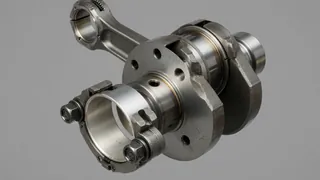
Not every knock means the same thing. A light spark knock under high load may disappear when the throttle is eased, while a deeper, steady hammering can point to a mechanical clearance problem such as a worn rod bearing. The pattern matters: a single metallic tap at idle is different from a load-sensitive rattle that follows rpm. Symptom conditions such as engine temperature, fuel quality, and whether the noise appears cold or hot help narrow the cause. Treat the sound as a clue about combustion or mechanical stress, not as automatic proof of one failed part.
Identification and location
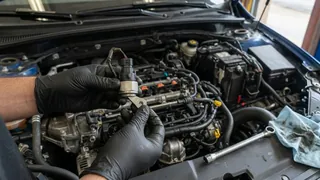
Locating the source begins with a careful listening pass around the engine bay while the noise is present, if it can be reproduced safely. A knock caused by abnormal combustion often seems to come from the top of the engine or the intake side, while a deep mechanical rap may be louder near the oil pan or lower block. Using a mechanic's stethoscope or a long screwdriver handle pressed to the ear can help isolate whether the sound is strongest near the cylinder head, valve cover, timing cover, or crankcase area.
The engine configuration changes where a knock is most audible. Inline engines place the cylinders in a single row, so a combustion-related knock may sound centered along the head. V-type engines spread cylinders across two banks, and a knock on one bank may be easier to hear from that side. Accessory drives, heat shields, and exhaust manifolds can also produce sharp metallic sounds that mimic detonation. Inspection should therefore compare noise location against engine speed and load, because a loose heat shield or worn accessory bearing may rattle at the same rpm without involving combustion.
Interpreting symptoms and test results
Interpreting the symptom means separating abnormal combustion from mechanical clearance issues. Spark knock, ping, or detonation under acceleration often relates to fuel octane, hot combustion chamber deposits, overly advanced ignition timing, or high intake air temperature. If the noise appears only on a hot day, during hard throttle, or after filling with lower-octane fuel, the pattern points toward combustion pressure spikes rather than a worn bearing. Diagnostic codes may also appear if knock sensors detect repeated vibration and the engine controller retards timing.
A deeper knock that is present at idle and grows with rpm is more consistent with a mechanical problem, such as excessive bearing clearance, piston slap, or valve train wear. Service history helps here: an engine with neglected oil changes or a recent overheating event may be more likely to have lubrication-related wear. A fault code is evidence to interpret, not proof that a part has failed. Manufacturer-dependent codes require vehicle-specific confirmation, and a knock sensor code may indicate noise, wiring, or calibration rather than a failed sensor. Checking oil condition, listening for changes during warm-up, and noting when the sound appears provide better direction than replacing parts from a code alone.