Choosing Steering Linkage for a Ram 2500
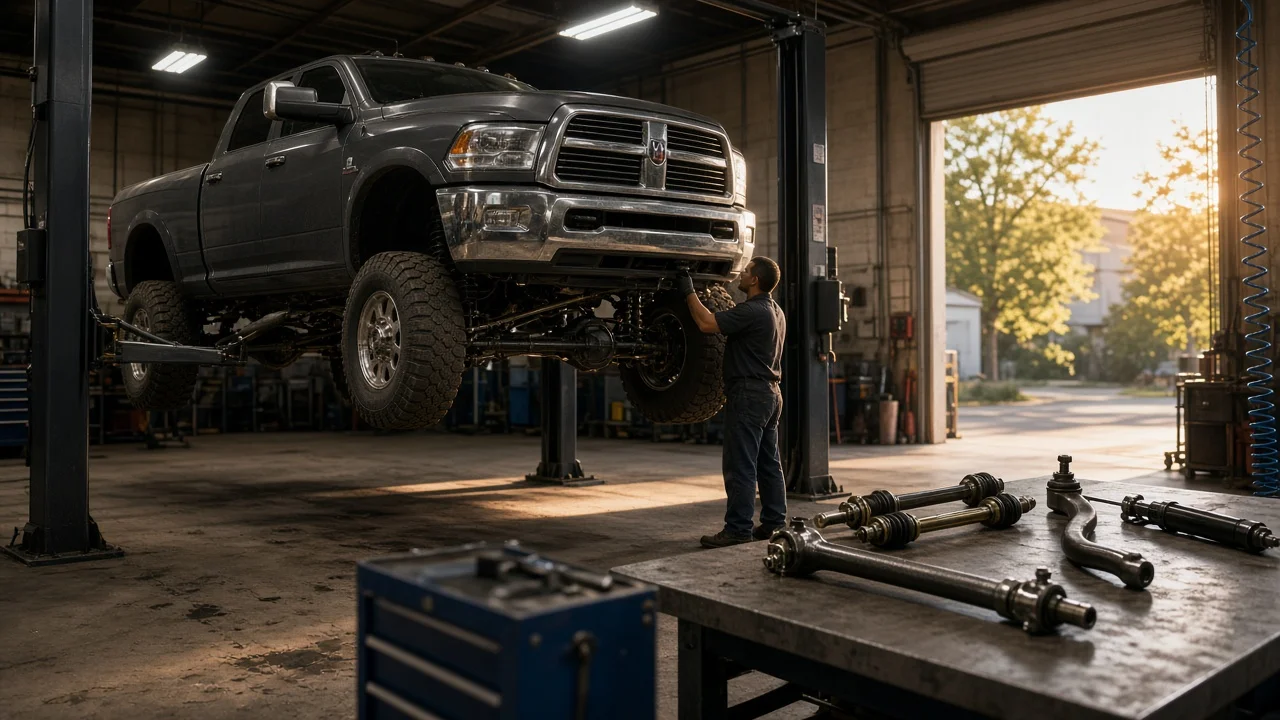
Steering linkage on a Ram 2500 carries a heavy front end, large tires and the extra load of towing, plowing or off-road use. Whether you need to replace worn tie rod ends or upgrade the whole assembly, the right parts depend on how your truck is built and how you use it. This guide covers what the linkage needs to do, how to confirm fitment, which features matter, the real costs of owning it, and how to build a short list of options.
Define the job the product must do
Steering linkage connects the steering gear to the front wheels. It includes the pitman arm, the drag link, the tie rod, the ball-style ends and the adjusting sleeves. On solid-axle trucks, the track bar locates the axle side to side. It is not part of the linkage itself, but it is often sold alongside it and strongly affects steering feel. Common signs of worn linkage are wandering, a clunk over bumps, an off-center steering wheel and uneven tire wear. Before you buy anything, confirm the linkage is actually the cause. With the truck on the ground, have a helper rock the steering wheel back and forth while you watch each joint for play. A worn track bar, ball joints, steering gear, wheel bearings or damaged tires can all produce similar symptoms.
Next, be honest about how the truck is used. A mostly stock truck used for commuting and occasional towing is usually well served by quality OE-style replacement parts. A lifted truck on larger tires, a plow rig or a truck that sees rocky trails puts more bending load on the tie rod and drag link, so heavier components make more sense. Also weigh your budget, how much downtime you can accept, and whether you have the tools and space to do the work yourself.
Check compatibility
Start with model year, drivetrain and front suspension type. Ram heavy-duty generations do not all share the same steering layout. Two-wheel-drive and four-wheel-drive trucks can also use different parts. Choose a listing that names your exact year range and drivetrain, and where possible confirm it against the OE part number or a VIN-based lookup. Do not assume a part fits just because it is marketed for Ram 2500 and 3500 trucks in general.
Then check the physical connections. Look at the taper size where the ends meet the knuckle and pitman arm, and whether the kit requires reaming the knuckle or another permanent modification. Check the thread sizes and directions on the adjusting sleeves, and whether your steering stabilizer clamp fits the new tube diameter. Clearance matters too: the linkage must clear the wheels, differential cover and track bar at full lock and through full suspension travel. Ride height changes linkage angles, so if the truck is lifted, confirm the kit is intended for your lift height. You may also need a matching pitman arm or track bar adjustment to keep the drag link and track bar roughly parallel.
Features that affect the choice
Tube design is the main structural difference between options. A larger diameter or thicker-walled tie rod resists bending from rocks and side loads, but it adds weight and may need a different stabilizer clamp. Joint design is the other big factor. Greasable joints let you purge water and grit with fresh grease, but only if you service them regularly. Sealed joints need less attention but cannot be refreshed. Some heavy-duty linkages use rebuildable joints, so worn internals can be replaced without discarding the tube. A wide adjustment range also helps you center the steering wheel after suspension changes.
Treat labels such as heavy duty, one-ton or bulletproof as marketing unless specifics back them up. Useful evidence includes the stated tube material and wall thickness, the joint type and whether it is serviceable, and any required modifications. Also look at what hardware is included, such as castle nuts and cotter pins, whether replacement ends are sold separately, and clear warranty terms. Installation instructions that list the fastener specification for each joint show that the manufacturer has documented the product properly. A low price with vague details often means compromises you only discover during installation.
Limitations and ownership costs
Installation starts with proper vehicle support. Park on level, solid ground, chock the wheels, and place rated jack stands at the frame or axle points listed in the service manual. Never work under a truck held up only by a jack. Separate tapered joints with a suitable puller rather than a pickle fork that tears boots. Tighten every nut to the fastener specification in the service manual or the kit instructions, and install new cotter pins. Do not guess torque values. Some kits also ask you to recheck fasteners after a short break-in period.
Plan for a wheel alignment after any linkage replacement. At a minimum, toe must be reset and the steering wheel centered, and a lifted truck may also need caster checked. Other costs can include a tie rod end puller, a reamer if the kit requires knuckle modification, a drop pitman arm or adjustable track bar for lifted trucks, grease, and regular inspections. New linkage will not fix a worn steering gear, loose ball joints, a bent component, out-of-balance tires or incorrect caster. If front-end shimmy has another cause, new linkage alone will not cure it. If you find excessive joint play, address it promptly rather than continuing to drive on it.
Build a practical shortlist
Use the same questions for every candidate. Does it match your year, drivetrain and front axle? Is it suited to your current ride height and tire size? Does it fit your knuckle tapers without modification, or are you prepared to modify them? Will your steering stabilizer mount to it? Does the joint type suit your maintenance habits? Are replacement ends available separately? Is mounting hardware included? Do the instructions give fastener specifications? What does the warranty cover? Any option that fails a fitment question comes off the list, whatever the price.
Most buyers end up comparing three kinds of options. A quality OE-style replacement keeps factory geometry and is usually the simplest fit for a stock truck. An upgraded tie rod and drag link with stronger tubes and serviceable joints suits trucks with larger tires or harder use. A complete heavy-duty kit, sometimes paired with track bar or pitman arm changes, is built for lifted or off-road trucks but often involves more installation work. Pick the least complex option that handles your actual loads, and budget for the alignment from the start.