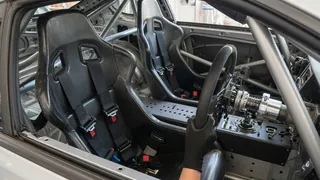
Race car quick release steering wheel
A race car quick release steering wheel changes entering and exiting the cockpit by letting the driver separate the rim from the steering column in seconds. Track cars, formula cars, and dedicated race builds typically use this hub-and-spline system where a collared release replaces the fixed factory fastener. The setup gives a secure mechanical lock during driving and a deliberate pull or ring movement when leaving. For street-driven vehicles, the modification also affects horn wiring, airbag function, steering lock behavior, and how the column interfaces with the existing steering wheel adapter, making the choice more than a simple appearance upgrade.
Essential answer
The essential answer is that a quick release steering wheel is a two-piece assembly consisting of a splined hub mounted to the steering column and a matching release body bolted to the back of the steering wheel rim. A spring-loaded collar slides to lock the two halves together, usually with a positive click or ball-lock engagement. The driver pulls the collar toward the wheel to disengage the hub, allowing the rim to be removed. On a dedicated race car, this provides faster exit through a window opening or narrow roll-cage structure and can act as a mild anti-theft measure when the wheel is removed.
The scope differs sharply between competition and road use. In a race car, the column typically has no factory clockspring, airbag, or steering wheel radio controls, so converting to a quick release mainly involves selecting the correct hub adapter for the column spline count and diameter. On a production car used on the street, the change removes the driver airbag and often the horn circuit unless a separate coiled cord or contact ring is installed. Driver restraint, seat position, and the release mechanism itself become the protection path, which changes how a builder should evaluate the modification.