Printable Vehicle Maintenance Log and Checklist: What to Track and How to Use It
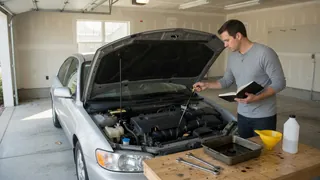
A printable vehicle maintenance log is a paper record of every service your car, truck or SUV receives: the date, odometer reading, work performed, parts and fluids used, and who did the job. A maintenance checklist is a separate tool. It lists what should be inspected or serviced, and at what frequency, so nothing gets skipped. Most owners get the best results by using both: the checklist tells you what is due, and the log proves what was done. One qualification shapes everything below. Service intervals are not universal. They come from your vehicle's owner's manual or maintenance schedule and can differ by model year, engine or powertrain, and driving conditions. Use the templates here as a framework, and fill in the intervals your manufacturer specifies.
Log, checklist or journal: how they differ
These terms are often used interchangeably, but each one does a different job. Knowing the difference helps you pick or build a template that fits how you actually maintain your vehicle.
Format | Main purpose | Looks backward or forward | Best for; Maintenance log | Records completed service with dates, mileage and costs | Backward (history) | Warranty records, resale documentation, tracking spending; Maintenance checklist | Lists inspection and service items by frequency | Forward (what is due) | Routine inspections, preventing missed tasks; Preventive maintenance checklist | A checklist built around scheduled intervals to catch wear before failure | Forward | Owners following a manufacturer schedule, fleet or work vehicles; Maintenance journal | A freer-form notebook combining service history with observations, noises and symptoms | Both | Older vehicles, DIY owners, diagnosing recurring problems
What every log entry should record
A log is only useful if each entry can stand on its own months or years later. These are the fields worth including on any template:
Date of service; Odometer reading at the time of service; Service performed, described specifically (for example, "engine oil and filter changed" rather than "oil"); Parts and fluids used, including type or specification where known, such as oil viscosity grade or tire size; Who performed the work: dealer, independent shop or yourself; Cost, split into parts and labor if possible; Receipt or invoice number, so the paper record can be matched to a document; Next service due, by date or mileage, whichever your schedule uses; Notes on anything observed, such as a technician's recommendation or a new noise
Printable vehicle maintenance log template
The layout below prints cleanly on a standard letter-size page in landscape orientation. You can copy it into a word processor or spreadsheet, widen the columns, and add as many rows as you need. Keep a header section at the top so the page is tied to one specific vehicle.
VEHICLE MAINTENANCE LOG; Year/Make/Model: ____ VIN: ____; Engine/Powertrain: ____ License plate: ____; Tire size: __ Oil spec: __ Purchase date/mileage: ____; Date | Odometer | Service performed | Parts / fluids | Done by | Cost | Receipt # | Next due; | | | | | | |; | | | | | | |; | | | | | | |; | | | | | | |; | | | | | | |; | | | | | | |; Notes / observations:
Building a preventive maintenance checklist
Preventive maintenance means servicing or inspecting components on a schedule, before they fail, instead of waiting for a breakdown. The checklist groups tasks by how often they come up. The frequencies below are general categories, not prescribed intervals. Your owner's manual sets the actual mileage or time limits for items such as oil changes, filters, spark plugs, coolant and transmission fluid.
Many manufacturers publish two schedules: a normal schedule and a severe (or special operating conditions) schedule. The severe schedule usually applies to frequent short trips, stop-and-go traffic, towing, dusty roads, or extreme heat or cold. A lot of everyday driving falls into those categories, so check which schedule describes your use before you fill in your checklist.
Quick checks: regularly, such as at fuel stops or weekly
Tire pressure, compared with the placard on the driver's door jamb rather than the maximum on the sidewall; Visible tire damage, bulges or embedded objects; All exterior lights, including brake lights and turn signals; Warning lights on the instrument cluster; Windshield washer fluid level; Unusual noises, vibrations, smells or fluid spots under the vehicle
Monthly or at each oil service
Engine oil level and condition, using the dipstick or the vehicle's electronic oil-level display; Coolant level in the reservoir, checked only with the engine cool; Brake fluid level; Power steering fluid, if the vehicle uses a hydraulic system; Tire tread depth and wear pattern, since uneven wear can point to alignment or inflation problems; Wiper blade condition; Battery terminals for corrosion
At manufacturer-specified intervals
Engine oil and filter change; Tire rotation; Engine air filter; Cabin air filter; Brake pads, rotors and lines inspection; Suspension and steering components inspection; Transmission fluid service, if your schedule calls for one; Coolant replacement; Spark plugs on gasoline engines; Timing belt, on engines that use a belt rather than a chain; Drive belts and hoses inspection
Seasonally or annually
Battery test, especially before cold weather; Air conditioning and heating performance; Wiper blade replacement and washer fluid suited to the season; Switching to or from winter tires, if you use them; Underbody and wheel-well cleaning where road salt is used; Review of open safety recalls for your VIN
Hybrid and electric vehicle differences
A battery-electric vehicle has no engine oil, spark plugs or exhaust system, so a gasoline-focused checklist will include many items that don't apply. Tires, brakes, suspension, cabin air filter, wipers, the 12-volt auxiliary battery and coolant for the battery and power electronics thermal system usually remain relevant. Regenerative braking can reduce brake pad wear, but brake components still need inspection, particularly in regions where corrosion is a concern. Hybrids keep most internal-combustion service items while adding hybrid-system checks. In both cases, the manufacturer's schedule is the authority, because requirements vary widely between models.
Printable vehicle maintenance checklist template
This version is designed to be printed, kept in the glovebox or garage, and ticked off. Fill in the interval column from your owner's manual when you first set it up.
VEHICLE PREVENTIVE MAINTENANCE CHECKLIST; Vehicle: _______ Schedule used: [ ] Normal [ ] Severe; ITEM INTERVAL (from manual) LAST DONE (date/miles) NEXT DUE; [ ] Engine oil & filter _____ _____ __; [ ] Tire rotation _____ _____ __; [ ] Engine air filter _____ _____ __; [ ] Cabin air filter _____ _____ __; [ ] Brake inspection _____ _____ __; [ ] Brake fluid _____ _____ __; [ ] Coolant _____ _____ __; [ ] Transmission fluid _____ _____ __; [ ] Spark plugs _____ _____ __; [ ] Drive belts / hoses _____ _____ __; [ ] Timing belt (if equipped) _____ _____ __; [ ] Battery test _____ _____ __; [ ] Wiper blades _____ _____ __; [ ] Wheel alignment check _____ _____ __; [ ] Recall check (by VIN) _____ _____ __; MONTHLY QUICK CHECK Month: ____; [ ] Tire pressure [ ] Tread [ ] Lights [ ] Oil level [ ] Coolant level; [ ] Brake fluid [ ] Washer fluid [ ] Wipers [ ] Warning lights [ ] Leaks
Paper, PDF or spreadsheet?
A printed log works well because it needs no app, account or battery. It can stay with the vehicle, and it can be handed to a buyer along with the keys. Its weaknesses are that it can be lost or damaged and it can't remind you when service is due.
A fillable PDF or spreadsheet version keeps the same layout but can be backed up, searched and reprinted. A spreadsheet can also total your maintenance costs and calculate the next due mileage automatically. A practical approach is to keep the master record digitally, print a fresh copy periodically for the glovebox, and store scanned receipts alongside it.
Why keeping a log is worth the effort
Warranty claims: if a covered component fails, records showing that required maintenance was done can help support the claim. In the US, using an independent shop or doing the work yourself generally does not by itself void a manufacturer's warranty, but you may need to show the maintenance was actually performed, so dated receipts matter. Resale value: a complete service history gives buyers evidence of how the vehicle was treated and can make a private sale easier. Spotting patterns: repeated entries for the same problem, or declining fuel economy, can reveal an issue earlier than memory would. Budgeting: totaling costs over a year shows what the vehicle really costs to keep running and can inform a repair-or-replace decision. Avoiding duplicate work: a clear record prevents paying twice for a service that was recently done.
Tips for keeping the log useful
Fill in the vehicle header, including the VIN, before the first entry. Record the odometer reading every time, since many intervals are mileage-based. Write an entry the same day as the service, while details are fresh. Attach or file receipts in order, and note each receipt number in the log. Log DIY work as carefully as shop work, and keep receipts for parts and fluids. Note technician recommendations you chose to postpone, so they don't get forgotten. Use one log per vehicle; combining vehicles on one sheet makes records harder to use later.
Choosing or adapting a template
The right template depends on your vehicle and how you maintain it. A newer vehicle under warranty benefits most from a strict log with receipt numbers. An older, high-mileage vehicle often suits a journal-style format with room for symptoms and repair notes. EV owners should remove engine-related rows rather than leave them blank. Whatever format you choose, the essentials are the same: tie each record to one vehicle, base intervals on the manufacturer's schedule for your model year and powertrain, and write down every service with its date and mileage.