What Makes a Good Vehicle Maintenance Log?
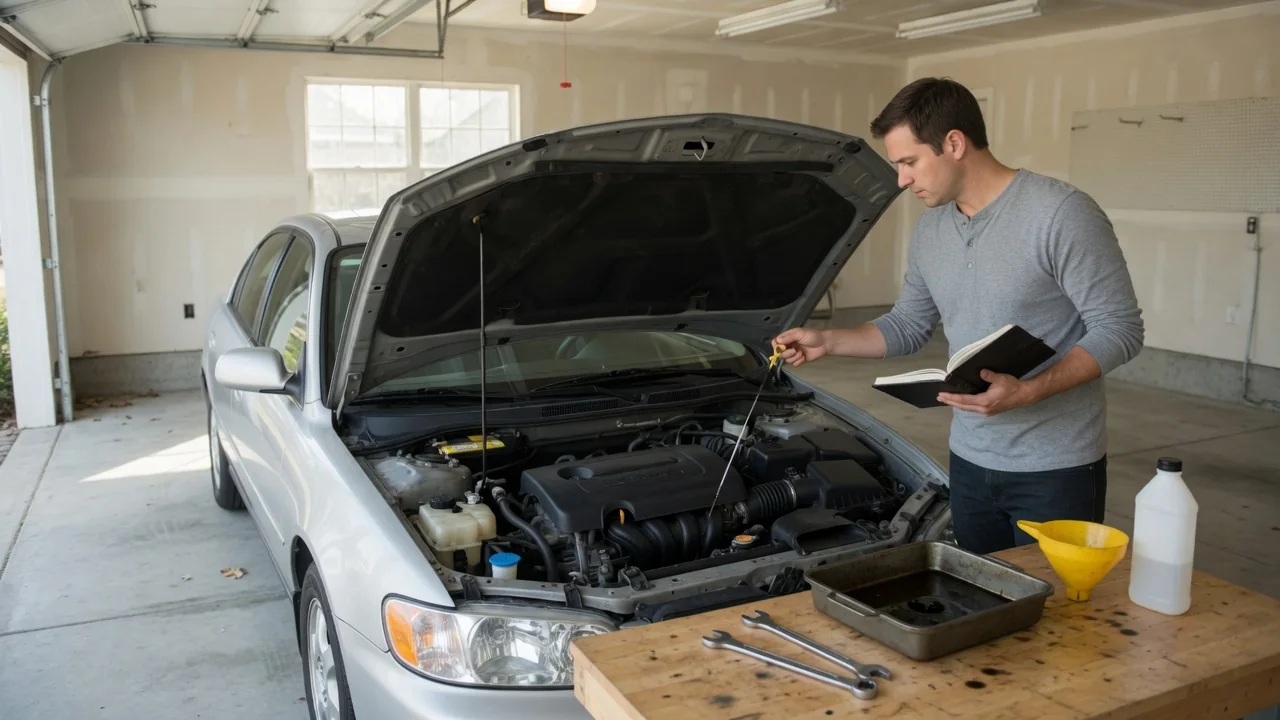
A vehicle maintenance log is only as useful as the details it captures. A good one answers simple questions quickly: when was this last done, at what mileage, with which parts, and what still needs attention? You might keep a paper notebook in the glovebox or a spreadsheet on your phone. Either way, the same core car maintenance log fields separate a record you can rely on from a pile of half-remembered notes.
Date and mileage
Every entry should start with two numbers: the calendar date and the odometer reading at the time of the work. Many manufacturer maintenance schedules give intervals both as a distance and as a period of time, whichever comes first. If you record only one of them, you are left guessing. A car that is driven very little may reach a time-based interval long before the mileage-based one. A high-mileage commuter can reach the distance threshold well ahead of the calendar date. With both values logged, you can check either condition against your owner's manual without reconstructing history from receipts.
Write down the actual odometer reading rather than a rounded estimate. If the vehicle can display either miles or kilometers, note which unit you used. If the instrument cluster or odometer has ever been replaced, record that event with the readings on both the old and new units, because the displayed number may no longer reflect total distance. For work done at a shop, the invoice often lists the mileage. Compare it with the dashboard anyway, since the figure may have been entered by hand.
Consistency matters as much as accuracy. Use one date format throughout, and log the entry on the day the work happens instead of filling it in later from memory. If a job spans several days, such as a repair waiting on parts, note when it started and when the vehicle returned to service. That small habit makes patterns easier to spot, such as a fluid that needs topping up more often than before.
Parts
The second element of a good log is a clear description of what was done and what went into the vehicle. Name the service in plain terms, such as engine oil and filter change, front brake pad replacement, or coolant drain and fill. Then list the parts and fluids used. For each item, record the brand, part number and quantity where available. For fluids, include the specification printed on the container, such as the oil viscosity grade and any approval or standard your owner's manual calls for, along with how much you added.
Part numbers are worth the extra effort. They let you buy the same component again without guessing and confirm that a replacement matched the original specification. They also help you identify the installed parts later if a recall or service bulletin applies. If you reused a component, such as a drain plug washer or a gasket, say so, and note it if you replaced it instead. When the service information specifies torque values, record the ones you used. A home mechanic who returns to the same fasteners will find them useful.
Keep the supporting paperwork. Receipts, invoices and labels from parts packaging show where and when something was bought, which can matter for parts warranties. A simple reference in the log, such as an invoice number or a note about where the receipt is filed, links the entry to that proof without copying every line into the log.
Follow-up
A maintenance log should look forward as well as back. After each entry, write down when the next related service is due, expressed the same way as the schedule: a target mileage and a target date. Work it out at the time of the service, using the interval in your owner's manual. That saves you from doing the arithmetic later and lets you see upcoming tasks at a glance.
Follow-up also covers observations that are not yet repairs. You might notice a slight seep around a gasket, uneven tire wear, a brake pad closer to its limit than expected, or a warning light that cleared on its own. Record what you saw, where it was, and the mileage at the time. Measurements you actually took, such as remaining tread depth or brake pad thickness, are more useful than impressions, as long as you note how you measured them. These notes give you a baseline, so a later inspection can show whether something is stable or getting worse.
Finally, close the loop. When you check a flagged issue again, repair it or rule it out, add an entry that refers back to the original note. Some tasks are easy to forget unless the log treats them as open until they are finished. Examples include re-torquing wheel fasteners after a wheel change, rechecking fluid levels after a refill, and confirming that a repair resolved a symptom.
Practical implications and limits
In everyday use, a log built around these fields turns maintenance decisions into quick lookups instead of guesswork. It helps you plan purchases and avoid paying for the same service twice. It also lets you give a technician a concise history when they are diagnosing a problem. A documented history can help when you sell the vehicle, too, since buyers often ask what has been done and when. The format matters less than the habit: a notebook, a spreadsheet or an app all work if the entries are complete and up to date.
A log also has limits. It holds only what you or a shop wrote down. It does not prove that the work was done correctly, and it cannot replace an inspection when something seems wrong. Intervals and specifications vary by vehicle, engine and operating conditions, so base the log on your owner's manual or service information rather than general rules of thumb. Some manuals include a separate schedule for severe operating conditions; if your driving fits that description, set your follow-up dates from it. Record-keeping requirements under a warranty depend on that warranty's terms. Read those terms rather than assuming your log automatically satisfies them.