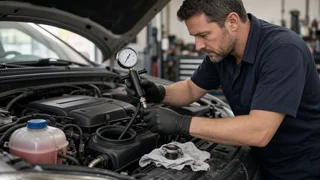
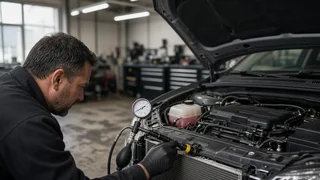
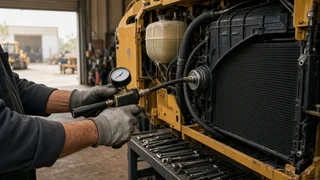
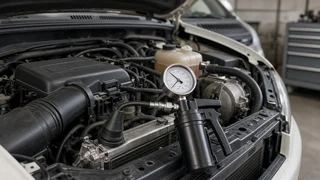
Powerbuilt Cooling System Pressure Tester
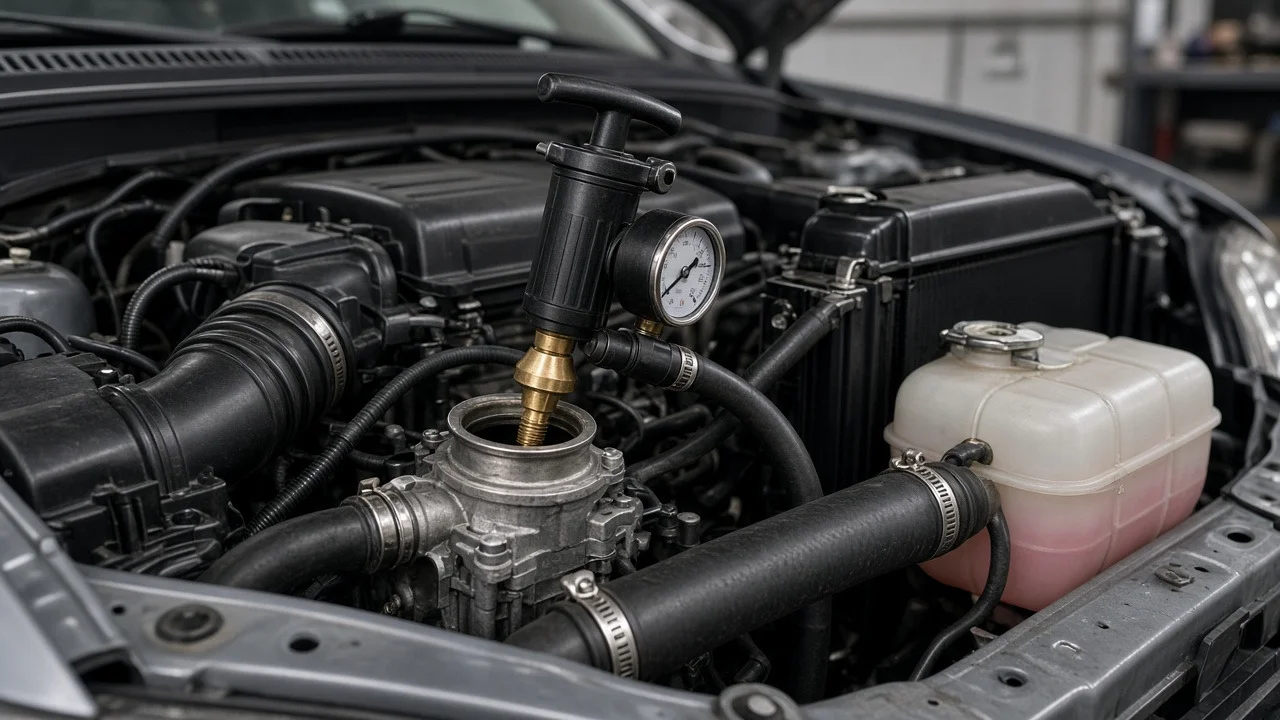
A cooling system pressure tester turns intermittent overheating, slow coolant loss, and mystery wet spots into a diagnosis instead of a guess. The Powerbuilt cooling system pressure tester is built around that job: pressurizing the cooling circuit by hand so leaks, a weak pressure cap, or an internal breach show themselves while the engine is off and cool. Before buying, it helps to understand what the tool can and cannot reveal, which adapters matter for your radiator or surge tank, and how a pressure reading relates to normal thermostat, radiator, and coolant concentration behavior.
The direct answer
The Powerbuilt cooling system pressure tester is a hand-pumped diagnostic tool that lets you apply controlled air pressure to a cool cooling circuit and watch whether the needle holds, drops slowly, or falls quickly. A stable reading generally points away from an external leak in the hoses, radiator, heater core, or water pump area. A falling reading means you still need to locate the escape point, and a pressure cap that releases well below its rated value can explain coolant loss even when the rest of the system looks dry.
The immediate question is usually whether the tester is worth purchasing for a one-time concern, and that depends on the vehicle and the symptom. If you already see crusty coolant residue near a hose end, a pressure test can confirm the seep before you replace parts. If the car loses coolant only after heat-soak with no visible drip, the tool may help expose a small leak that opens under pressure, but a combustion leak or a failing head gasket may require a different test method. Buy it when you expect repeated cooling system checks across several vehicles or multiple repair attempts.
One useful check before purchase is adapter coverage. A cooling system pressure tester only works when the correct cap- or neck-mounting adapter seals to your radiator, expansion tank, or degas bottle. If the kit does not fit the pressure cap thread or bayonet style on your vehicle, you may need a separate adapter. Also note that some closed systems pressurize at the reservoir rather than the radiator, so the location you can test matters as much as the gauge range. Air pockets can cause misleading readings, so the system should be filled to the proper level before testing.