Power Brake and Spring: What the Term Covers and How Brake and Spring Systems Differ
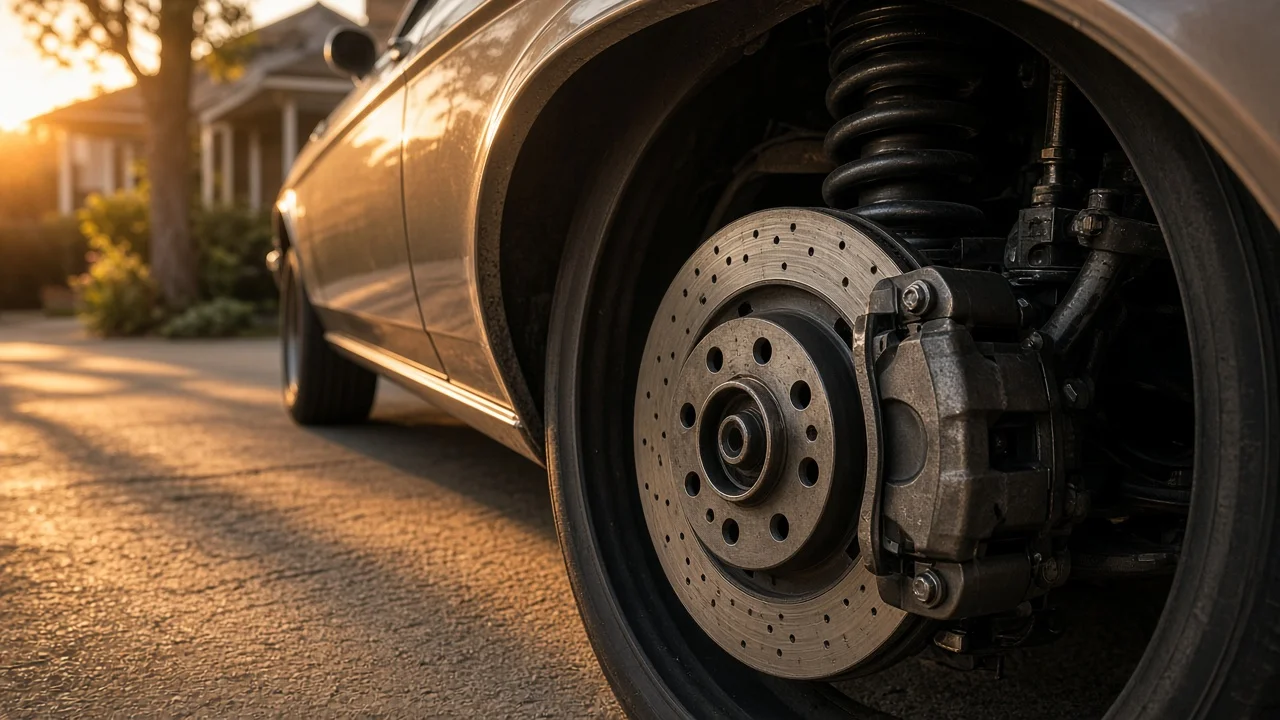
People who search for "power brake and spring" usually want one of two things: a repair shop that uses this or a similar name, or an explanation of what brake and spring work involves. Shops that combine brake and spring service often work on trucks, trailers and other heavy-duty vehicles, where braking and suspension parts carry large loads and wear together. Many independent businesses use similar names, so this guide does not refer to any one company or location. It explains what the term covers, how the systems differ, and what to confirm before you book service.
The Short Answer
"Power brake" means a braking system with assistance from a booster or from air pressure, so the driver does not stop the vehicle by leg force alone. "Spring" has three common meanings in this context. It can mean the small return and hold-down springs inside a brake assembly. On air-braked trucks, it can mean the spring brakes that apply the parking and emergency brakes. It can also mean the leaf, coil or air springs in the suspension. Which meaning applies depends on the vehicle. A passenger car with hydraulic disc brakes and a Class 8 tractor with air brakes share the vocabulary but need very different service.
How Power Brakes Work
In a typical passenger car or light truck, pressing the brake pedal pushes a piston in the master cylinder. That piston pressurizes brake fluid, and the fluid travels through lines and hoses to each wheel. A brake booster between the pedal and the master cylinder multiplies the driver's effort. Without the booster, the pedal still works, but stopping takes much more force.
Vacuum booster: uses engine vacuum, or a vacuum pump, acting on a diaphragm to add force. It is the most common design on gasoline vehicles. Hydraulic booster (often called hydro-boost): uses pressure from the power steering system. It is common on diesel trucks and other vehicles with little engine vacuum. Electric or electro-hydraulic booster: uses an electric motor or pump. It is common on hybrids, EVs and vehicles with advanced driver-assistance features. Full air brakes: found on most heavy trucks, buses and many trailers. Compressed air applies the service brakes directly, and there is no brake fluid in the main system.
A hard pedal, a hissing sound when you press the pedal, or a change in pedal feel after the engine is shut off can point to a booster or vacuum-supply problem. These symptoms can also come from other faults. A technician should diagnose them rather than replacing parts on a guess.
Springs Inside the Brake System
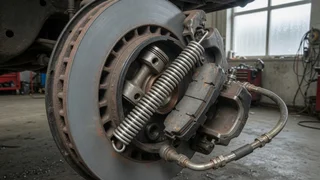
Even a hydraulic brake system relies on springs. In drum brakes, return springs pull the shoes away from the drum when you release the pedal. Hold-down springs keep the shoes seated against the backing plate, and an adjuster spring keeps the self-adjuster working. In disc brakes, the springs are smaller: anti-rattle clips and abutment hardware keep the brake pads positioned in the caliper bracket, which reduces noise and helps the pads release evenly.
Heat weakens these springs over time. A tired return spring can let drum brake shoes drag. Worn pad hardware can cause uneven pad wear, noise, or a caliper that does not release fully. For that reason, many technicians replace hardware kits whenever they replace pads or shoes.
Spring Brakes on Air-Braked Trucks
On heavy vehicles with air brakes, "spring brake" means something specific. Each spring brake chamber holds a very strong spring. Air pressure compresses that spring to release the brake while the vehicle is running. When the driver sets the parking brake, or when system air pressure drops too low, the air is exhausted and the spring applies the brake mechanically. If air is lost, the vehicle can still be brought to a stop and held in place.
Spring brake chambers store a large amount of energy. Do not open, cut or disassemble a chamber. Caging the spring with the release bolt and replacing a chamber are jobs for trained technicians with the correct procedure for that chamber type.
Suspension Springs
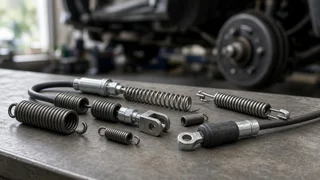
The "spring" in a brake-and-spring shop name usually refers to suspension work, especially on trucks and trailers. Leaf springs are stacked steel plates that support the axle. They are common on pickups, vans, trucks and trailers. Coil springs are typical on passenger cars and many SUVs. Air springs, also called air bags, use pressurized rubber bellows. They are common on heavy trucks, buses and some luxury or load-leveling systems.
Brakes and springs are connected even though they are separate systems. Sagging or broken springs change ride height and load distribution. That affects how weight shifts onto each axle during braking, and it can change how evenly brakes and tires wear. On a heavy vehicle, inspecting both at the same visit often makes sense.
How the Systems Differ
Component | What it does | Typical vehicles | Common wear signs; Vacuum or hydraulic brake booster | Multiplies pedal force | Most cars and light trucks | Hard pedal, hissing, longer stops; Air brake system | Uses compressed air to apply brakes | Heavy trucks, buses, many trailers | Air leaks, slow pressure build, warning alarms; Drum and disc brake hardware springs | Return, hold and position shoes or pads | Cars, light and medium trucks | Dragging, noise, uneven wear; Spring brake chamber | Applies parking and emergency brake when air is released | Air-braked trucks and trailers | Brakes not releasing, leaks, damaged chamber; Suspension springs (leaf, coil, air) | Support vehicle weight and control ride | All vehicles; leaf and air common on heavy duty | Sagging, broken leaves, uneven ride height, leaks
Related Brake Components You Will Hear About
Brake pads: steel backing plates bonded to friction material. The caliper clamps them against the rotor. Brake rotors: the discs the pads clamp. They have a minimum thickness, and below it they must be replaced rather than resurfaced. Caliper: the hydraulic clamp that holds the pads. It can stick or leak as seals and slide pins age. Friction material: the compound on pads and shoes. Formulations such as organic, semi-metallic and ceramic differ in noise, dust, heat tolerance and wear. Brake fluid: hydraulic fluid that absorbs moisture over time. That lowers its boiling point, so it should be replaced at the interval the vehicle maker specifies. Wear limits: minimum thicknesses for pads, shoes, rotors and drums, set by the vehicle or parts maker. Vehicle fitment: confirmation that a part matches the exact model year, axle, brake package and gross weight rating.
Signs It Is Time for Brake or Spring Service
Squealing, grinding or scraping when braking; The vehicle pulls to one side under braking; A soft, sinking or unusually hard brake pedal; Vibration through the pedal or steering wheel when stopping; Brake warning lights, or low-air warnings on air-braked vehicles; One corner sitting lower than the others, or a visibly cracked or shifted leaf spring; Bouncing, bottoming out or unusual handling under load; Audible air leaks around brake chambers or air springs
Choosing a Shop for Brake and Spring Work
If you are looking for a specific business with this name, check its listing directly. Similar names are used by unrelated shops in different areas. Whichever shop you choose, confirm a few things first. Does it service your class of vehicle? Light-duty hydraulic systems and heavy-duty air brakes need different tools and training. Will it measure components against published wear limits, rather than replacing parts by default? Can it confirm vehicle fitment for replacement parts? Will it explain whether a recommended spring or brake repair is urgent or can be planned? For commercial vehicles, also ask whether the shop can document work for inspection or fleet records.
Bottom Line
"Power brake and spring" covers power-assisted braking, the springs inside brake assemblies, spring brakes on air-braked vehicles, and suspension springs. On a car, the work usually means booster, pad, rotor and hardware service. On a truck or trailer, it often means air brake, spring brake chamber and leaf or air spring repair. Identify which systems your vehicle uses, note the symptoms you notice, and choose a shop equipped for your vehicle class.