Porsche Cayenne Steering Angle Sensor

A Porsche Cayenne steering angle sensor works with the stability, traction, and suspension systems to report how far and how quickly the driver is turning the wheel. When its signal becomes inconsistent, the vehicle may disable driver aids, display warnings, or feel unsettled during cornering. Because interpretation depends on chassis configuration and control module logic, the sensor’s output should be read as one input within a broader system rather than immediate proof of an internal failure.
Essential answer
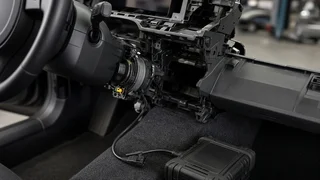
The steering angle sensor is a rotational position device that translates steering wheel movement into an electronic signal used by modules such as stability control, adaptive damping, and headlamp aiming. In a Cayenne, its relevance grows when suspension geometry changes, when a wheel alignment is performed, or when body height and load alter the relationship between the steering wheel and the road wheels. The sensor does not measure tire slip by itself, but its reading helps the vehicle decide whether the driver’s intended direction matches the chassis response.
A fault code pointing to this sensor is evidence of a signal plausibility problem, not confirmation that the component has failed. Wiring, connector contact, mounting points, calibration loss after alignment, or ride height differences can all disturb the reading. Before replacing parts, the practical step is to verify that the installed sensor matches the vehicle configuration and that recent work affecting suspension or steering geometry has been followed by the correct reset or adaptation procedure where manufacturer guidance calls for it.