Poly Hitch-Mounted Cargo Carrier
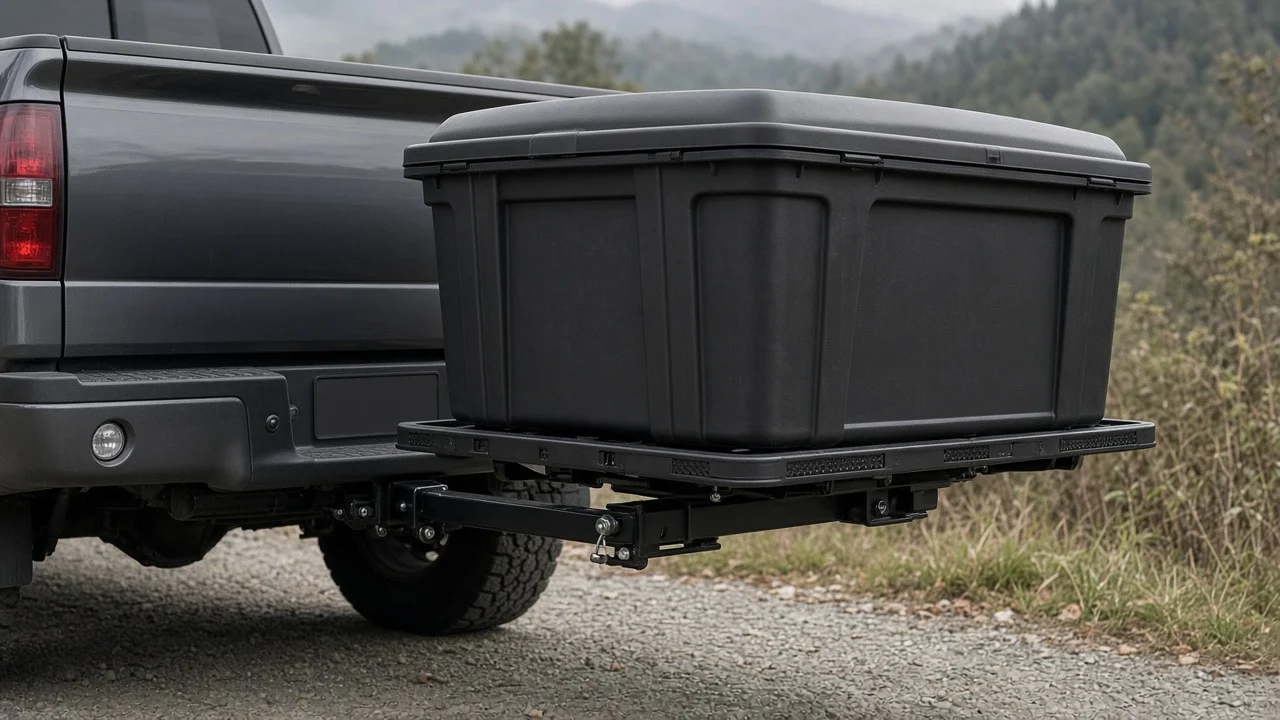
A hitch mounted poly cargo carrier adds enclosed, lockable storage without sacrificing interior passenger space, but the material choice changes how it behaves on the road. Poly carriers resist dents and corrosion better than steel or aluminum boxes in wet, salty conditions, making them a practical option for gear that must stay dry. Buyers should focus on how the plastic shell is supported, how the mounting points transfer load to the receiver, and whether the design retains its shape when loaded. Understanding these details helps match the carrier to your vehicle’s receiver size and the way you actually pack for trips.
The direct answer
A hitch mounted poly cargo carrier is a weather-resistant storage box made from molded plastic that slides into a vehicle’s receiver hitch. It generally works best for moderate loads such as camping chairs, tools, groceries, or recovery gear, where the lighter shell and rust resistance are clear advantages over painted steel boxes. The direct answer for most shoppers is that this style provides functional enclosed cargo space and easier handling than heavier metal alternatives, provided the unit’s internal frame and load floor carry the weight properly. Check the carrier’s weight capacity and your receiver’s tongue weight rating before purchasing, because the plastic body itself does not act as the main load-bearing structural member.
A practical condition that changes the recommendation is how the poly shell is braced. Some designs use a steel or aluminum inner frame that bears the load and ties into the shank, while others rely on a reinforced plastic tub with limited underfloor support. If you routinely carry dense items such as sandbags, tool kits, or liquids, the braced design is the safer interpretation of the product’s advertised capacity. For lighter, bulky cargo, a simpler poly carrier is often sufficient and keeps the tailgate area easier to reach. Corrosion protection at the metal mounting points still matters, especially where the shank enters the receiver and where any hardware meets the plastic shell.