Polaris VIN Lookup: How to Decode and Verify Your Polaris Vehicle
A Polaris VIN lookup uses the vehicle identification number stamped on a Polaris machine to confirm its model year, model family, manufacturing details and serial identity. It can also be used to check recall and warranty status and look for theft or title problems. Polaris builds several product lines, including ATVs, side-by-sides, snowmobiles and the three-wheeled Slingshot. What a lookup can tell you depends on which line the vehicle belongs to, how it is titled in your state, and which tool you use.
The Short Answer
The VIN alone reliably confirms identity and model year, and it gives a general model-family description. It often cannot confirm the exact trim, package or factory accessories, especially on off-road models. For exact configuration, pair the VIN with the Polaris model number, which identifies a specific build. Ask an authorized Polaris dealer to run both. Free public decoders are useful for a first check, but they may return incomplete results for off-road vehicles.
What a Polaris VIN Is
A VIN is a 17-character code assigned to one specific vehicle. Road-going vehicles sold in the US must carry a VIN that follows federal formatting rules. Polaris also uses the 17-character format on its off-road products. Off-road vehicles are not regulated as motor vehicles in the same way, though, so some decoding conventions and database coverage can differ from cars and on-road motorcycles. A VIN never contains the letters I, O or Q, which avoids confusion with the numbers 1 and 0.
How the 17 Characters Are Organized
Position | Section | What it generally indicates; 1–3 | World Manufacturer Identifier (WMI) | The manufacturer and, in some cases, the vehicle type or region; 4–8 | Vehicle Descriptor Section | Model family, body or chassis type, engine or other manufacturer-defined attributes; 9 | Check digit | A calculated character used to detect transcription errors or altered VINs; 10 | Model year | A letter or number representing the model year, on a repeating 30-year cycle; 11 | Plant code | The assembly facility; 12–17 | Production sequence | The unique serial number of that individual unit
The meaning of positions 4 through 8 is set by the manufacturer and can vary between product lines and model years. That is why generic decoders sometimes describe a Polaris only broadly, such as "ATV" or "utility vehicle," rather than naming a specific trim.
VIN Versus Polaris Model Number
Polaris vehicles typically carry a model number as well as a VIN, usually on the same identification label or decal. The two serve different purposes:
VIN: identifies one individual machine and is what titles, registrations, theft databases and recall systems track. Model number: identifies a specific configuration within a model year, such as the trim level, package or color. Dealers and parts catalogs rely on it to find the correct parts.
If your goal is to verify trim and equipment, such as whether a side-by-side is a base, premium or special-edition version, the model number is usually more informative than the VIN alone.
Where to Find the VIN on a Polaris
The exact location varies by product line, model and year, so check the owner's manual for your model if you can't find it. Common places include:
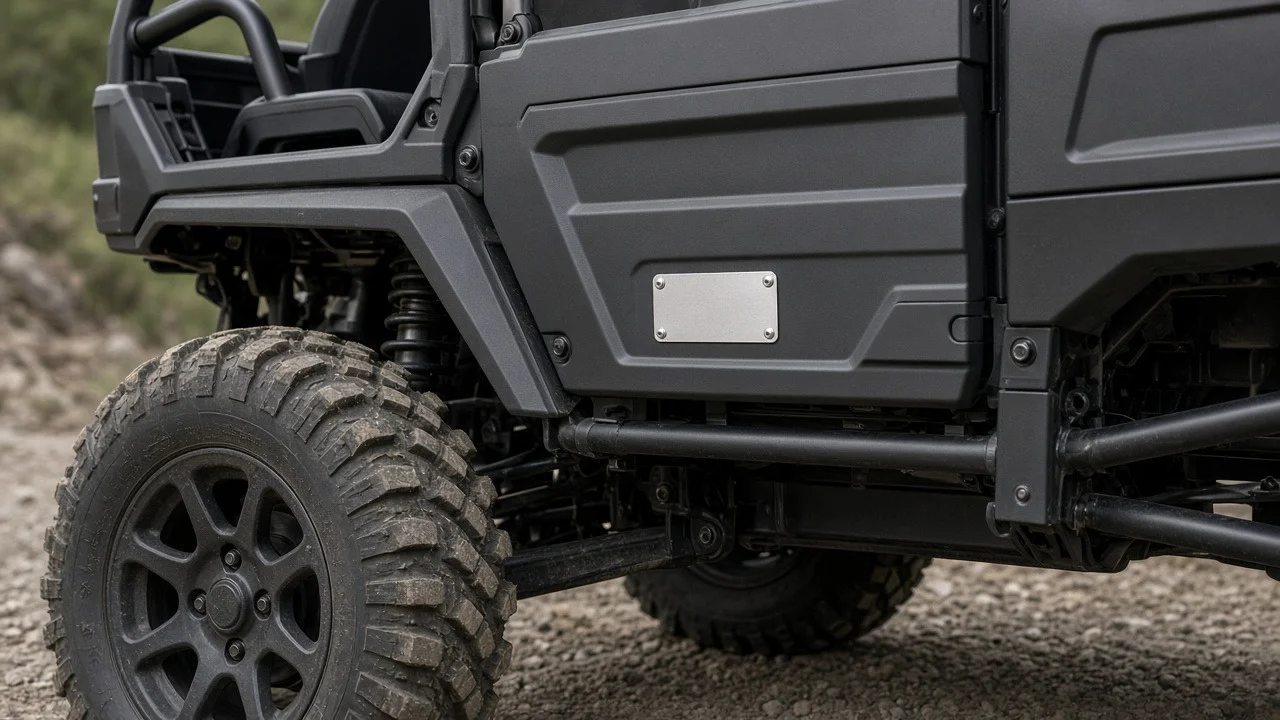
ATVs: stamped into the frame, often near the front or lower frame, and sometimes on a label as well. Side-by-sides: stamped on a frame rail and printed on an identification decal, often near the front of the vehicle or under the seat area. Snowmobiles: typically stamped on the tunnel and shown on an identification decal. Slingshot: on the frame and on a compliance label, as is typical for road-registered vehicles. Paperwork: the title, registration, bill of sale, manufacturer's certificate of origin and dealer service records.
Compare the stamped frame VIN with the one on the decal and on the paperwork. A mismatch, a damaged or ground-off stamping, or a replacement decal with no explanation is a reason to stop and investigate before buying.
Ways to Run a Polaris VIN Lookup
Free public VIN decoders, including NHTSA's decoder: quick confirmation of manufacturer, model year and basic description. Coverage for off-road models may be limited. Polaris recall check: Polaris gives owners a way to check open recalls by VIN, and dealers can confirm recall and warranty status. Authorized Polaris dealer: can typically pull factory build information, model number, warranty registration and service campaign history. This is the most dependable route for trim and equipment verification. Theft check: free stolen-vehicle databases such as the NICB's VINCheck can flag vehicles reported stolen, but only when a report has been filed and recorded. Paid history reports: may include title brands, accident or auction records. Off-road vehicles are titled inconsistently across states, so these reports often contain far less for ATVs and side-by-sides than for cars.
Verifying Trim and Equipment
When you're confirming that a used Polaris matches its advertised trim, use the VIN to establish identity and year. Then use other evidence to confirm configuration:
Get the model number from the identification label and have a dealer or parts catalog confirm what that model number corresponds to. Check that the engine, drivetrain and features physically present on the machine match that configuration. Separate factory equipment from aftermarket or dealer-installed accessories. Winches, roofs, windshields, wheels and audio are commonly added later and won't appear in factory data. Ask for the original sales paperwork, which often lists the exact model and installed accessories.
Limits to Keep in Mind
A clean VIN lookup doesn't prove a vehicle is problem-free. Theft databases only show reported thefts. History reports depend on what was recorded, and off-road records are sparse. Decoder descriptions may be generic or occasionally inaccurate for powersports models. A careful physical inspection is still needed, along with a dealer check of recalls and the model number and verification that the VIN matches across frame, label and title.