Penny Test for Tire Tread Depth
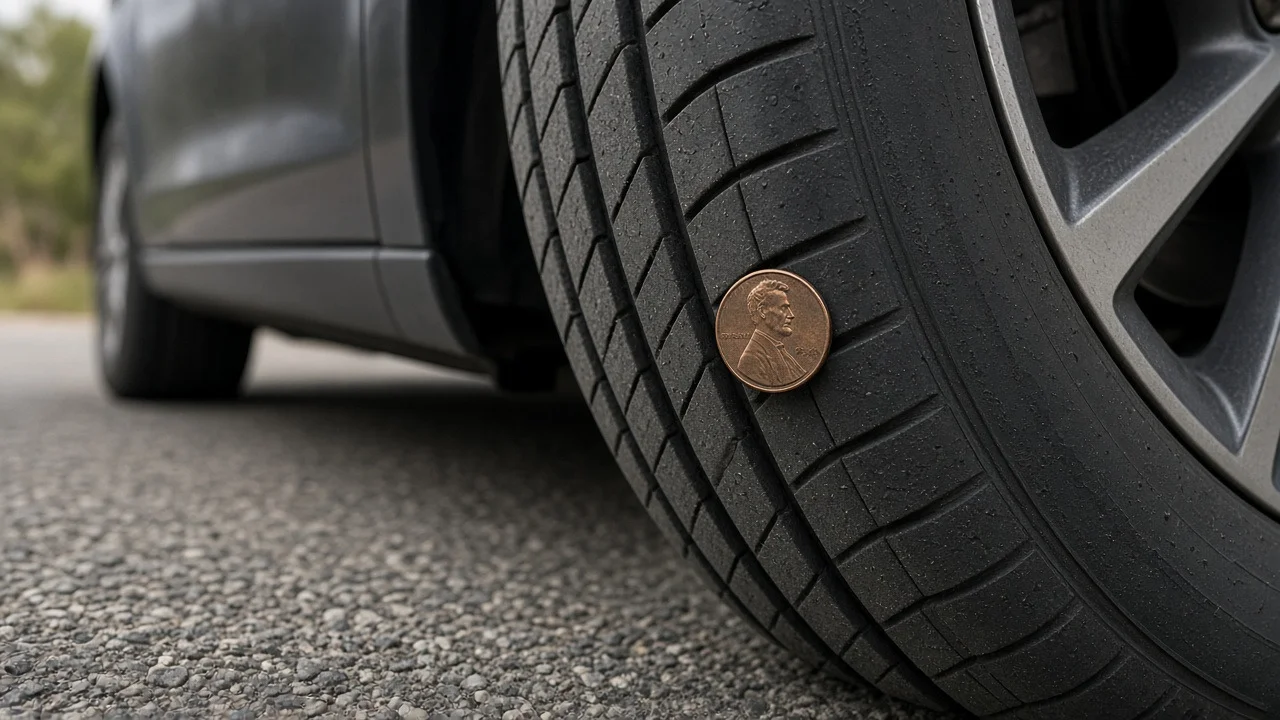
A Lincoln penny is a practical depth reference, but a dedicated tire tread depth gauge removes the guesswork from wear checks. Comparing the coin method with a marked probe helps drivers understand remaining tread, wet-road performance, and when replacement becomes urgent. This overview explains how each approach works, why tread depth matters, and what limitations affect the penny reading.
Essential answer
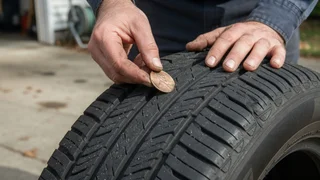
The penny test offers an approximate way to judge tire wear by inserting a coin, head first, into a tread groove. When the top of Lincoln's head disappears, the remaining depth is generally near a wear indicator threshold, suggesting there is still useful tread. If the head remains visible above the surrounding rubber, the tire is likely near or below the point where wet traction and hydroplaning resistance decline significantly.
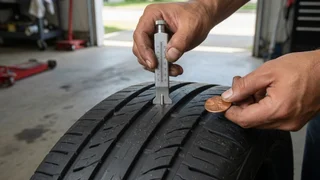
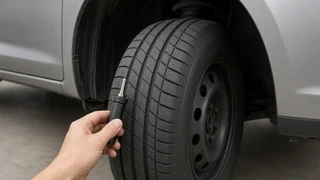
A purpose-made tire tread depth gauge uses a calibrated probe and scale, giving a direct measurement in thirty-seconds of an inch or millimeters. Unlike the coin, it reads specific values rather than a pass-or-fail silhouette. The gauge clarifies whether all grooves wear evenly, whether inner and outer shoulders differ, and exactly how much material remains before the built-in tread wear bars sit flush with the face of the tread.