How to Check Tire Tread Depth With a Gauge or Penny
The Short Answer
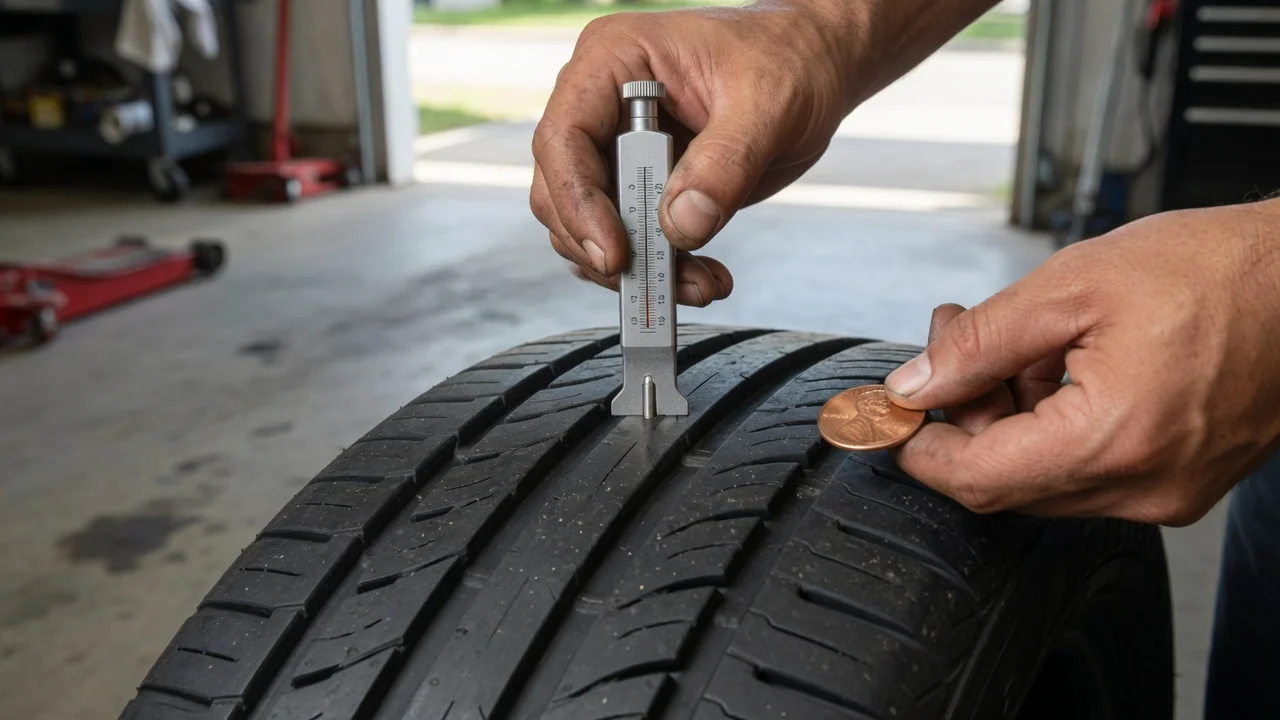
Tire tread depth is the vertical measurement from the top of a tread block to the bottom of its main groove. The quickest accurate method is a tire tread depth gauge, but a common penny can also be used as a rough wear indicator. New passenger vehicle tires often start at about 10/32 or 11/32 of an inch, while many safety advocates recommend replacing tires once the remaining tread reaches 2/32 of an inch. The penny test approximates that limit by checking whether Lincoln's head is covered by the tread.
Why Tread Depth Matters
Tread grooves channel water, slush, and loose material away from the contact patch. As the tread becomes shallow, the tire has less ability to evacuate water, which can increase stopping distances on wet roads and raise the risk of hydroplaning. A shallow tread also reduces traction on snow, mud, and gravel and exposes the tire to faster belt damage from impacts.
Wear is not always even. Tires can wear faster on one edge because of alignment issues, in the center because of overinflation, or on both shoulders because of underinflation. Checking several points around the tire helps reveal those patterns before they become unsafe.
What You Need
• A tire tread depth gauge or a clean US penny; • Access to the tire tread on a parked vehicle; • Optional: a tire pressure gauge for inspecting the displayed inflation pressure
Method 1: Using a Tread Depth Gauge
1) Park the vehicle on a level surface, set the parking brake, and let the tires cool if the vehicle was recently driven. 2) Inspect a main tread groove near the center of the tire before checking the outer grooves. 3) Press the gauge base flat against the top of the tread block so the probe enters the groove. 4) Push the probe down until it touches the bottom of the groove. 5) Read the depth shown on the gauge scale. 6) Repeat the measurement at several points across the tire and in a few locations around its circumference.
A complete check means the lowest consistent measurement, not the highest one, sets the urgency for replacement. If one groove is near the wear limit while another still has deep tread, treat the tire as worn.
Method 2: The Penny Test
1) Hold a penny so the top of Lincoln's head points down into the tread groove. 2) Press the penny into the main groove until the coin rests against the tread blocks on either side. 3) Look at the portion of Lincoln's head that remains visible. 4) If the tread covers part of Lincoln's head, at least some tread is present above the coin's reference point. 5) If the top of Lincoln's head is fully visible above the surrounding tread, tread depth is likely approaching or below 2/32 of an inch. 6) Repeat the test in multiple grooves and around the tire.
The penny test is a convenience check, not a substitute for numeric measurement. The distance from the edge of a penny to the top of Lincoln's head is commonly cited as roughly 2/32 of an inch, but coin wear and viewing angle can affect the result. A gauge gives a more repeatable reading.
Wear Bars and Built-In Indicators
Most tires have molded wear bars, also called treadwear indicators, running across the main grooves. When the surrounding tread wears down until it is level with these bars, the tire is at or near its minimum service depth. If the tread surface is flush with the wear bars, replacement is appropriate. Some tires may also display manufacturer-specific indicators, so the vehicle manual and tire sidewall markings remain the relevant source for model-specific guidance.
What the Measurements Mean
Tread Depth | Typical Interpretation; 10/32 inch or more | Near-new depth for many passenger tires; 6/32 to 8/32 inch | Noticeably worn but still serviceable; wet-weather performance is reduced; 4/32 inch | Approaching replacement; reduced snow and wet traction; 2/32 inch or less | At the common minimum wear limit; replace the tire
These figures describe common guidance for passenger vehicles and do not apply to every tire type. Light truck, winter, performance, and commercial tires can have different new-tread depths and service recommendations. Always compare the measured depth with the vehicle manufacturer's guidance and the tire maker's stated limits for the specific tire installed.
Where and How Often to Check
Check tread across the full tread face, including the inner, center, and outer grooves. Tires driven in harsh conditions, carrying heavy loads, or showing visible unevenness should be inspected more frequently. A monthly check is a practical habit, with an immediate inspection after a visible impact, sudden vibration, or loss of tire pressure.
When to Involve a Qualified Service
Replacement, mounting, balancing, and diagnosis of uneven wear are service tasks that belong with qualified tire service. Uneven wear may point to suspension, alignment, or inflation problems that need correction before new tires are fitted. If a tread reading is difficult to interpret, the vehicle's inflation guidance cannot be confirmed, or the tires show cracks, bulges, cuts, or exposed cords, stop driving on that tire and have it inspected before further use.
Measurements supplied here are general automotive reference points and do not replace the limits printed for a specific tire or required by local regulations. Legal wear requirements can differ by jurisdiction, so a local inspection standard may apply even when the measured depth differs from the common 2/32-inch guidance.