OTC Cooling System Pressure Tester
A cooling system pressure tester is one of the most direct ways to find leaks, a weak pressure cap, or a failing sealing surface before they leave you stranded. For anyone researching an OTC cooling system pressure tester, the practical question is whether the tool fits your radiator neck, adapts to your vehicle, and holds a steady reading long enough to expose a slow coolant loss. The answer depends on condition of access to the adapter and your cooling circuit. A tester does not condemn a part by itself; it reveals where the system can no longer hold the pressure the cap is designed to manage. This guide explains what to check before purchase and how to read the result.
The direct answer
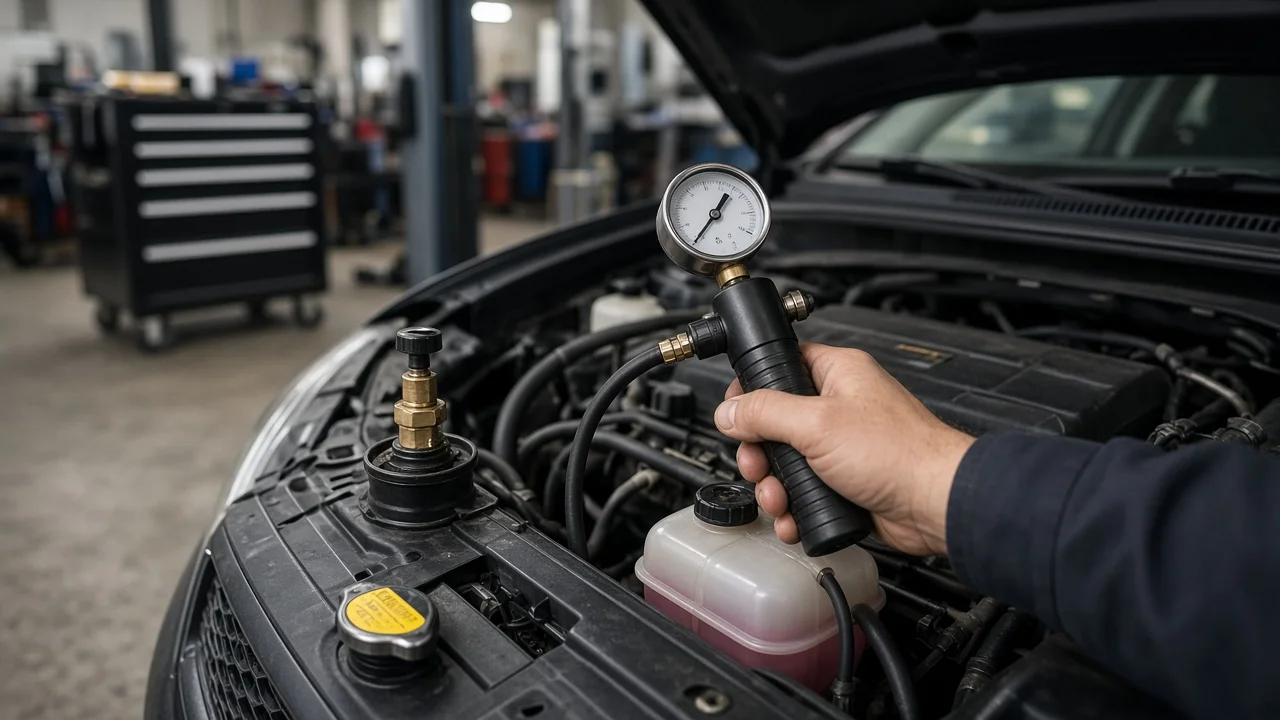
An OTC cooling system pressure tester is a hand-pumped diagnostic gauge used to pressurize a cold cooling circuit and watch whether the needle holds or falls. The immediate answer is that this style of tool is suited to identifying external coolant leaks, an internal leak that allows coolant into a cylinder, or a pressure cap that releases below its marked rating. It works only when the adapter seals correctly at the radiator or reservoir neck, and it is most useful on a system that is already cooled enough to open safely.
Before buying, confirm that the kit includes the adapter style your vehicle requires. Many testers use a universal pump and gauge with interchangeable caps or cones that thread onto different filler necks. The cooling circuit must be capable of holding pressure for the test to mean anything. A dropping needle usually points to a leak, but air pockets from recent service or a tester connection that is not fully seated can also cause a false loss. Treat the gauge as evidence to interpret rather than a standalone verdict on one component.