How to obtain traffic camera footage after a collision
The short answer
In the US, traffic camera footage is usually held by the agency that operates the camera. That may be a city or county transportation department, a state department of transportation, a police department, a toll authority, or a private vendor working under a government contract. You can usually try to get footage in three ways: ask the investigating police officer to collect it, submit a public records request to the agency that holds it, or have it subpoenaed as part of a legal case. Your insurer may also request it while handling a claim.
Two conditions can decide whether this works at all. First, many traffic cameras do not record. Some only feed live images to a traffic management center, and some only detect vehicles to control signal timing. Second, when footage is recorded, agencies often keep it for a limited time and then overwrite it automatically. Retention periods differ by agency and state, so you should act as soon as you safely can after the collision.
Key terms
Traffic monitoring camera: a camera used by transportation staff to watch traffic flow. Depending on the system, it may stream live video only or may also record. Detection camera: a camera, often mounted near signal heads, that senses waiting vehicles so the signal can change. These cameras commonly do not store video. Enforcement camera: a red-light or speed camera that captures images or short clips when it detects a violation. It may not capture events unrelated to a violation. Public records request: a written request for government records. State and local agencies follow their state's public records law. The federal Freedom of Information Act (FOIA) applies only to federal agencies. Preservation letter: a written request asking the record holder to keep specific evidence and not delete it. It is sometimes called a spoliation letter. Subpoena duces tecum: a court-backed order requiring a person or agency to produce documents or records, such as video files.
Before you start
Gather these details first. Agencies usually search footage by location and time, and vague requests are slower to process and easier to deny.
Exact location: the intersection or road segment, the nearest cross street or mile marker, and each vehicle's direction of travel. Date and a narrow time window for the collision. Police report or incident number, if a report was filed. Insurance claim number, if a claim is open. Descriptions of the vehicles involved. Photos of the scene that show where cameras are mounted, if you took any.
Step-by-step: requesting the footage
1) Identify the cameras at the scene
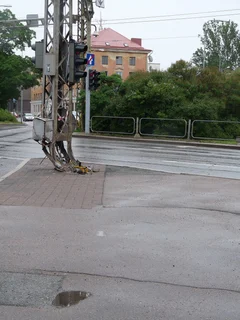
Note which cameras could have seen the collision and roughly what they are: signal-mounted units, pole-mounted cameras over the roadway, enforcement cameras, or toll gantries. Do this from a safe position, such as a sidewalk or a parked vehicle, or by checking your scene photos. Never stand in the roadway or a live traffic lane to inspect equipment.
2) Find out who operates each camera
City streets are usually covered by a municipal traffic or transportation department. State highways and interstates are usually covered by the state department of transportation. Toll roads are covered by the toll authority. If you can't tell who owns a camera, ask the investigating police department or the city's general information line. When you reach the right office, ask two questions: does this camera record, and how long is footage kept?
3) Ask for preservation right away
Send a written preservation request to the operating agency as soon as you can. Include the location, date, time window and incident number, and ask that any recorded footage be kept. A preservation request does not guarantee you will receive the footage. It does create a record that you asked before deletion, which can matter if a dispute arises later. An attorney or insurance adjuster can send this letter for you.
4) Contact the investigating officer
If police responded, ask the officer or the records unit whether footage was collected for the report. If police already have it, you may be able to request it through the department's records process, or your insurer may be able to obtain it. Police may withhold footage while an investigation or prosecution is active.
5) Submit a public records request
Submit a written request to the agency that holds the footage, using its own records request process if it has one. Describe the camera location, date and time window exactly, and ask for the video in a common playable format. Response deadlines, fees and exemptions are set by each state's law and each agency's policy. Common grounds for denial include ongoing investigations and privacy protections. If the agency denies your request, ask it to state in writing which exemption it relied on.
6) Involve your insurer
Tell your insurance adjuster which cameras may have captured the collision and what requests you have already made. Adjusters often request scene evidence themselves. Coordinating with them helps avoid duplicate or conflicting requests.
7) Use a subpoena if the request fails or a case is filed
A subpoena is generally tied to a pending legal proceeding, such as a lawsuit over the collision. In federal court, subpoenas are governed by Rule 45 of the Federal Rules of Civil Procedure. State courts follow their own rules on who may issue a subpoena, how it must be served, and how much notice the other parties must receive. In many states attorneys can issue subpoenas in their cases. Self-represented litigants often get one through the court clerk. Some states have procedures for obtaining evidence before a lawsuit is filed, but whether one applies depends on the jurisdiction. Government agencies may also have specific service requirements.
Subpoenas are formal legal steps, and a defective subpoena can be challenged or ignored. Have a licensed attorney in the state where the case is pending handle this step. If you are facing a citation or charges arising from the collision, speak with a lawyer before you contact agencies or give statements about the incident.
When to stop and change course
The agency confirms the camera does not record, or the footage has already been overwritten: ask for that confirmation in writing, then move to other evidence sources. The request is denied under an investigation exemption: note the reason, ask when the exemption might end, and raise subpoena options with an attorney if a case is pending or expected. The footage is in a proprietary format you can't play: ask the agency for a standard format or for the viewer software it uses. Do not convert or edit the only copy.
Other cameras that may have captured the collision
If no traffic camera recorded the collision, other footage may exist. Possible sources include nearby businesses, residential doorbell or security cameras, transit buses, and dashcams in other vehicles. Private owners are not covered by public records laws. You can politely ask them to save and share footage, but only a subpoena in a legal case can compel them to produce it. Ask from public areas, and never enter private property without permission.
How to confirm you have usable evidence
The file plays completely and shows the correct location, camera angle and time window. Timestamps are visible or documented, and you know whether the camera clock might be offset from actual time. You have kept the original file exactly as received, plus at least one backup copy. You have recorded who provided the footage, when, and how, along with any cover letter or certification. This record helps show the footage is authentic if it is used in a claim or in court. You have shared copies with your insurer or attorney as appropriate.
What this guide cannot tell you
Retention periods, request fees, response deadlines, exemptions and subpoena procedures vary by state, county and agency. No specific figures or agency contacts were available for this guide. Check the current rules with the agency that operates the camera and, for legal steps, with an attorney licensed in your state.