Nissan CVT Fluid Specifications and Maintenance Schedule
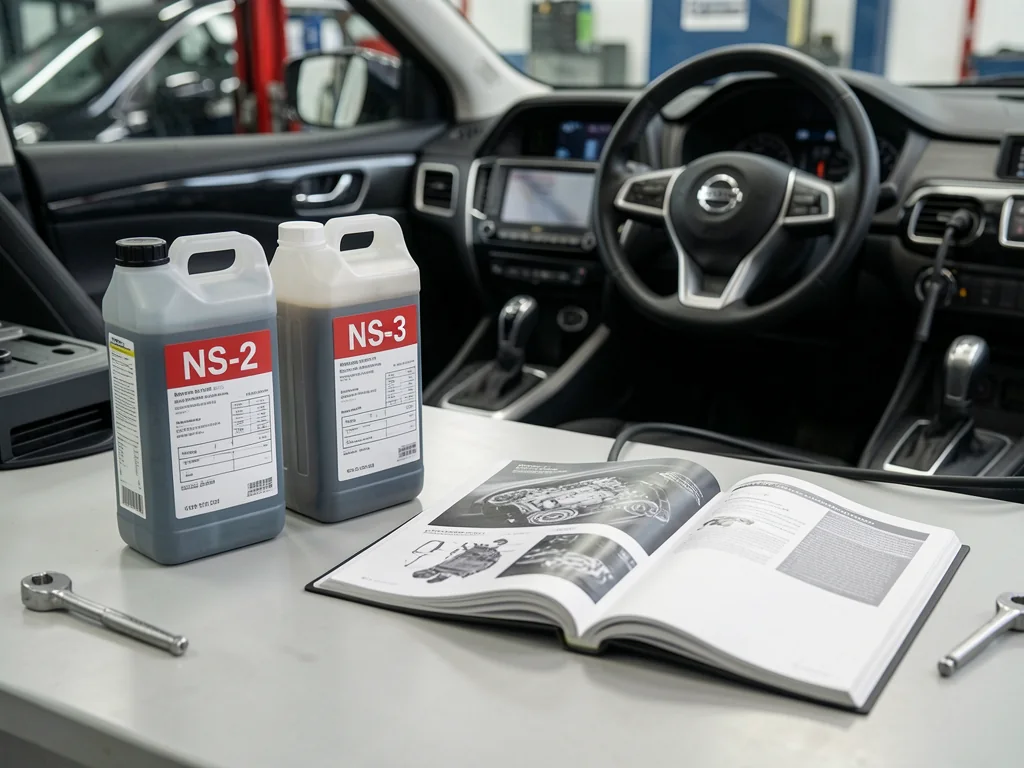
Choosing the right CVT transmission oil for a Nissan and servicing it on the correct schedule are practical ways to support a continuously variable transmission over the long term. You'll need to confirm whether it takes NS-2 or NS-3 fluid and read the maintenance schedule for your driving conditions. You'll also need to plan the fluid change, sort out filter questions, and know which symptoms need diagnosis rather than routine service.
Confirm the Required Nissan CVT Fluid Specification
Nissan CVT transmission oil does far more than lubricate. A typical Nissan CVT uses a steel belt running between two variable-diameter pulleys. The fluid must provide carefully controlled friction between those parts so torque moves through them without slipping. It also carries heat away from the pulleys, bearings, and torque converter. It is also the hydraulic fluid the valve body uses to clamp the pulleys and change ratios. If the fluid's friction characteristics or viscosity don't match the design, shift feel, efficiency, and wear protection can all suffer.
Before buying any fluid, confirm the model year, the installed transmission, and the required fluid specification in Nissan documentation for your vehicle. You can use the owner's manual, the service manual, or a dealer parts lookup by VIN. NS-2 and NS-3 are separate fluid specifications, so don't assume one can replace the other, and never mix them. A bottle labeled as compatible with many CVTs hasn't necessarily been approved for your transmission. A broad compatibility claim on the label doesn't show that the fluid meets the exact Nissan requirement.
Find the Maintenance Schedule for Your Vehicle and Driving Conditions
The maintenance schedule for your vehicle is in the owner's manual or maintenance booklet for your model year and sales market. A Nissan dealer can also confirm it using the VIN. Read it carefully, because the schedule may list CVT fluid inspection separately from CVT fluid replacement. Inspection means checking for leaks, condition, or level as directed, while replacement means draining out old fluid and refilling. No single mileage or time interval applies to every Nissan. Use the figures printed for your vehicle, not a number you heard secondhand.
Many Nissan manuals list severe operating conditions that may call for more frequent service than the standard schedule. Use only the conditions your manual actually lists rather than guessing. If you bought the car used and the service records are incomplete, gather receipts and dealer history. Also ask for any fluid deterioration data the dealer's diagnostic equipment can read for your transmission. Then have a qualified technician assess everything before you decide on service. Following the schedule is good Nissan CVT transmission maintenance, but it can't guarantee CVT life or prevent every failure.
Plan a Nissan CVT Fluid Change
A shop can give an accurate quote for Nissan CVT transmission service only if it has the right information. Give them the VIN, current mileage, whatever service history you have, any symptoms you've noticed, and the confirmed fluid specification. Fluid quantity, the conditions for checking CVT fluid level, and the service procedure itself must come from the documentation for your exact transmission, because these details vary. On many CVTs, a correct level check depends on fluid temperature and on the vehicle sitting level, so a technician should do it with the right procedure and diagnostic tools.
In general terms, a Nissan CVT transmission fluid change usually means draining the old fluid and refilling with the specified product. The technician then checks the level under the conditions the documentation specifies. Hot fluid and a raised vehicle make this a job for trained staff, not a driveway task. Before you approve a machine fluid exchange, a flush, or any additive, confirm that Nissan specifies that method for your transmission. Afterward, the service record should show the fluid used, the work done (including any filter or strainer replacement), the date, and the mileage.
Verify Fluid Service Requirements for Rogue, Murano, Altima, and Sentra
If you're planning a Nissan Rogue CVT transmission fluid change, start by verifying the model year and transmission. The fluid type, service quantity, and maintenance requirements should be looked up from those details, not assumed. For a Nissan Murano CVT transmission fluid change, use the maintenance schedule and service information for your specific vehicle to decide what the job includes. That means checking whether only a drain-and-fill is specified or whether other items are involved. For either vehicle, a dealer or independent shop with access to Nissan service data can match the job to the VIN.
If you're planning a Nissan Altima CVT transmission fluid change, confirm which transmission is installed and what service it requires before you follow general CVT advice found online. For a Nissan Sentra CVT transmission fluid change, find the documentation for the correct model year. Gather any earlier service records too, so the shop knows what has already been done. For all four vehicles, the model name alone doesn't tell you the fluid specification, the filter setup, or when replacement is due. Transmissions and requirements can differ between generations and markets.
Understand CVT Filter Location and Replacement Requirements
Questions about the Nissan CVT transmission filter are common, but the answer depends on the transmission. Depending on the design, the service information may list a strainer inside the transmission, a separate filter, or more than one filtering part. Because of this variation, find the Nissan CVT transmission filter location in the documentation for your exact transmission. Don't rely on a diagram or video made for a different vehicle. Assuming every Nissan CVT has its filter in the same place leads to wrong parts orders and incomplete service.
A fluid change doesn't automatically include Nissan CVT transmission filter replacement, so get written confirmation of whether the filter is part of the job. Ask the shop to check the replacement requirements and confirm the correct part for your transmission using the service documentation and a VIN-based parts lookup. Getting to the filter and removing it are covered in the service manual, not in general guides. If debris, contamination, or a leak is suspected around the filter, have a professional inspect it. What they find may mean the transmission should be diagnosed before any routine maintenance.
Know When CVT Symptoms Need Diagnostic Service
Some problems are worth reporting to a technician. These include shuddering when you accelerate, a delay before the car engages Drive or Reverse, whining or other unusual noises, transmission warning messages, and visible leaks under the vehicle. Note when each one happens, such as on cold starts or at highway speeds, but don't try to name a cause. Symptoms and fluid appearance alone can't show the fluid's real condition or identify an internal fault. Dark fluid doesn't prove a failure, and clean-looking fluid doesn't prove the transmission is healthy. Stored fault codes are clues to interpret, not a final answer.
When symptoms are present, a professional should check for leaks, check the fluid level, read the diagnostic data, and test how the transmission operates. That should happen before you approve routine maintenance. A fluid change isn't a guaranteed fix for an existing driving problem, and it can delay the right diagnosis. For any warning message, follow the owner's manual. If the car stops moving reliably, such as losing power or not moving in gear, stop somewhere safe away from traffic. Call roadside assistance or a tow truck instead of continuing to drive.