CVT Transmission Filter: Does It Need Replacement?
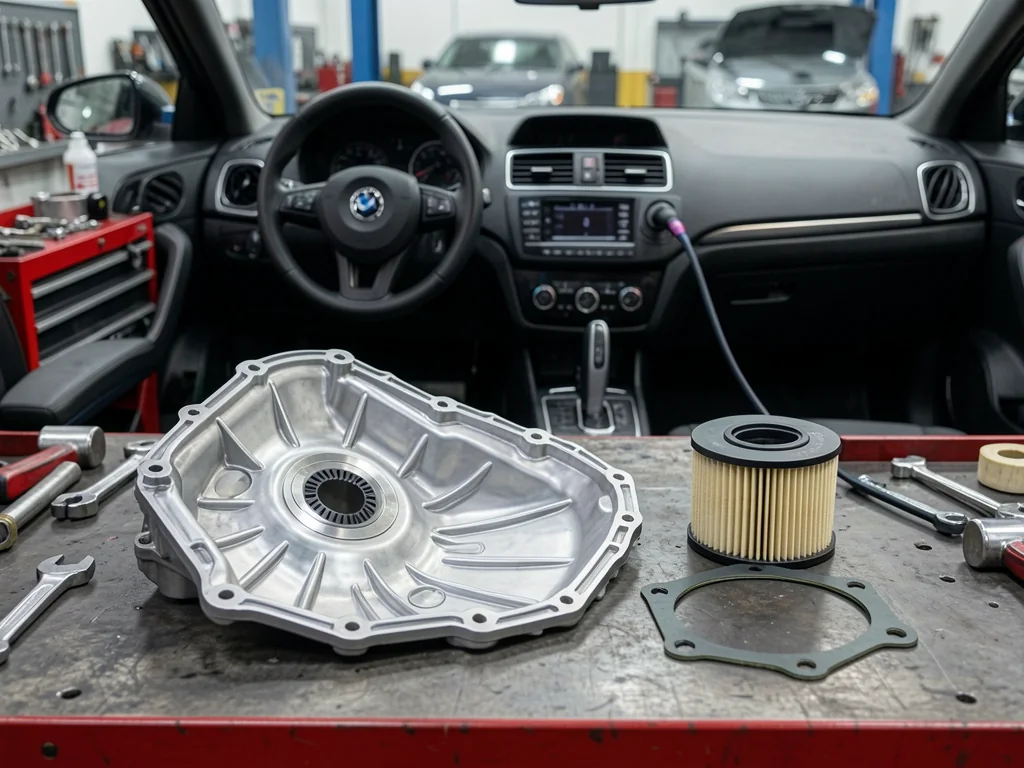
A CVT transmission filter is one of several parts that help keep continuously variable transmission fluid cleaner as it circulates. Whether a CVT transmission filter replacement belongs on a maintenance visit depends on how that transmission is built and what the manufacturer specifies. Some designs use a pan strainer, an internal filter, an external filter, or a combination, and a fluid service does not always include changing any of them.
Does Your CVT Filter Need Replacement?
There is no universal interval for CVT transmission filter replacement. The maintenance schedule for the vehicle, the exact transmission, and the manufacturer's fluid specification decide whether a filter or strainer is treated as a service item at all. One design may call for fluid only, another may include a pan-mounted strainer or an external element in a filter housing, and a third may leave an internal filter in place unless the unit is opened for repair. Matching year, model, and transmission identification is the starting point, not a generic calendar.
A CVT filter or transmission strainer captures debris carried by circulating CVT fluid, which can reduce the amount of particles reaching valves, a pump, or the belt and pulley surfaces. That capture function does not prevent every fault, because wear, heat, fluid breakdown, and control issues can still develop with a clean screen in place. A scheduled fluid service also does not automatically include filter replacement. Easy access through a transmission pan or an external housing is useful when a part is specified for change, but accessibility by itself does not mean routine replacement is required.
Filter Types and Locations Inside a CVT
Inside a continuously variable transmission, filtration can take several forms. A pan-mounted pickup strainer often sits in the transmission pan and screens fluid as it is drawn toward the pump. An internal filter may sit deeper in the valve body or case, and an external filter can be mounted in a filter housing on the outside of the unit. Not every CVT uses all of these arrangements. Some transmissions rely on a strainer alone, while others combine a pickup screen with a finer element, so the parts list has to match that specific layout.
Some designs contain more than one filtration element, which means a shop may change an accessible strainer during fluid service while an internal filter remains in place. Filters that sit behind a pan, cover, or housing can be reached during a planned maintenance visit. Others sit inside the case and require substantial disassembly, so they are more often addressed during repair than during a routine drain and fill. Before confirming layout or ordering a CVT transmission filter, identify the vehicle year, model, and the exact transmission used in that application.
How to Confirm Whether Filter Service Is Due
Whether filter service is due is settled by the maintenance schedule and the vehicle-specific service information for that transmission, not by a general CVT rule. Those documents establish the fluid specification, whether a strainer or other filter is a listed item, and how the work is described. Severe-use provisions matter only when the manufacturer defines the operating conditions that trigger them, such as frequent towing, extreme heat, or stop-and-go use if those conditions are named. If the schedule does not define a severe-use filter interval, extra driving is not an automatic reason to replace the filter.
Service history is equally important because a previous visit may have included CVT fluid alone, a pan strainer, an external filter, or a combination of those items. Invoices and shop notes can show which filtration element was actually replaced and which seals were renewed. When records are missing, the useful next step is a documented assessment of the transmission, the listed service items, and the present condition rather than assuming a CVT transmission filter replacement is overdue or that no work is needed. Unknown history is a reason to verify, not a reason to skip identification.
Symptoms That Need Diagnosis Before Filter Replacement
Slipping sensations, delayed engagement, unusual noises, and transmission warning lamps are reasons to have the vehicle assessed, not proof that a clogged CVT transmission filter is the cause. A continuously variable transmission can produce those complaints from fluid condition, pulley or belt wear, valve-body problems, or control-system faults even when the strainer is not restricted. Fluid appearance and odor also cannot establish filter restriction on their own. Dark or burnt-smelling CVT fluid may support further inspection, but color, smell, and driving feel do not measure how much debris a filter or strainer is holding.
Safer observations still help a technician start diagnosis. Record when the sensation occurs, such as from a stop, during ratio change, or after the unit warms up, and note any dashboard messages exactly as they appear. Looking for fresh fluid spots on the ground after parking can hint at a leak without crawling beneath the vehicle. Loss of drive, severe shuddering, or an overheating warning calls for prompt professional evaluation. Continued driving is not appropriate when the transmission cannot move the vehicle reliably or when a warning indicates unsafe operation.
What CVT Filter Replacement Involves
Professional CVT transmission filter replacement begins with confirming the transmission and the published procedure for that unit. The technician then accesses only the serviceable filter or strainer, replaces the specified seals or pan gasket, and restores the correct CVT fluid to the specified level. Access through a transmission pan or a filter housing depends on the design. An internal filter that sits inside the case is often outside routine service scope and is not opened simply because the fluid is being changed. Improvised level checks are not a substitute for the vehicle-specific method.
The specified CVT fluid, filter fitment, seals, and any temperature-dependent level procedure must be checked against vehicle-specific information before the unit is closed and filled. Using the wrong fluid or a mismatched filter can affect lubrication and control even if the parts look similar. Debris found in a pan or on a strainer may warrant further testing of the pump, valve body, or ratio hardware. A new filter cannot repair existing mechanical damage, so metal or heavy contamination is a diagnostic finding rather than a reason to install another screen and release the vehicle without investigation.
What to Ask Before Approving CVT Service
Before approving work, ask the shop to identify which filtration elements are present in that CVT and which, if any, the proposed service actually replaces. A pan strainer, an internal filter, and an external housing-mounted filter are not interchangeable line items, and a fluid-only visit should be described as such. Request an itemized scope that covers CVT fluid, filters, seals, labor, and any diagnostic work already needed. Access requirements, fluid quantity, and the filter arrangement all affect the estimate. One transmission may need only a drain and fill, while another requires pan or housing access.
Confirm how the shop will check for leaks after reassembly, how it will verify fluid level using the specified method, and how the completed service will be documented on the invoice. That record becomes part of the service history for later visits. If slipping, delayed engagement, noise, or a warning remains after the fluid and any replaced filter are correct, the next step is diagnosis of the remaining fault rather than another CVT transmission filter replacement. Repeating the same filter change does not correct mechanical damage, a control issue, or an incorrect fluid specification that was never addressed.