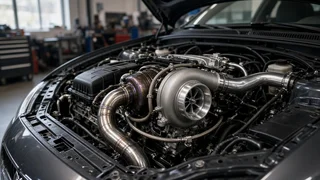
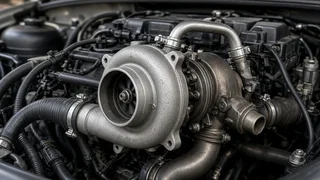
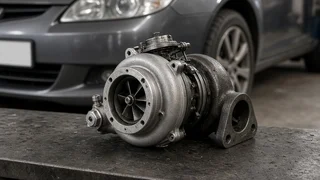
Muscle car turbocharger

Adding forced induction to a classic V8 platform changes more than peak power. A muscle car turbocharger uses exhaust energy to spin a compressor, packing the cylinders with denser air so the engine can burn more fuel on each stroke. That approach suits the big displacement and strong low-end personality of American performance cars, but it also reshapes throttle response, underhood packaging, and the exhaust note. The right setup depends on matching the turbo to the engine’s airflow, compression ratio, and intended use rather than simply chasing the largest boost pressure number.
Essential answer
A turbocharger on a muscle car serves the same basic purpose as on any gasoline engine: it recovers heat and velocity from the exhaust to drive a turbine wheel, which spins a compressor wheel on a shared shaft. The compressor pulls filtered air in and forces it through the compressor outlet toward the intake manifold. Because the air is compressed, each cylinder receives a greater mass of oxygen than a naturally aspirated engine would draw by vacuum alone. The fuel system can then add a proportionally larger amount of gasoline, producing a stronger combustion event and a substantial gain in crankshaft torque.
The character of a turbocharged muscle car depends heavily on turbo sizing, boost pressure management, and charge-air temperature. A large turbo may flow well at high rpm but feel soft when the throttle is opened at low speed, while a smaller unit spools sooner but can become a restriction as engine speed climbs. Heat from compression also reduces air density, so an intercooler is usually part of a well-integrated system. These supporting pieces matter because a muscle car with a tall final drive and a heavy body rewards broad midrange torque more than a narrow top-end power spike.