Motorcycle Floorboard Extensions for Legroom: What to Check Before You Buy
The short answer
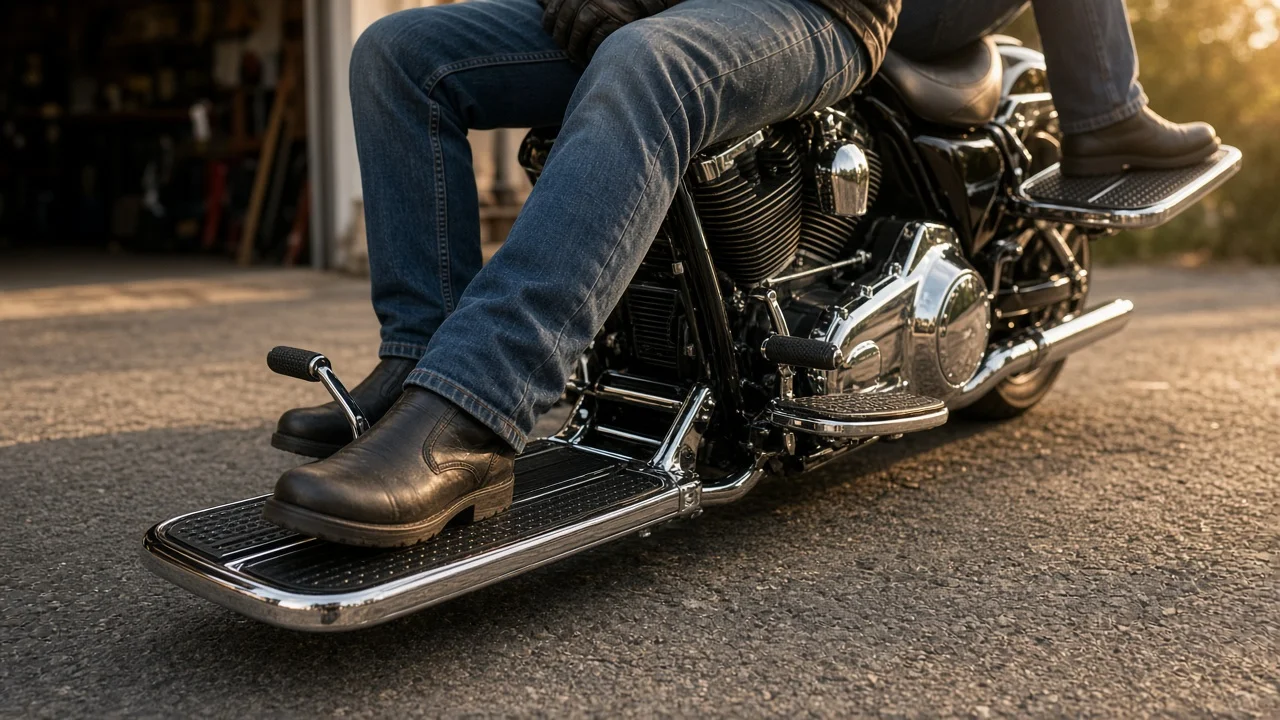
Floorboard extensions, often sold as relocation brackets or extension kits, move a motorcycle's floorboards farther forward, lower, or both. That opens up the knee angle and can make a cruiser or touring bike more comfortable for a taller rider or passenger. They are a reasonable fix when the cramped feeling comes mainly from foot position. They are less likely to help if the problem comes from the seat, the handlebar reach, or the overall size of the bike.
Three conditions change the answer. First, a kit only works if it is made for your exact make, model, model year and floorboard style. Second, rider floorboards are tied to the brake pedal and shifter, so moving the boards without moving those controls can leave them awkward or unsafe to reach. Third, lowering the floorboards reduces cornering clearance, so the boards will touch the road sooner when the bike leans.
What floorboard extensions do
Floorboards are the wide, flat foot platforms used on many cruisers and touring motorcycles in place of narrow footpegs. Extensions mount between the frame or the original floorboard mount and the board itself. They change where the board sits relative to the seat. Some kits offer only one offset. Others have several mounting positions so the board can be set forward, down, or at an angle.
Moving the board forward mainly straightens the leg. Moving it down mainly opens the angle between thigh and shin. Which helps more depends on your inseam, your seat height and where your knees sit now. Before buying, sit on the bike in your normal riding position and note whether your knees feel too high, too far back, or both.
Rider vs. passenger floorboards
Rider and passenger floorboard extensions are usually separate products, and they raise different issues.
• Rider floorboards: The brake pedal sits next to the right board and the shifter next to the left. A kit that moves only the board can leave your foot too far from the controls. Check whether the kit includes, or needs, matching brake pedal and shifter relocation parts or linkage extensions. • Passenger floorboards: These carry no controls, so the main concerns are clearance from the exhaust, saddlebags and the rider's legs. Also check that the passenger's feet stay clear of hot parts and moving components.
What to check when choosing a kit
• Exact fitment: Confirm the make, model, model year and trim the kit is listed for. Frame and floorboard mounts can change between model years and between families within one brand, so a kit for one year range may not fit another. • Floorboard style: Some bikes use different board shapes or mounts by trim. Confirm the kit matches the boards on your bike, not just the model name. • Direction and amount of adjustment: Check whether the kit moves the board forward, down, or both, and whether it offers several positions. Adjustable kits help if you are not sure how much change you need. Compare the offsets the manufacturer lists against what you found sitting on the bike. • Control reach: For rider boards, check how the brake pedal and shifter will be repositioned, including heel-toe shifters if fitted. • Ground clearance: Lower boards scrape sooner in corners. If you ride twisty roads or lean the bike hard, a forward-only position may suit you better than a lowered one. • Interference: Check clearance to the exhaust, crash bars, saddlebags, kickstand and other accessories already on the bike. • Hardware and materials: Look for complete mounting hardware, a finish that resists corrosion, and clear installation instructions. • Returns: Fit can be hard to judge until a kit is installed, so check the seller's return terms before ordering.
Installation and safety
Floorboard mounts carry your weight, and on the rider side they work alongside the rear brake and shifter. Follow the kit maker's instructions and the bike manufacturer's torque specifications. If the job involves brake pedal linkage or other brake components and you are not confident doing it, have a qualified technician install it. After installation, check while stationary that you can work the brake and shifter fully and comfortably. Then test at low speed before riding normally.
Warranty considerations
In the US, federal warranty law generally prevents a manufacturer from voiding a whole warranty just because aftermarket parts are installed. However, the manufacturer can deny a claim for damage it shows the aftermarket part or its installation caused. Keep receipts and installation records. If your bike is under warranty, read the warranty terms or ask your dealer how they treat accessory mounting changes.
When another change may work better
If extensions alone won't fix the problem, other options include a seat that places the rider farther back or higher, forward controls that move the rider's feet well ahead of the stock position, or highway pegs for stretching out on long straight stretches. Highway pegs add a second foot position for cruising. They do not replace a comfortable main riding position, because the controls stay at the floorboards.
Gaps in this guide
This guide does not cover specific products, prices, offset measurements or model-by-model fitment, because no verified data on these was available. Confirm dimensions, fitment lists and included parts with the kit manufacturer or a dealer for your exact bike before buying.