Most reliable cars to buy
The short answer
No single top 10 list of reliable cars stays accurate for long, and this guide does not publish one. The evidence behind it contained no verified rankings, survey scores, model names or test results, and naming specific cars without that support would be guesswork. What it can give you is a dependable way to build your own shortlist of reliable cars and confirm that the individual vehicle you buy matches that reputation.
One condition changes the answer more than any other. Reliability belongs to a specific model year, powertrain and sometimes trim, not to a model name or brand in general. A car with a strong record in one generation can perform differently after a redesign, an engine change or a new transmission. Check any ranking you find against the exact version you are considering.
Why reliability rankings shift between model years
Manufacturers redesign models every few years. A redesign can bring a new engine, transmission, electrical system or infotainment unit, and new components have no track record yet. The first model year of a new generation therefore carries more uncertainty than later years, after early faults have been identified and corrected.
The powertrain also matters within a single model year. The powertrain is the engine or electric motor plus the transmission and the parts that deliver power to the wheels. The same model may be sold with a gasoline engine, a hybrid system or a fully electric drive, and each can have a different reliability record. Treat these as separate cars when you compare data.
Where US reliability data comes from
Owner surveys: Consumer Reports publishes predicted reliability ratings based on problems reported by owners in its annual surveys, broken down by model and model year. Dependability studies: J.D. Power's Vehicle Dependability Study counts problems reported by original owners of roughly three-year-old vehicles and expresses the result as problems per 100 vehicles. Recall records: The National Highway Traffic Safety Administration (NHTSA) keeps a public database of safety recalls and owner complaints, searchable by model or by a vehicle's 17-character VIN (vehicle identification number). Technical service bulletins: Manufacturers issue these repair instructions to dealers for known issues that are not safety recalls. They are filed with NHTSA and can show recurring problems for a given model year.
Each source measures something different, so a model that does well in several of them is a stronger candidate than one that does well in only one.
Signal | What it tells you | Main limitation; Owner survey ratings | How often owners report problems, by model year | Depends on who responds; predictions for new or redesigned models rely on limited data; Dependability study results | Problem rate after about three years of ownership | Reflects vehicles from several model years ago, not the current design; Recall history | Safety defects the manufacturer has acknowledged | Does not cover non-safety faults or wear-related costs; Owner complaints and service bulletins | Recurring issues with specific components | Complaints are unverified, and the volume depends partly on how many cars were sold; Individual vehicle records | How one particular car has been maintained and repaired | Records may be incomplete or missing
How to build your own top 10 shortlist
Start with your use case: body style, seating, cargo needs, budget and whether you want new or used. List candidate models that fit, then write down the exact model years, powertrains and trims you could realistically buy. Check owner survey and dependability data for each of those exact versions, not just the model name. Flag first-year-of-generation versions and any new engine or transmission, and give them less weight unless their data is already strong. Search recall and complaint records for each version and note any recurring problem areas such as transmissions, engines or electrical systems. Keep the versions that look consistently good across sources. The result is a shortlist suited to your needs, which is more useful than a general ranking.
What to check before buying a specific car
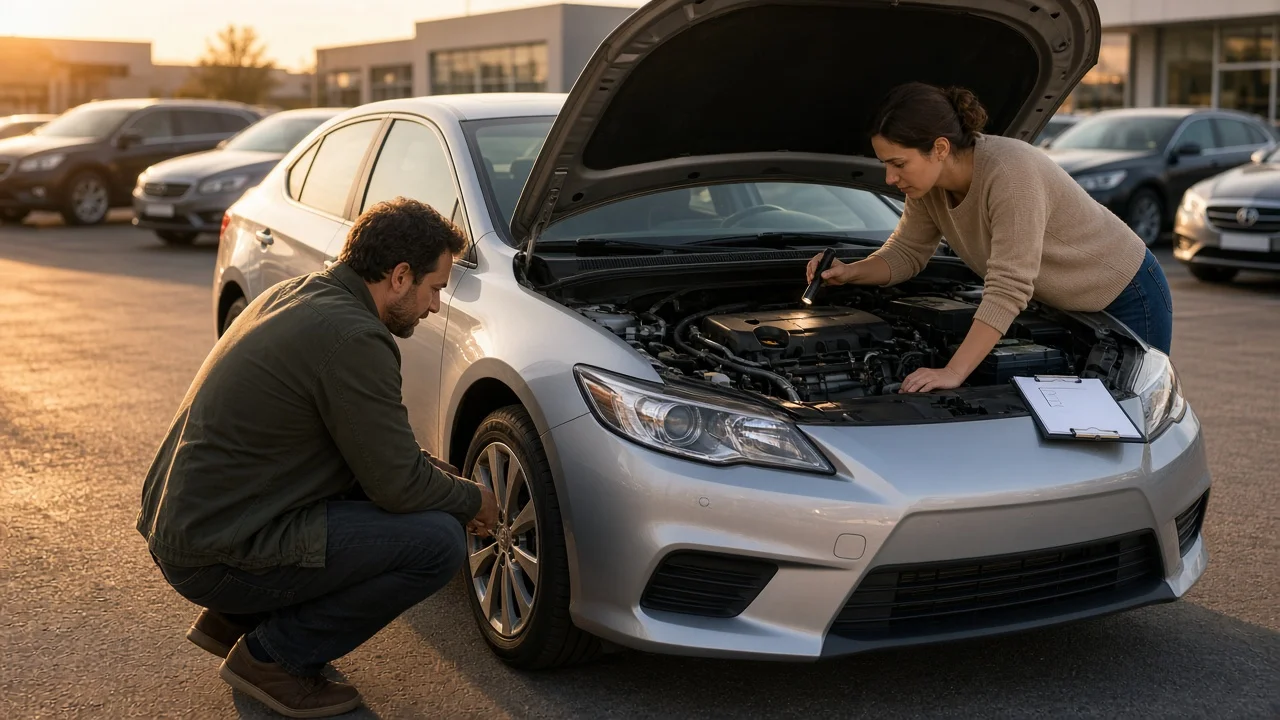
A model's reputation tells you about the average car. The vehicle you buy still needs to be checked on its own, especially if it is used.
Run the VIN through NHTSA's recall lookup and confirm that open recalls have been completed. Get a vehicle history report to check for accidents, title problems such as salvage or flood branding, and odometer inconsistencies. Ask for maintenance records and confirm that routine service, especially oil changes and fluid services, was done at reasonable intervals. Have an independent mechanic carry out a pre-purchase inspection before you commit. Confirm what warranty coverage remains, whether factory, certified pre-owned or extended, and what it excludes. For hybrids and electric vehicles, ask about the condition of the high-voltage battery and whether any battery warranty transfers to you.
What this guide cannot confirm
The source material for this article did not include current reliability rankings, survey scores, prices or model-specific results, so it does not name particular cars or claim that one brand outperforms another. Before you decide, look up current data for the exact model year, market, trim and powertrain you are considering, and use the checks above to confirm that the specific vehicle matches that record.