Most Reliable AWD Cars: What to Buy and What to Check
The short answer
In the US market, the AWD vehicles with the strongest long-term reliability reputations usually come from Toyota and Lexus, especially their hybrid crossovers. Honda, Mazda and Subaru follow closely, and many shoppers include them on the same shortlist. The brand name is only the starting point, though. Reliability belongs to a specific model year, engine, transmission and AWD system, not to a badge. A well-regarded nameplate can have one weak generation, and a first-year redesign often carries more risk than a model in its third or fourth year of production. Narrow your search to a specific model year and powertrain, then check that exact combination.
What "reliable AWD" actually means
An AWD car has two layers of reliability: the base vehicle (engine, transmission, electronics) and the hardware that sends power to all four wheels. Most problems owners report come from the first layer. The drive configuration still matters, because each type of system adds different parts that need maintenance and can fail.
On-demand (part-time) AWD: The car drives mainly through the front wheels and engages the rear axle through a clutch coupling when it detects slip or expects it. This is common in compact crossovers. The design is simple and efficient, but the coupling and rear differential fluid need periodic service. Full-time AWD: All four wheels are driven continuously through a center differential or coupling. It gives consistent traction on mixed surfaces. It has more rotating parts in constant use, and it is more sensitive to mismatched tires. Electric AWD in hybrids: An electric motor drives the rear axle, and no driveshaft runs from front to back. This removes the transfer unit and propshaft, the mechanical parts most likely to wear. The tradeoff is that rear-axle power is usually modest. Part-time 4WD (trucks and body-on-frame SUVs): This is a different system from AWD. You engage it manually, often with low-range gearing. It is very durable for off-road use but is not intended to stay engaged on dry pavement.
AWD models commonly shortlisted for reliability
The table lists vehicle families that frequently appear in reliability-focused shortlists. It is a guide to where to start your research, not a ranking. Results vary by generation and powertrain, so confirm the details for the exact model year and trim you are considering.
Vehicle family | Typical AWD type | What to verify for the specific year; Toyota RAV4 / RAV4 Hybrid | On-demand mechanical (gas) or electric rear motor (hybrid) | Which AWD system the trim uses; hybrid battery and inverter warranty status; Lexus NX / RX (including hybrids) | On-demand or electric rear motor, depending on powertrain | Powertrain-specific service history; first-year redesign status; Toyota Highlander / Highlander Hybrid | On-demand mechanical or electric rear motor | Engine generation; AWD system on the chosen trim; Honda CR-V / Honda Pilot | On-demand clutch-based AWD | Engine and transmission for that generation; rear differential fluid service; Mazda CX-5 / CX-50 | Predictive on-demand AWD | Engine option (turbo vs. non-turbo); rear differential and transfer unit service; Subaru Forester / Outback / Crosstrek | Full-time AWD, standard on most of the lineup | CVT fluid history; engine-specific known issues for the model year; Toyota 4Runner / Tacoma | Part-time or full-time 4WD, depending on trim | Whether the trim is 4WD or 2WD; transfer case condition and off-road use
Where AWD reliability problems usually come from
When AWD hardware itself fails, the cause is usually neglected maintenance rather than a design flaw. These are the most common points of wear:
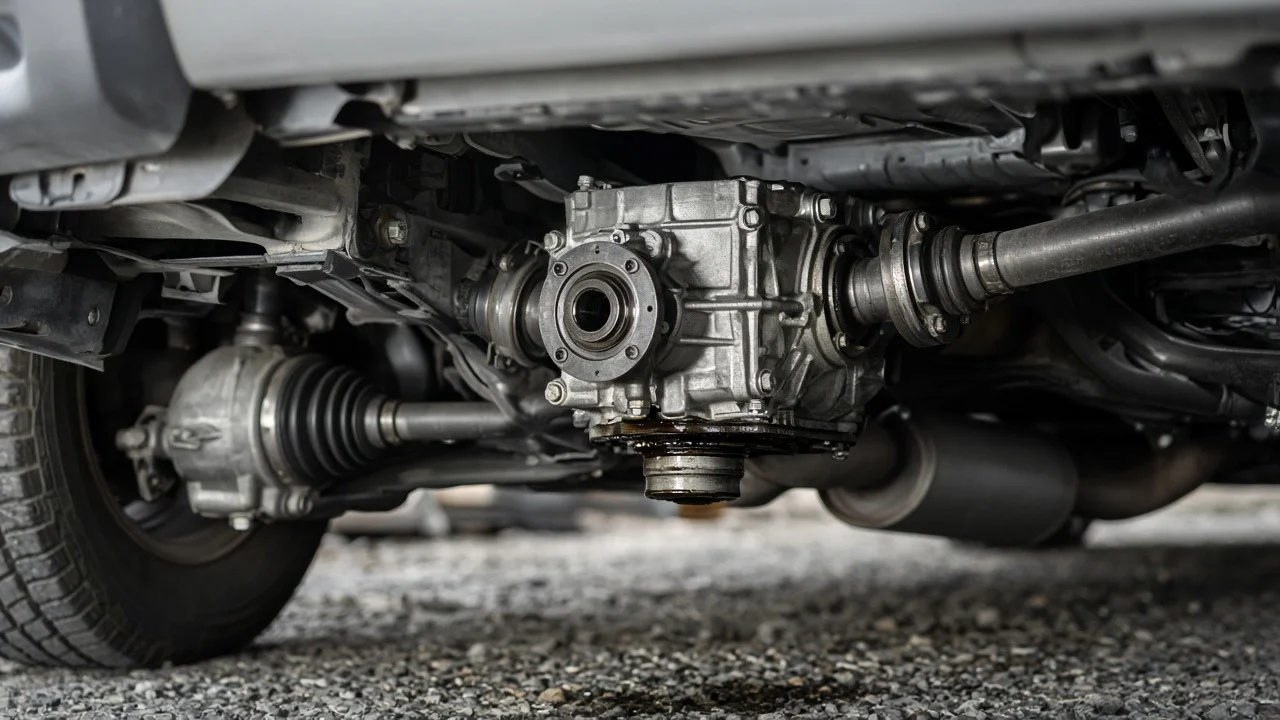
Transfer unit (power take-off) on front-drive-based systems: It sits close to the exhaust and engine heat. Its fluid can break down if it is never changed. Rear differential and coupling: Many owners never service these fluids, because some maintenance schedules list them only under severe-use conditions. CVT and automatic transmissions: Many AWD crossovers pair the system with a continuously variable transmission. Fluid condition and service history matter more than the AWD hardware. Driveshaft joints and center bearings: These wear gradually and usually show up as vibration or clunking when you pull away. Software and sensors: Modern systems rely on wheel-speed sensors and control modules. A faulty sensor can disable AWD or trigger warning lights.
Why tire specification matters more on AWD
AWD systems assume all four tires roll at almost the same speed. If one tire has a different size, brand or tread depth from the others, the drivetrain constantly compensates for the difference. Over time this can strain the coupling or center differential. For that reason, many manufacturers recommend replacing all four tires together, or shaving a new tire down to match the others when only one needs replacing. When buying, check that all four tires match the size on the door-jamb placard and are the same model with similar tread depth. Mismatched tires on a used AWD car are a warning sign, and they also add an immediate cost.
Match the AWD system to your use case
A reliable car that is wrong for your driving will still disappoint you. Choose the drive configuration based on the terrain and conditions you actually face.
Snow, rain and paved roads: Any well-maintained AWD crossover is adequate. Winter tires often improve traction and braking more than the choice of AWD system does. Gravel, dirt roads and unplowed driveways: Ground clearance becomes important. Look for models with more clearance and all-terrain tire options. Regular off-road trails: Consider body-on-frame 4WD with low range. Check for factory recovery points, which are rated tow hooks or mounting locations used to pull a stuck vehicle free. Many crossovers have only light-duty transport tie-downs that are not meant for recovery. Towing: Check the tow rating for the specific trim and powertrain. AWD alone does not raise towing capacity, and hybrid versions sometimes have different ratings.
Checklist before buying a used AWD car
Confirm that the car actually has AWD. Many nameplates are sold in both FWD and AWD versions, and listings sometimes get this wrong. Ask for service records covering transmission fluid, transfer unit fluid and rear differential fluid. Check for open recalls using the VIN. Inspect all four tires for matching brand, size and tread depth. Test drive with slow, tight turns in a parking lot. Binding, shuddering or clunking can point to AWD coupling or differential problems. Listen for whining or humming at highway speed, which can indicate worn differential bearings. Look under the car for fluid leaks around the rear differential and transfer unit. Check for underbody damage or heavy scraping, which can suggest hard off-road use. Have an independent mechanic do a pre-purchase inspection, ideally one familiar with that brand's AWD system.
Ownership trade-offs to weigh
AWD usually costs more to buy and to maintain than the same car with front-wheel drive. Fuel economy is typically slightly lower, there are extra fluids to service, and tires need replacing in sets. Hybrid AWD systems with an electric rear motor reduce mechanical wear points. They do add hybrid components, so check warranty coverage on a used example. If you rarely see snow or unpaved roads, a FWD version of a reliable model with good tires may be the simpler choice. If you need AWD, the most dependable approach is a proven model year with complete service records and four matching tires.