Michelin Tire Tread Depth Gauge

Checking tread depth is one of the fastest ways to judge whether a tire still has safe wet-weather grip and predictable handling. A Michelin tire tread depth gauge turns that visual guess into a repeatable measurement you can compare across the tread face and between axles. Wear does not always happen evenly, and a low spot hidden in a groove can change braking distance even when the outer shoulder looks acceptable. The right tool also helps with drivetrain compatibility decisions, since replacing only two tires can matter when tread depths differ meaningfully.
The direct answer
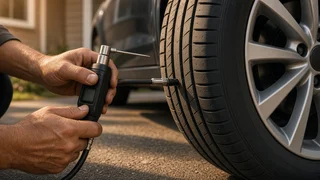
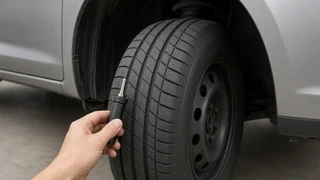
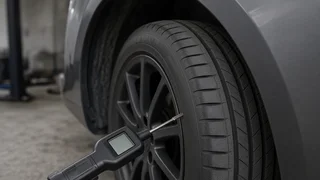
A Michelin-branded tire tread depth gauge is designed to measure the remaining height of a tire's main grooves so you can tell whether a tire is near the wear bars or already past a safe service limit. Most gauges use a probe that drops into the groove, and the reading appears on a small scale or digital display. The direct value is helpful because a tread pattern that still looks deep near the tire size lettering or sidewall can be misleading; the center rib or an inner groove may be noticeably more worn.
This measurement matters most when you are comparing the same axle or deciding whether one tire can be paired with a newer one. Even without specific Michelin specifications, general tire practice treats consistent readings across the tread face as a better sign than a single high number at one point. A large difference between grooves, or between the left and right tire, points to inflation pressure, alignment, or suspension wear rather than simply age. The gauge gives you the condition that changes that answer.
Using the tool also connects tire condition to the information already required for ownership decisions. Tread depth influences how a replacement matches the existing set, but the vehicle placard remains the source for inflation pressure, tire size, load index, and speed rating. A wear measurement does not override those requirements; it adds a separate layer of evidence about remaining performance. If a tire measures near the legal or manufacturer-indicated wear point, the practical next step is replacement before the safety margin disappears.
When you shop for a gauge, the important feature is whether the scale is easy to read and whether the probe seats repeatably in the groove. The measurement should be taken in several places because a tire wears in a pattern shaped by the drivetrain and driving style. A cheap gauge that slips or gives different readings in the same spot is less useful than a simple one that repeats. The goal is not a perfect number to a hundredth of an inch but a reliable comparison over time.