Michelin Digital Tire Gauge with Tread Depth Indicator
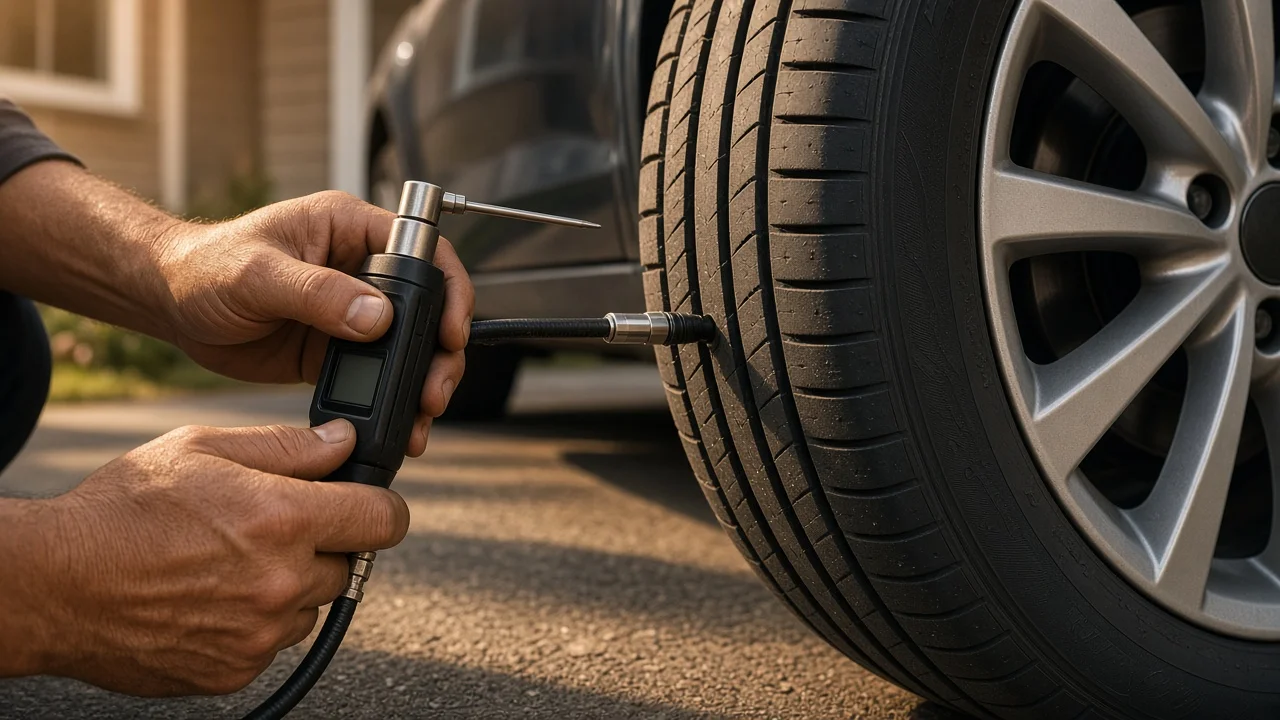
Choosing a Michelin tire tread depth and pressure gauge means getting one simple tool that answers two important roadside checks. The Michelin Digital Tire Gauge with Tread Depth Indicator combines a pressure reading and a sliding probe so you can monitor inflation and remaining tread in the same inspection. This is useful when a low tire light appears, before a trip, or when you notice uneven wear. The following explanation covers what this digital gauge does, how to read the results, and what the reading does not prove by itself.
The direct answer
The direct answer is that this Michelin tire tread depth and pressure gauge is designed to measure tire pressure and tread depth in one handheld digital tool. The pressure side checks inflation against the vehicle specification, usually found on the driver’s door jamb or in the owner’s manual, not the maximum figure molded on the tire sidewall. The tread side uses a sliding depth indicator to show how much tread remains across the contact patch. This combined check helps you decide whether a tire needs air, rotation, or replacement planning.
A meaningful result depends on how the measurement is taken. The pressure reading requires a firm connection at the valve stem so no air leaks during the test. The tread probe should be pushed against a main groove, not a wear bar, because the wear bar is already the minimum-height marker. Digital displays reduce the interpretation error common with a bouncing needle or a hard-to-read scale, but the accuracy of the tool should be confirmed by a repeat reading. The gauge gives evidence for a decision; it does not identify the cause of pressure loss or uneven tread wear by itself.