Mercedes M276 timing marks
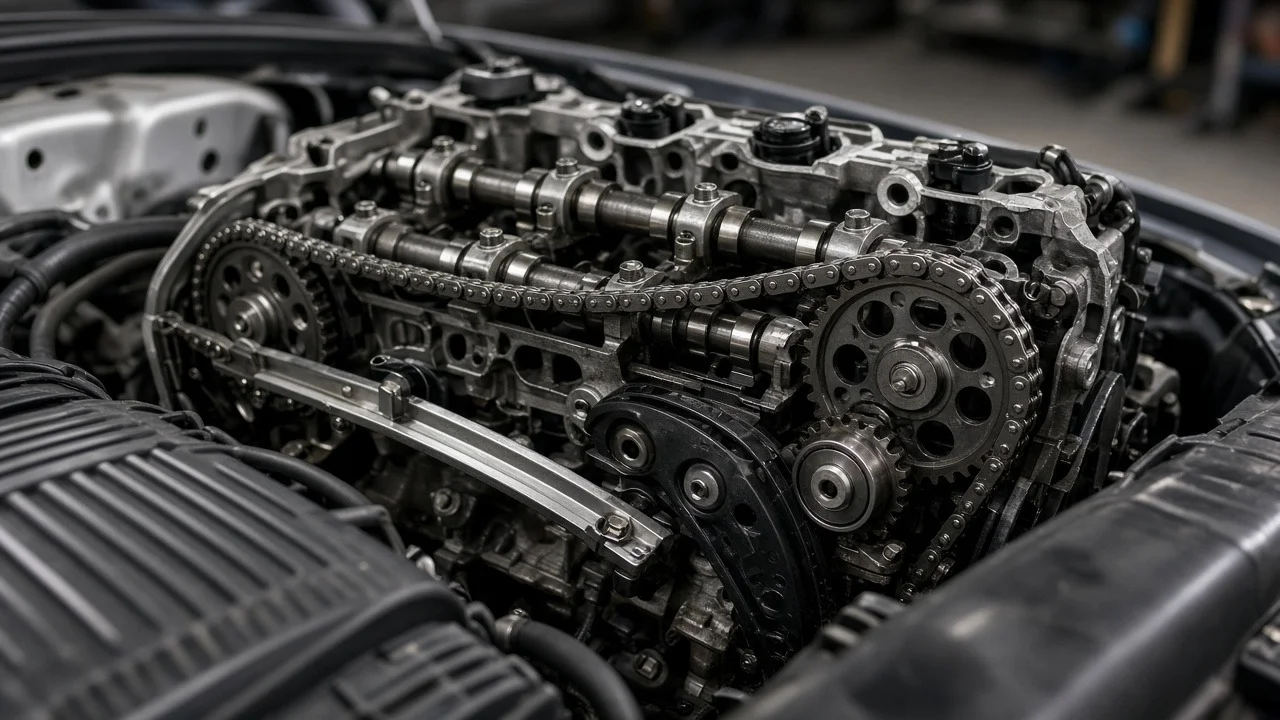
The Mercedes-Benz M276 V6 uses a chain-driven valvetrain, so timing marks matter differently than on a belt engine. A search for “chain mercedes m276 engine timing marks” usually reflects an owner or technician checking camshaft and crankshaft alignment during reassembly, or trying to understand whether a running concern points to chain wear. Because the timing components sit behind covers and require careful indexing, the markings are reference points for verifying engine configuration and detecting skipped timing before internal damage occurs.
Essential answer
On the M276, timing marks align the crankshaft and camshaft drive so the four-stroke cycle stays synchronized across both cylinder banks. Unlike a belt that may have clearly visible external marks, this engine uses internal chain sprockets and colored or stamped links that must line up with specific sprocket positions. A change in that relationship can shift valve events enough to create rough running, misfires, or timing-related diagnostic codes without necessarily producing a loud mechanical failure.
The most useful first interpretation is that timing marks are setup and inspection references, not a self-contained diagnosis. If a code or noise suggests a jumped chain, the presence of marks lets a technician compare actual cam timing against manufacturer specifications. Service history also matters here. Confirming whether the engine was recently opened, had tensioner work, or shows oil-pressure-related wear helps distinguish an assembly error from progressive chain stretch or a failed guide.