Mercedes M270 timing chain
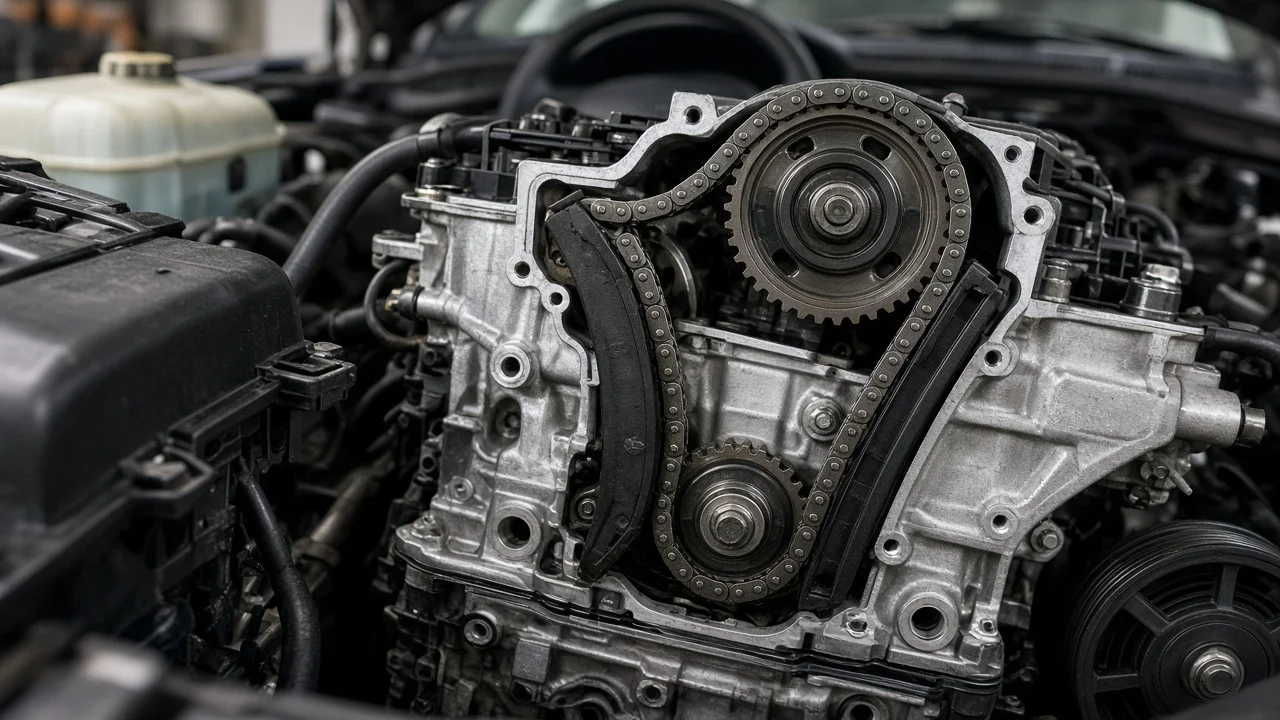
The Mercedes M270 timing chain question usually begins with an owner noticing a cold-start rattle, an occasional rough idle, or a stored diagnostic code that points toward camshaft position correlation. Understanding what this chain does and how it differs from a belt helps separate normal engine noise from wear that deserves attention. The M270 is a compact four-cylinder engine configuration used in several transverse applications, and its timing chain lives inside the front cover where lubrication and tensioner behavior shape service life. Reading symptoms carefully matters more than assuming the chain has stretched simply because a fault appeared.
Essential answer
The M270 engine timing chain synchronizes the crankshaft and camshafts so the valves open and close in correct relation to piston movement. Unlike an external timing belt, this chain is internal and relies on engine oil, guides, and a tensioner to maintain precise control. When wear, tensioner degradation, or chain elongation alters that relationship, the engine control system may detect a correlation error between the crankshaft and camshaft position sensors. The essential answer is that the chain is a critical wear component whose condition is inferred from symptoms and diagnostic codes, not confirmed by a single fault alone.
Service history and symptom conditions shape how a fault should be interpreted. A cold-start rattle that fades quickly may indicate brief tensioner bleed-down, while persistent noise during warm operation suggests deeper wear. Diagnostic codes related to camshaft position correlation can be produced by oil control issues, sensor problems, or wiring faults as well as true chain stretch. Because manufacturer-dependent codes require vehicle-specific confirmation, inspection through the specified timing cover service point or measured camshaft timing deviation is typically used to establish whether the chain is genuinely out of specification.