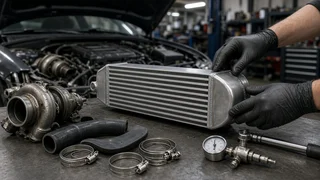
Volvo turbo intercooler

A Volvo turbo intercooler is a heat exchanger positioned between the turbocharger's compressor outlet and the engine's intake. Its job is to lower charge-air temperature after compression. Compressing intake air raises its heat, which reduces density and can encourage knock. Cooling the charge restores density for more complete cylinder filling and helps protect the engine under sustained boost. On Volvo models, this component must manage boost pressure, hose connections, and occasional oil contamination without creating excessive pressure loss.
Essential answer
The intercooler cools the compressed intake charge before it enters the combustion chambers. When the turbocharger compresses air, the air heats significantly, and hot intake air carries less oxygen per unit of volume. Passing that heated charge through the intercooler removes heat, making the air denser and improving combustion consistency. For a Volvo, the part is designed to fit within the front intake path and support the engine's expected boost pressure without becoming a restriction.
Because the intercooler sits after the compressor outlet, it also collects residue carried through the turbo system. Oil contamination from crankcase ventilation or turbocharger seals can pool inside the core, reducing its ability to transfer heat. A damaged hose connection or a cracked end tank can create a boost leak, causing pressure loss and rough running. The essential answer is therefore practical: the intercooler makes turbocharged intake air cooler and denser, but its condition directly affects how the Volvo builds and holds boost.