Toyota Camry Steering Angle Sensor
A Toyota Camry steering angle sensor gives the stability control system a live measurement of where the driver is pointing the front wheels. When that signal becomes implausible, the vehicle may disable traction or stability assistance and illuminate a warning light. Understanding what this sensor does, why it matters, and how it interacts with steering and suspension components helps owners interpret symptoms accurately before assuming a part has failed. The measured data should always be viewed as a clue rather than a final diagnosis, because wiring, alignment, and module states can all affect the reported angle.
Essential answer
The steering angle sensor on a Toyota Camry is an electronic input used primarily by the anti-lock brake and stability control systems. It reports the rotational position of the steering wheel and the rate at which that position changes. The vehicle compares this report with inputs such as yaw rate, wheel speed, and lateral acceleration to judge whether the car is following the driver’s intended path or beginning to slide. When the correlation fails, the system may reduce engine torque or apply individual brakes, and it may also store a diagnostic code that points toward the steering angle circuit or sensor performance.
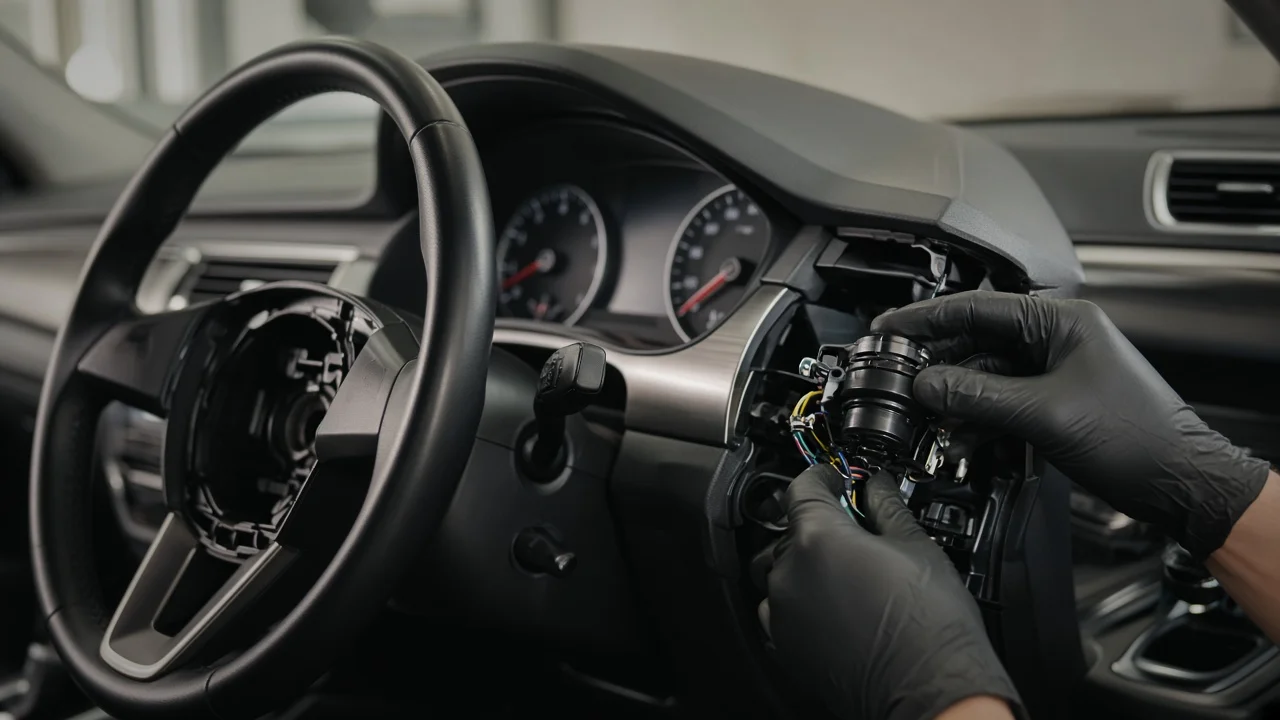
The sensor is not a standalone wear item in the same way as brake pads or suspension bushings. It can be housed within the steering column, combined with a clockspring assembly, or integrated into another steering component depending on the generation and trim. Because there is no single exact location or service interval supported here, the practical point is that a Camry with an angle sensor diagnostic should have the related wiring, recent alignment changes, and steering column mounting condition evaluated. A stored code shows that the module lost confidence in the signal, not that any one component must be replaced.