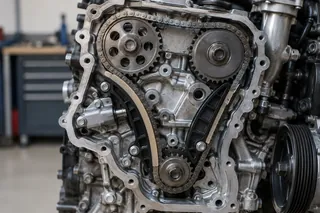
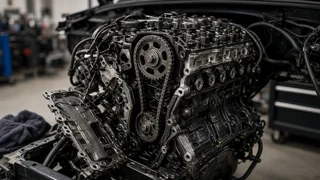
Timing Chain Tensioner
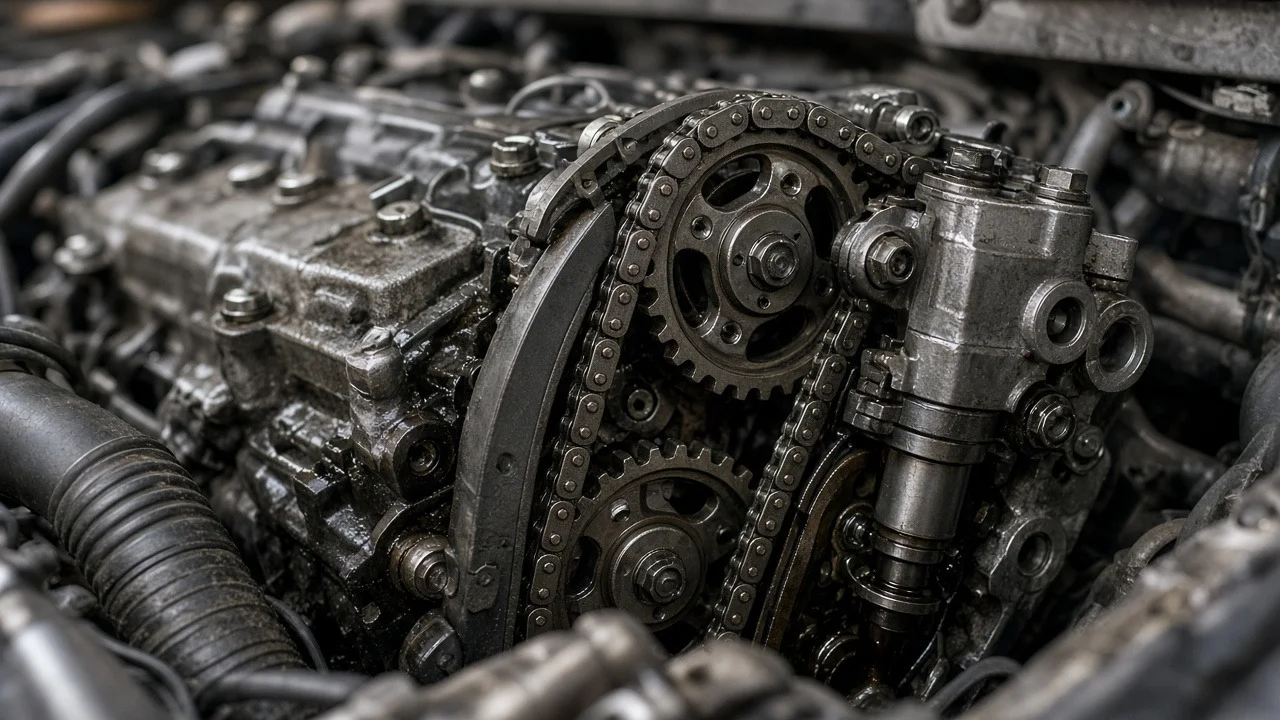
A timing chain tensioner is a small but critical component that keeps the engine timing chain under controlled tension. When it weakens, leaks, or sticks, the chain can develop slack that alters valve and ignition timing. This produces distinct cold-start rattles, warm-engine ticks, and sometimes illumination of diagnostic codes related to camshaft or crankshaft correlation. Understanding how the tensioner works, what noises mean, and which conditions worsen them helps an owner assess the risk before wear damages the chain guides or allows the chain to jump timing.
Essential answer
An engine timing chain tensioner is a hydraulic or spring-loaded device that applies calculated force to a movable guide or directly to the timing chain. Its job is to remove excessive slack as the chain stretches slightly over its service life, while still allowing oil pressure to cushion the chain during rapid changes in engine speed. A healthy tensioner keeps the chain path stable across the full rev range, preserving the fixed mechanical relationship between the crankshaft and each camshaft.
How the tensioner differs from a belt tensioner matters because chains operate inside the engine and rely on engine oil for both lubrication and hydraulic pressure. Some tensioners use a ratcheting mechanism to hold a minimum position after oil pressure bleeds down, while others rely entirely on oil pressure once running. The exact design depends on engine configuration and manufacturer specifications, so a noise that appears only at start-up often points to bleed-down or sticking, while a constant rattle suggests permanent loss of tensioning force.