Apple Car Key on iPhone
Apple Car Key on iPhone replaces a conventional remote with a secure digital credential stored in the Wallet app. That credential can unlock, lock, and start a compatible vehicle using near-field communication, and some implementations extend the experience with ultra-wideband for hands-free access. For drivers researching a digital car key for iPhone, the practical questions are how the feature is added, what happens when the phone battery is low, and how access is shared. The technology remains manufacturer-dependent, so the exact behavior depends on the vehicle and the iPhone generation. Understanding that distinction prevents confusion when comparing cars or troubleshooting entry.
Essential answer
An iPhone digital car key is a virtual key stored in the Apple Wallet that can communicate with a vehicle’s access system. Unlike a mechanical key or a basic remote transmitter, the phone uses encrypted wireless signals and, on supported hardware, secure ranging. The phone acts as a credential rather than as a universal key fob. It cannot add keyless entry to a vehicle that lacks the required hardware; the vehicle must support the feature. That qualification matters because two cars with push-button start and passive entry may still differ in whether their manufacturer has enabled the digital car key app experience.
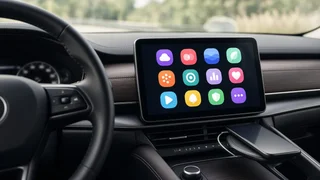
The system relies on credentials provisioned through the carmaker’s interface or a dealer workflow, and the iPhone stores that data inside Wallet. The phone then behaves like a smart access device: hold it near the door handle to unlock, place it in the designated reader area to start, or, with ultra-wideband-equipped vehicles, leave it in a pocket while the car detects proximity. Because access also depends on the vehicle’s immobilizer and body control modules, a failed connection does not automatically mean the phone is defective. It can indicate a pairing problem, a vehicle-side authorization issue, or an interruption in the secure element communication. Apple digital car key is best understood as a convenient credential carrier rather than a replacement for all vehicle access logic.
Power reserve can allow the digital car key to work for a limited period after the iPhone’s normal battery reserve is depleted, but this should not be treated as indefinite. The vehicle still has to recognize the phone through its near-field reader, so placement and interference can affect performance. Anyone setting up a digital car key for iPhone should also keep the physical key or an alternative entry method available if the carmaker’s guide requires it. The iPhone car key feature is designed to reduce dependence on a mechanical key, not to eliminate the need for proof of ownership or account access when adding or removing keys.