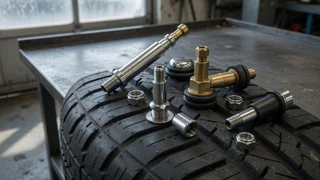
Replacing a Tubeless Bike Valve Stem
A tubeless mountain bike valve stem is the small but critical sealing component that lets air enter the rim while keeping sealant and pressure contained. Over time, a valve can become clogged with dried sealant, suffer a bent core, or develop a slow leak at its rubber base. Replacing a tubeless valve stem is a normal service task, not evidence of a larger rim or tire problem. The job mainly involves releasing tire pressure, loosening the retaining nut, installing a clean valve with a fresh base seal, and reinflating the tire so the bead seats firmly against the rim.
Essential answer
Replacing a mountain bike tubeless tire valve stem restores a reliable air seal where the valve passes through the rim. The valve stem itself is a threaded body, usually made of aluminum or brass, with a locknut and a shaped rubber base. That base must sit flat against the curved rim bed. When you notice air escaping around the base, a persistent slow leak, or a valve core that no longer holds a pressure gauge reading, a replacement is the direct fix. The tire does not have to be discarded, and the rim usually remains serviceable.
The exact fitting style and length depend on the rim profile. Some rims use a narrow channel suited to a conical rubber plug, while others seal better with a flat, oblong base. Before installing a new stem, the area around the rim hole should be clean and free of old sealant film. Replacing the complete stem is appropriate when cleaning or tightening the existing valve does not stop the leak. Because tubeless systems rely on a continuous rim-to-valve seal, the replacement must create full contact with the rim bed and allow the tire bead to seat normally.