Maruti Suzuki Alto: What It Is, Its Versions and How It Differs
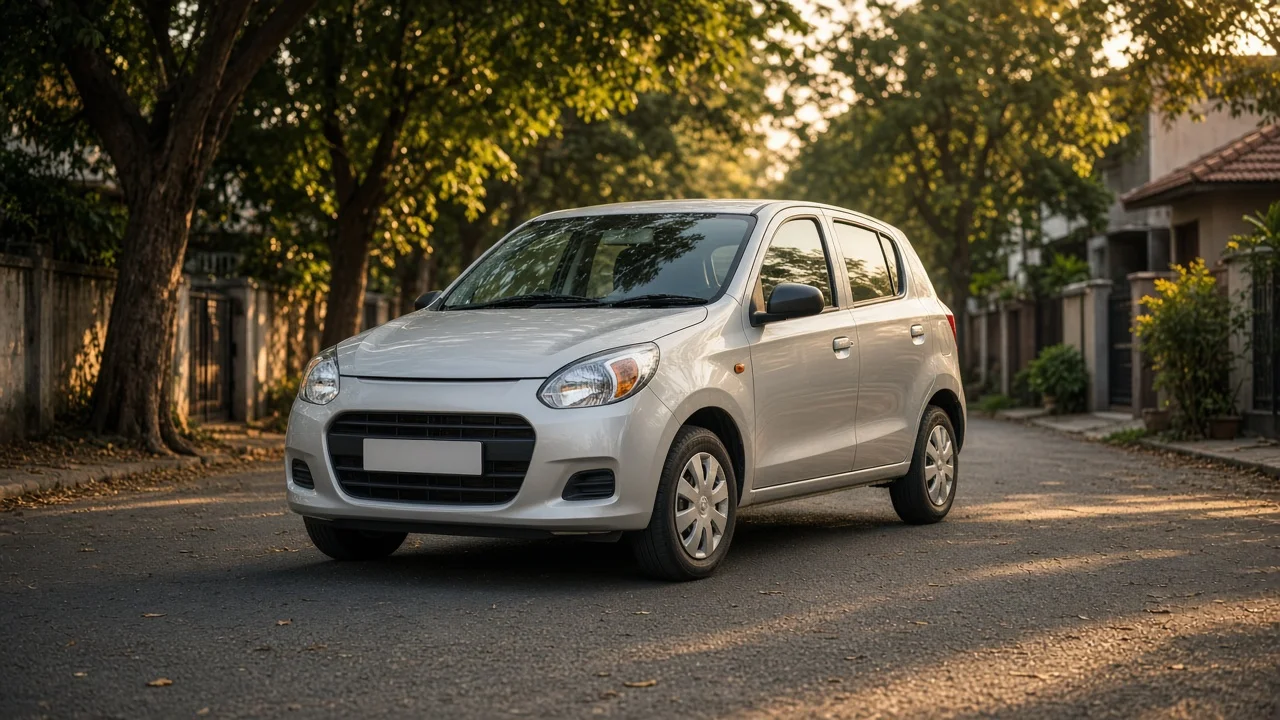
The Maruti Suzuki Alto is a small, entry-level hatchback built and sold mainly in India by Maruti Suzuki, the Indian affiliate of Japan's Suzuki Motor Corporation. For many Indian buyers it has been the most affordable way into a new car. If you are reading from the US, the most important point is that the Alto has never been sold new in America. The name belongs to a car designed for the Indian market, and to a lesser extent other markets in South Asia and beyond. It differs in important ways from the Suzuki Alto sold in Japan.
What the Maruti Suzuki Alto Is
The Alto is a five-door hatchback. Hatchback is a body style with a rear door that opens upward to reach the cargo area. Maruti Suzuki has positioned it at the bottom of its lineup, below models such as the S-Presso, Celerio and Wagon R. Its appeal rests on a low purchase price, compact dimensions suited to congested city streets, simple mechanicals and the very large Maruti Suzuki service network across India.
Over its life the Alto has been popular with first-time car owners, families moving up from two-wheelers, and fleet or commercial users who want low running costs. It is a basic urban car rather than a highway cruiser. Its strengths are cost and practicality, not performance, refinement or extensive features.
Model Generations and Main Versions
The Indian Alto has gone through several model generations, meaning distinct redesigns of body and platform rather than yearly updates. Along the way, Maruti Suzuki sold different versions side by side under related names. The two most commonly referenced are the Alto 800 and the Alto K10. When you research a used example or read an older review, check which version and which generation it covers. Equipment, safety features and engines changed between them.
Version | General positioning | Key distinction; Alto (original Indian generations) | Entry-level hatchback | Earlier designs that established the nameplate in India; Alto 800 | The most basic, lowest-priced Alto | Smaller three-cylinder petrol engine; prioritized low cost over power; Alto K10 | Slightly more upscale Alto | Larger K-series three-cylinder petrol engine; more performance and, in newer versions, an automated manual option
The Alto 800 has been withdrawn from sale in India. Stricter emissions and regulatory requirements made the most basic cars harder to justify. The Alto K10 has continued as the nameplate's current form, and a redesigned K10 has appeared in recent years. Market availability can change, so treat the current lineup as something to confirm at the time you are shopping.
Powertrain Configurations
Powertrain configuration refers to the combination of engine, fuel type and transmission. The Alto has consistently used small three-cylinder petrol engines driving the front wheels. Depending on version and model year, the main configurations have included:
Petrol engine with a manual gearbox, the most common setup; Petrol engine with an automated manual transmission, which Maruti Suzuki markets as AGS (Auto Gear Shift). It is a manual gearbox with automated clutch and gear changes. It is cheaper and simpler than a conventional automatic but less smooth; Factory-fitted CNG (compressed natural gas) versions, popular in India for lower fuel costs, typically paired with a manual gearbox
Exact engine outputs, fuel-economy ratings and transmission availability vary by generation, trim and market specification. Check the details for the specific car rather than assuming they carry across versions.
Trim Levels
Like most Maruti Suzuki models, the Alto has been offered in a ladder of trim levels, meaning equipment grades. Maruti Suzuki has typically labeled them with letter codes such as STD, LXi and VXi, with plus variants on some versions. Base trims have historically been very sparse. Higher trims add items such as power steering, air conditioning, power windows, central locking, an audio or touchscreen system and additional safety equipment. Which features appear in which trim has shifted over the years, so two cars with the same trim name but different model years may not be equipped the same way.
How It Differs From Other Suzuki Altos
The Alto name has been used by Suzuki for decades in several markets, and the cars are not interchangeable. In Japan, the Suzuki Alto is a kei car. That is a regulatory class of very small vehicles with strict limits on size and engine displacement, and it receives tax and insurance advantages there. The Japanese Alto uses different engines, platforms and equipment from the Indian Maruti Suzuki version, which is engineered for Indian roads, fuels, pricing and regulations.
Other markets, including Pakistan, have had their own locally produced or adapted Altos. These can share design elements with either the Japanese or Indian cars. When comparing information online, check which market specification a source describes before applying it to a particular vehicle.
Can You Buy a Maruti Suzuki Alto in the US?
Not new. Suzuki no longer sells passenger cars in the US, and the Maruti Suzuki Alto was never certified for American federal safety and emissions standards. A non-conforming vehicle generally cannot be imported and registered for road use unless it qualifies under the exemption for vehicles roughly 25 years old or older, or is brought into compliance through an approved process. Even an eligible older Alto would face practical problems in the US: limited parts, no dealer support and right-hand drive. Anyone seriously considering an import should confirm current rules with the relevant federal and state authorities before buying.
US shoppers who want a similar experience, a small, inexpensive and economical city car, will need to look at the subcompact and entry-level hatchbacks and sedans sold locally. No current US model is a direct equivalent of a car as basic and compact as the Alto.
Who the Alto Suits
In its home market, the Alto makes the most sense for buyers who prioritize low purchase and running costs, mostly drive in the city, and value easy access to service and parts. It is less suited to people who regularly carry several adults over long distances, want strong highway performance, or put advanced safety and comfort features near the top of their list. Small entry-level cars like the Alto have historically offered more modest crash protection and equipment than larger, pricier models. Safety-focused buyers should compare the specific generation and trim they are considering against alternatives.
In short, the Maruti Suzuki Alto is India's long-running budget hatchback. It is best understood through its versions, chiefly the Alto 800 and Alto K10, and through the generation, powertrain and trim of any particular car. It is a different vehicle from the Japanese kei-car Alto, and it is not a car you can buy new in the United States.