Manual Front Axle Actuator Options for Part-Time 4WD Trucks
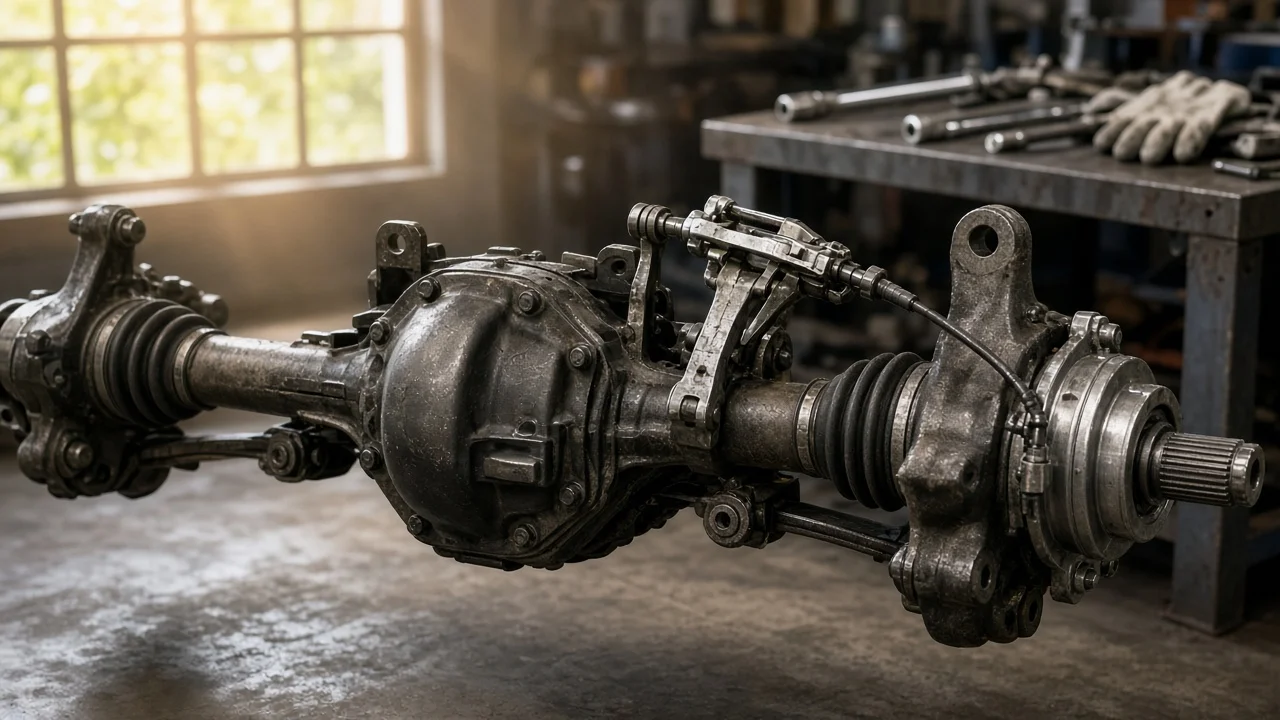
When a vacuum, electric or thermal front axle actuator fails, the front wheels may stop driving even though the transfer case reports 4WD. A manual front axle actuator replaces that automatic engagement with a cable, a lever or a fixed lock-in, so the driver controls the axle directly. Whether one suits your truck depends on its axle design, how the factory system is monitored and how you use the vehicle. This guide explains the main choices and what to confirm before buying.
Which manual option makes sense
Most owners choose among three manual approaches, plus a fourth path that is not manual at all. A cable-operated shift kit puts a lever or knob in the cab and connects it by cable to the axle shift fork, letting you engage and disengage the front axle yourself. A lock-in kit replaces the actuator with a part that holds the axle permanently engaged, so the front axle is always connected and only the transfer case decides whether the front wheels are driven. On axles designed to accept them, a manual locking hub conversion moves the disconnect point out to the wheel ends. The fourth path is repairing or replacing the factory actuator, which is often the simplest fix if the actuator itself is the only failed part.
The trade-offs are straightforward. A cable kit keeps the benefit of disconnecting the front axle in 2WD but adds a step you must remember. A lock-in kit is the simplest and has the fewest parts to fail, but it gives up that disconnect. A hub conversion depends heavily on axle and spindle compatibility. Buy only parts listed for your exact vehicle configuration.
How a front axle disconnect works
Many part-time 4WD trucks with independent front suspension use a center axle disconnect. One front axle shaft is split, and a sliding collar joins the two sections when 4WD is needed. The factory actuator moves a shift fork that slides this collar. Depending on the vehicle, the actuator may be a vacuum diaphragm controlled by a solenoid, an electric motor, or a heat-activated plunger. The vehicle triggers it when the transfer case is shifted into 4WD. In 2WD the collar separates, so the wheel side can spin without turning the differential and front driveshaft. Other designs place the disconnect at the wheel hubs instead.
A manual kit changes only how the collar or hub is engaged. A cable kit moves the same shift fork with a lever. A lock-in part holds the collar engaged at all times. Manual hubs connect or free each wheel by hand. In every case, the transfer case still has to be shifted separately. A manual axle actuator handles the axle side of 4WD, not the whole system.
What changes the answer
Axle design comes first. A center-disconnect axle, a hub-disconnect axle and a full-time 4WD system are different problems, and a kit made for one will not suit another. Even within one model name, axle hardware can change between model years or drivetrain packages. The factory electronics matter too. Some vehicles monitor the actuator through a position switch, and removing the actuator can leave the 4WD indicator unlit, store a fault code or change how the transfer case control module behaves. Some kits keep that switch in place, and others bypass it. Check how a kit handles this for your vehicle before you buy.
Operating conditions also shape the choice. An owner who relies on 4WD in snow, mud or remote areas may value the reliability of a lock-in kit and accept that the front differential and driveshaft turn whenever the vehicle moves. That added rotation can mean more wear on the front driveline, more noise and some extra drag. A driver who spends most of the time on pavement may prefer a cable kit that keeps the front axle disconnected. Cable kits route hardware under the vehicle, so exposure to salt, mud and debris affects how often they need cleaning and adjustment.
Confirm the actuator is actually the fault
Common symptoms of an engagement problem include no front drive in 4WD, engagement that comes and goes, a 4WD light that blinks or stays off, and clicking or grinding from the front axle. The actuator is a frequent cause but not the only one. On vacuum systems, look for a cracked hose, a leaking connection, a failed check valve or a faulty solenoid. On electric systems, check for a blown fuse, a corroded connector or damaged wiring. Mechanical faults, such as a worn shift fork or damaged collar teeth, will not be fixed by a new actuator of any type. A transfer case that is not fully shifting can produce similar symptoms.
Review the service history for earlier repairs to the axle, transfer case or wiring, and scan for stored codes if your vehicle supports it. A careful inspection before buying parts can show whether the problem is a simple hose or connector, whether a manual kit would solve it, or whether the axle needs internal repair first.
Choosing, installing and using a manual kit
Match the kit to your truck by model year, drivetrain and axle, using the VIN or axle identification where possible rather than the model name alone. Follow the manufacturer specifications in your service manual for fluid type, fill level and fastener torque, because a generic kit sheet may not reflect your axle. During installation, route the cable away from the exhaust, steering linkage and suspension travel, and adjust it so the collar engages fully. A collar that only partly engages can wear its teeth quickly. If the axle housing is opened, plan to replace any lost fluid.
Using a cable kit takes a little routine. Follow the kit instructions for when to engage. Many call for engaging while stopped or rolling slowly in a straight line, and the teeth may need a short roll forward to line up. Label the control clearly, and remember that the axle and the transfer case must both be engaged for front drive. Add the new hardware to your maintenance schedule: inspect and lubricate the cable, check the front differential fluid, and watch the front driveshaft joints more closely if the axle is locked in permanently.
Limitations and next step
This guide cannot confirm kit compatibility, wear rates or fuel economy effects for a specific vehicle. Those depend on the exact configuration and the kit maker's application data. Local inspection rules and any remaining warranty coverage may also affect whether replacing a factory system is acceptable, so check those before you modify the drivetrain. Get professional help if the axle grinds or jumps out of engagement, if you suspect damaged collar teeth or a worn fork, if the transfer case control module stores codes, or if 4WD engagement on your vehicle is tied to other electronic systems.
A practical next step is to write down your VIN, axle details, symptoms and recent service history, confirm the root cause, and then decide between repairing the factory actuator and choosing a manual option. That order prevents buying a kit for a problem it cannot fix.