Manheim Car Inspection: What to Check Before You Bid
At Manheim, you usually cannot take a car to your own mechanic before you bid. A Manheim car inspection is therefore assembled from three things: the seller's or auction's condition report, whatever you can check in person or remotely before the sale, and the post-sale protections the auction offers, such as a paid post-sale inspection and arbitration. If you buy without understanding those layers, an apparently cheap wholesale car can become expensive quickly. One condition changes everything else. Manheim is primarily a wholesale marketplace for licensed dealers and businesses. If you are a private buyer, you will generally need to buy through a licensed dealer or an auction-access broker, and your inspection options depend on what that intermediary can and will do for you.
How a Manheim vehicle inspection actually works
Wholesale auctions move large numbers of vehicles quickly, so buyers rely heavily on standardized information instead of a long test drive. A Manheim vehicle inspection combines several separate sources. They differ in who produces them, what they cover and how much protection they give you after the sale.
Source | What it tells you | Main limitation; Condition report | Recorded damage, photos, tire and paint notes, an overall condition grade, sometimes scan or mechanical notes | Snapshot taken at one point in time; coverage and depth vary by report and inspector; Seller announcements and auction lights | Known defects, title issues and the level of arbitration protection attached to the sale | Must be read carefully on every listing; announcements can narrow your rights; In-person preview | Your own look at the body, interior, fluids, start-up and warning lights | Often limited time and access; usually no lift or extended road test; Vehicle history report | Reported accidents, title brands, ownership and odometer records | Only shows what was reported; unreported damage does not appear; Post-sale inspection | A check after purchase against defined inspection criteria before you take full responsibility | Optional, paid and time-limited; covers specific items, not every possible fault; Arbitration | A formal route to dispute a sale when the vehicle does not match its disclosures | Strict deadlines and rules; announced conditions are usually excluded
Reading the condition report
The condition report is the closest thing to a pre-purchase inspection most auction buyers will get. Manheim reports typically include a numeric grade, damage descriptions with photos and notes on tires, glass, interior and accessories. The grade gives a quick summary, but do not use it as the decision. Two cars with the same grade can have very different problems, and a cosmetic-heavy grade may hide a minor mechanical note that matters more to your plans.
Read every damage line and look at the matching photo instead of relying on the grade alone. Note prior paint or repair indications, panel misalignment and mismatched color, which can point to past collision work. Check whether the report includes diagnostic codes or mechanical notes, and treat any engine, transmission or drivetrain remark as a reason to dig deeper. Look at tire condition and whether the tires match; replacing a full set adds to your cost. Confirm what the report does not cover. A report that says nothing about the engine has not cleared the engine. Check the report date. A vehicle that has been sitting or transported since the report may have changed.
Announcements and the auction light system
Auctions commonly signal the terms of each sale with announcements and a light system. In broad terms, a green light usually indicates the vehicle is sold with the auction's standard arbitration protections, a yellow light means specific announced conditions apply, and a red light means the vehicle is sold as-is with little or no arbitration. A separate indicator is often used when the title is not yet present. The exact rules can change and can differ between sale types, so read the current terms for the specific sale rather than assuming the color means the same thing everywhere.
Announcements matter because a defect the seller discloses usually cannot be arbitrated later. If a listing announces frame damage, a transmission issue, flood history or a title brand, you are accepting that condition when you bid. Read announcements as carefully as the condition report itself.
What to check in person if you can preview the car
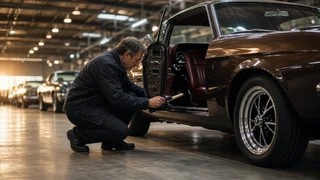
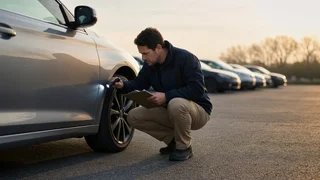
If you or your dealer can attend a preview, a focused walk-around can catch things a report misses. You will rarely have time for a full inspection, so prioritize the checks most likely to change your bid.
Vehicle identification: match the VIN on the dashboard, door jamb and paperwork, and confirm it matches the listing. Warning lights: start the engine if allowed and watch whether warning lamps come on at start-up and then go out. Lamps that never illuminate can hide a problem. Cold start: listen for knocking, ticking or rough idle, and look for smoke from the exhaust. Fluids: check oil level and appearance, coolant color and any signs of leaks under the vehicle. Body and structure: look for uneven gaps, overspray, replaced fasteners and signs of welding near structural areas. Water damage: check for musty odors, silt under carpets or in the spare-tire well, and corrosion on seat rails or wiring. Tires and brakes: look for uneven tire wear, which can indicate alignment or suspension problems. Electronics: test windows, locks, climate control, infotainment and any driver-assistance features the trim should have.
An inexpensive OBD-II scanner can show stored or pending fault codes and readiness monitors, if you are permitted to use one. Readiness monitors that are not set can mean the battery was recently disconnected or codes were cleared, which matters both for hidden faults and for passing a later emissions test.
Buying remotely: getting a third-party inspection
Many wholesale purchases now happen online, without anyone physically seeing the car. In that case, ask whether an independent inspection service can access the vehicle at the auction location before the sale. Availability depends on the location, timing and auction policies, so do not assume it is possible for every listing. Where it is available, a third-party inspection can add a second opinion on mechanical condition, but it is usually still limited by the auction setting and typically does not include a lift inspection or long road test.
Post-sale inspection and arbitration
A post-sale inspection is an optional, paid check carried out after you win the bid but before the transaction is final for arbitration purposes. It typically looks at defined inspection criteria such as frame or structural damage, major mechanical faults within its scope, odometer issues and whether the vehicle matches its listing. If the inspection finds a qualifying problem that was not disclosed, you may be able to return the vehicle or negotiate an adjustment under the auction's rules.
Arbitration is the formal dispute process. Manheim generally follows industry arbitration rules, with its own policies on top. The details that matter most are the deadline for raising a claim, which items are eligible, any minimum cost thresholds for mechanical claims, and how announcements and the light status limit your rights. Deadlines are short and strict, so arrange inspection and transport before the sale rather than after.
Decide before bidding whether you will buy a post-sale inspection for this vehicle. Check the claim window and plan transport so the car can be inspected inside it. Keep the condition report, listing photos and announcements as evidence of what was disclosed. Do not modify or repair the car before resolving any claim, because that can void arbitration.
Total cost: the hammer price is only the start
Compare any auction car against the full cost of getting it on the road, not just the winning bid. Prices and fees change by location and date, so check the current fee schedule for the specific sale. Also keep in mind that published sale results are completed transactions, while listing prices elsewhere are asking prices; they are not directly comparable.
Buyer fees, which typically increase with the sale price. Broker or dealer fees if you are buying through an intermediary. Optional post-sale inspection fees. Transport from the auction location, plus storage if pickup is delayed. Reconditioning: tires, brakes, fluids, detailing, keys and any repairs noted in the report. Title, registration, taxes and any required state inspection fees.
After the purchase: state inspections and registration
An auction inspection is not the same as a state inspection. Depending on where you register the car, you may need a safety inspection, an emissions test, a VIN verification or a combination of these, and the resulting test certificate may be needed before registration. Requirements and inspection criteria vary by state and sometimes by county.
Budget time and money for the possibility of a failed result. If the car fails, you will usually need to repair the fault and schedule a retest. Common failure causes include active warning lights, unset emissions readiness monitors, worn tires, lighting faults and cracked glass, several of which you can spot before you bid.
A practical decision sequence
Confirm how you will access the sale: as a licensed dealer or through a dealer or broker. Run a vehicle history report on the VIN and rule out title brands you cannot accept. Read the full condition report and all announcements, and note the sale's light status. Arrange an in-person preview or third-party inspection if the location allows it. Check the vehicle suits your intended use, including the correct model year, trim and powertrain for any parts or features you need. Calculate your maximum bid from the total landed cost, including fees, transport, reconditioning and registration. Decide on a post-sale inspection in advance and plan transport within the claim window. After purchase, complete any required state safety inspection or emissions test before registration.
If the report is thin, the light status limits your protections, and you cannot get anyone to see the car, treat the bid as a higher-risk purchase and lower your maximum price accordingly, or pass on that vehicle.