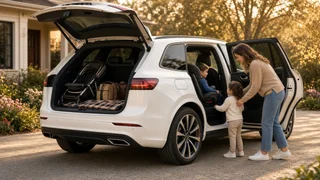
Luxury Cars for Moms: How to Choose a Premium Family Vehicle That Fits Daily Life
The best luxury car for a mom is usually a premium SUV or crossover sized to the family's seating needs. A two-row midsize model suits most families with one or two children. A three-row SUV makes more sense when you regularly carry three or more kids, carpool, or bring grandparents along. Two things change that answer. If you need easy third-row access and the most interior space for the money, a top-trim minivan may serve you better than a luxury-badged SUV. If you rarely carry more than one passenger and value driving feel, a premium sedan or wagon can still work. The rest of this guide explains how to match a luxury mom car to your actual routine and what to check before you buy.
Start With How You Actually Use the Car
Luxury branding covers a wide range of vehicles, and the badge alone says little about whether a car will fit family life. Before comparing models, write down a typical week: how many people ride along, how many car seats are installed, what you haul (strollers, sports gear, groceries, a dog), how much highway versus city driving you do, and where you park. These answers narrow the field faster than any feature list.
How many seats are needed on a normal day, and how many on the busiest day of the month; How many child seats are installed, and whether they are rear-facing, forward-facing or boosters; Whether children need to climb into the back row on their own; Typical cargo with all seats in use; Garage size, parking structure height limits and tight school pickup lanes; Long road trips versus short daily errands; Whether you can charge at home if considering an electrified vehicle
Body Configuration: SUV, Minivan, Sedan or Wagon
Body configuration means the overall shape and layout of the vehicle. It affects step-in height, door style, cargo access and how easily you can reach a child in the back. Within the luxury market segment, most family buyers choose between the options below.
Body style | Best fit | Main trade-offs; Two-row luxury compact or midsize SUV | One or two children, mixed city and highway driving | Limited room for a third car seat across the back; cargo shrinks with a stroller aboard; Three-row luxury SUV | Three or more kids, carpools, extended family | Larger footprint, harder parking; third-row space and access vary widely between models; Premium or top-trim minivan | Maximum usable space and easy access | Sliding doors are practical but the image is less upscale; fewer true luxury-brand options; Luxury sedan | One child or older kids, driving comfort and efficiency | Lower seating makes car-seat installation harder; trunk opening limits bulky gear; Luxury wagon | Sedan-like driving with more cargo room | Few choices in the US market; still lower than an SUV for loading children
Sliding doors deserve special attention. They do not swing into neighboring cars in tight lots, and they leave a wide opening for buckling in a child. That is the main reason many parents who cross-shop luxury SUVs end up preferring a well-equipped minivan.
Vehicle Class and Size: Bigger Is Not Always Better
Vehicle class describes size categories such as subcompact, compact, midsize and full-size. A larger class adds interior room but also adds weight, fuel or energy use, tire cost and parking difficulty. Many families buy one size up from what they need and then struggle with garages and parking ramps. Check exterior length, width with mirrors and height against your garage and regular parking spots, using the figures published for the exact model year and trim you are considering.
Seating Layout: Bench, Captain's Chairs and Third-Row Access
Seating layout refers to how many seats are in each row and how they are arranged. In a three-row luxury SUV, the second row is commonly offered either as a three-person bench or as two individual captain's chairs. The choice changes both capacity and convenience.
Bench seating adds one more seat, which matters if you need seven or eight places; Captain's chairs create a walkway to the third row, so older kids can climb back without folding a seat; Check whether the second row can tilt or slide forward with a child seat still installed; some designs allow this and some do not; Count the LATCH lower anchors and top tether points in each row, since car seat compatibility depends on where those anchors are located; Sit in the third row yourself; legroom and headroom vary widely, and some third rows suit only small children; Check cargo space behind the third row with all seats up, which is often much smaller than the maximum cargo figure
The most reliable test is practical: bring your own car seats to the dealership and install them. Fit depends on the specific seat, the vehicle's seat cushion shape and anchor placement, and it can differ between model generations of the same nameplate.
Powertrain Layout: Gas, Hybrid, Plug-In or Electric
Powertrain layout covers the engine or motor type and which wheels are driven. For family use, the main decisions are fuel type and drive system.
Gasoline: easiest refueling and the widest selection, but higher fuel costs in stop-and-go driving; Hybrid: often well suited to school runs and errands, where frequent braking lets the system recover energy; Plug-in hybrid: can cover short daily trips on electric power if you charge regularly, with gasoline backup for road trips; Fully electric: quiet and smooth with low running costs when charged at home; plan for charging access, and confirm real-world range in cold weather and with a loaded vehicle; All-wheel drive: helpful in snow and rain, though it does not shorten braking distances; good winter tires matter as much; Rear-wheel or front-wheel drive: usually adequate in mild climates and can be simpler or cheaper to maintain
Electrified powertrains may reduce cargo or third-row space in some models because of battery placement. Compare the exact powertrain version you would buy rather than assuming it matches the gas model's interior figures.
Features That Matter for Family Life
Luxury trims offer long feature lists, but only some items make daily parenting easier. Prioritize features you will use every day over showroom extras.
Hands-free or power liftgate for loading with full arms; Rear-seat climate controls and vents reaching every row; Rear sunshades for sleeping children; Durable, easy-to-clean upholstery; light-colored leather looks upscale but shows stains; Enough USB ports or outlets in the rear rows; Rear-seat reminder alerts and rear-door child locks; Camera systems and parking sensors for tight lots and driveways; Driver-assistance features such as adaptive cruise control, lane-keeping support and blind-spot monitoring, which help reduce fatigue on long drives; Rear-seat entertainment or a passenger view camera if you take frequent road trips
Features are frequently bundled into packages or reserved for higher trims, and the contents can change between model years. Read the window sticker or the build sheet for the exact vehicle, not just the brochure for the model line.
Safety Checks Before You Buy
In the US, crash-test results from the National Highway Traffic Safety Administration and the Insurance Institute for Highway Safety are the standard references. Ratings apply to a specific model year and sometimes to a specific body style or build date, so confirm that the result you are reading matches the vehicle you are buying. A new model generation often brings a redesigned structure, and older ratings may not carry over. Also check for open safety recalls on any used vehicle by its VIN.
Ownership Costs and Trade-Offs
Purchase price is only part of the cost of a luxury mom car. Premium vehicles commonly carry higher insurance premiums, more expensive tires, and higher parts and labor costs. Some brands require premium fuel. Depreciation is often steep in the first few years, which works against new-car buyers but can make a lightly used or certified pre-owned luxury model a good value.
Get an insurance quote on the exact model and trim before committing; Check tire size and replacement cost; large wheels look good but cost more and ride harder; Ask whether scheduled maintenance is included for any period; Compare warranty coverage, including any separate coverage for hybrid or electric components; For used vehicles, review the service history and consider a pre-purchase inspection by an independent mechanic; Research reliability for the specific model generation, since first-year redesigns sometimes have more issues
New, Used or Certified Pre-Owned
Buying new gives you full warranty coverage and the latest features. A used luxury model can deliver the same comfort for less, but confirm which model generation it belongs to, since features, safety ratings and seating options can change substantially between generations. Certified pre-owned programs from luxury brands typically add inspection standards and extended warranty coverage, though terms differ by brand, so read the program details before paying a premium for certification.
A Practical Test-Drive Checklist
Bring the kids and their car seats, and install every seat you use; Fold and unfold the second and third rows yourself, one-handed where possible; Load your stroller or typical gear into the cargo area with all seats up; Drive your real routes, including highway merges, parking lots and your own driveway; Check rear visibility and how well the cameras work in daylight and at night; Test the infotainment system and phone connection for ease of use while driving; Listen for road and wind noise at highway speed, especially from the third row
Bottom Line
For most families, a two-row luxury SUV covers everyday needs, a three-row SUV fits larger families or regular carpools, and a top-trim minivan offers the most practical space. Choose the body configuration and seating layout first, then the powertrain, then the features. Confirm every specification, safety rating and feature against the exact model year, trim and powertrain you plan to buy, and test it with your own car seats before you sign.