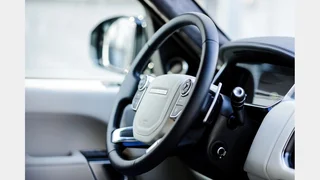
Land Rover Discovery 3 steering angle sensor replacement
A failing steering angle sensor on a Land Rover Discovery 3 can cause warning lights, reduced stability-control intervention, and confusing handling behavior. Owners often want to know where this component sits and what replacement involves before ordering parts or scheduling work. Understanding its integration with the steering system explains why the warning appears, why calibration matters, and how a repair should be approached without assuming every fault means the sensor itself has failed.
Essential answer
The steering angle sensor on a Discovery 3 measures how far and how quickly the driver turns the wheel relative to straight-ahead. The vehicle uses that data to compare the intended path with yaw and wheel-speed information. When the signal is missing, implausible, or fixed at an incorrect center value, the stability-control module typically reduces intervention and stores a fault. Replacement has to be followed by a calibration routine so the system learns the true zero point, otherwise the warning may remain even with a new sensor.
The replacement job is usually an interior steering-column task rather than an under-hood repair. The sensor is positioned close to the column, often near the steering angle encoder and clockspring area, and it can share a connector or mounting point with related column switches. Because the part works as a signal source within a larger dynamic-stability loop, a fault code points to a communication or plausibility problem, not automatically to a failed sensor. Connector issues, damaged clock spring wiring, or a lost calibration after battery disconnection can produce similar symptoms.
Identification and location
For most Discovery 3 configurations, the steering angle sensor is found along the steering column assembly inside the cabin. Looking under the dash near the column shaft, between the wheel and the firewall, typically reveals a ring-shaped or module-style component that wraps around or sits coaxial with the column. It may be integrated with the steering column switch cluster or mounted just behind the steering wheel, so it can be visually confused with the clockspring. Separating them matters because the clockspring carries airbag wiring while the angle sensor encodes rotational position.
Location can vary slightly with steering-column design and vehicle options, and a VIN-specific parts lookup is the more reliable way to confirm fitment before purchase. Some repair information refers to the area near the steering column lower joint or the electronic control module bracket. If the component is not immediately visible, removing the upper and lower column shrouds usually exposes the sensor, its mounting fasteners, and the harness connector. Any work there should begin with battery isolation because the airbag and its wiring are nearby.