L5P Duramax low oil pressure
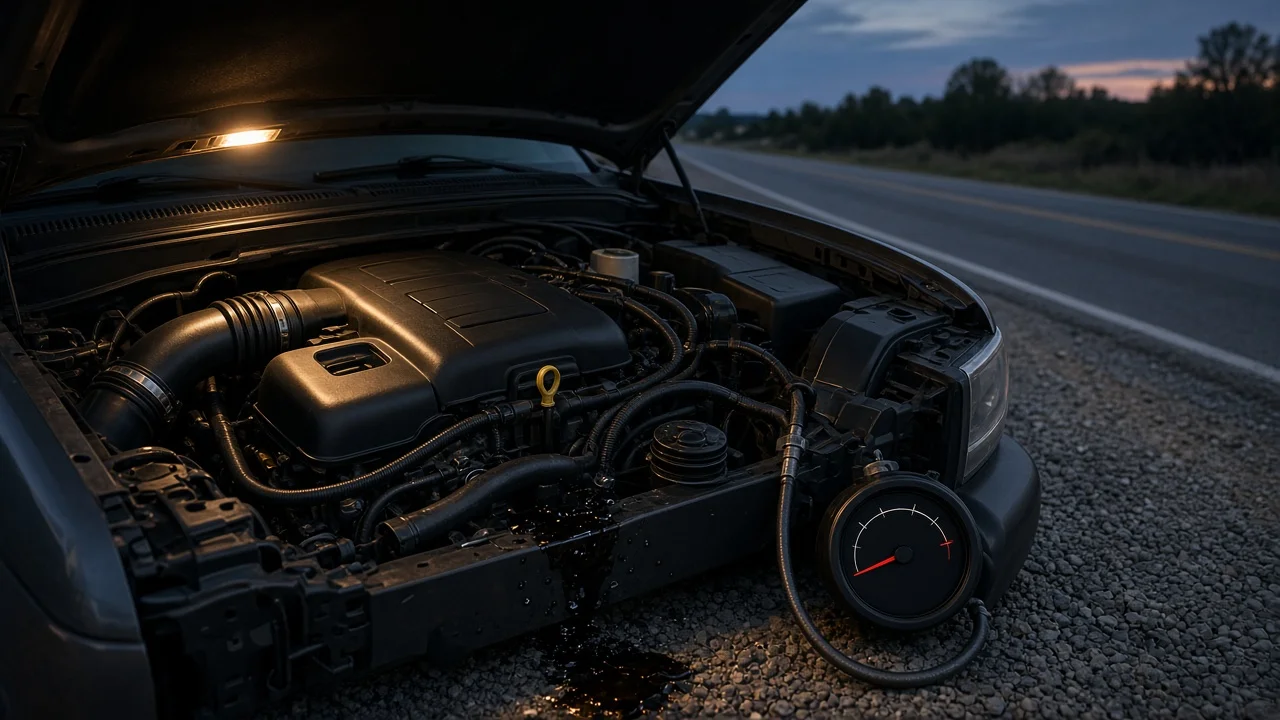
A low oil pressure reading or warning on an L5P Duramax deserves prompt interpretation because the 6.6L turbo-diesel relies on stable lubricant flow to protect turbocharger bearings, main bearings, camshaft lobes, and hydraulic timing components. The condition may appear as a gauge drop, an illuminated warning, an intermittent hot-idle symptom, or a message after an oil change. Understanding how the L5P lubrication circuit behaves under different rpm, temperature, and fill conditions helps an owner separate a genuine supply problem from a measurement issue before expensive parts are replaced.
Essential answer
The essential answer is that L5P low oil pressure is a symptom, not a single component diagnosis. The engine uses a variable-displacement oil pump controlled by the powertrain control module, so indicated pressure can change with rpm, coolant temperature, oil temperature, and commanded pump output. A reading below the expected range may reflect a genuine reduction in pump output, low oil level, incorrect lubricant specification, a stuck pressure relief condition, excessive bearing clearance, or a faulty sending unit and circuit. Confirmation starts with checking the oil level and condition, then comparing the indicated value with a known-good mechanical gauge.
When the symptom appears, the practical distinction is whether pressure remains low across all engine speeds or recovers as rpm rises. Consistently low pressure at cold start, hot idle, and cruise points toward a supply or mechanical clearance problem. A normal hot-cruise value with a drop only at hot idle is more consistent with reduced pump output at low speed, a pressure relief issue, or lower oil viscosity than expected. Because the turbocharger is especially sensitive to oil supply interruption, the vehicle should be treated as a no-load diagnostic case until the cause is understood, and no tuner adjustment or thicker-oil experiment should substitute for confirming the actual pressure signal.