Kawasaki Teryx and Ridge Wheel Offset
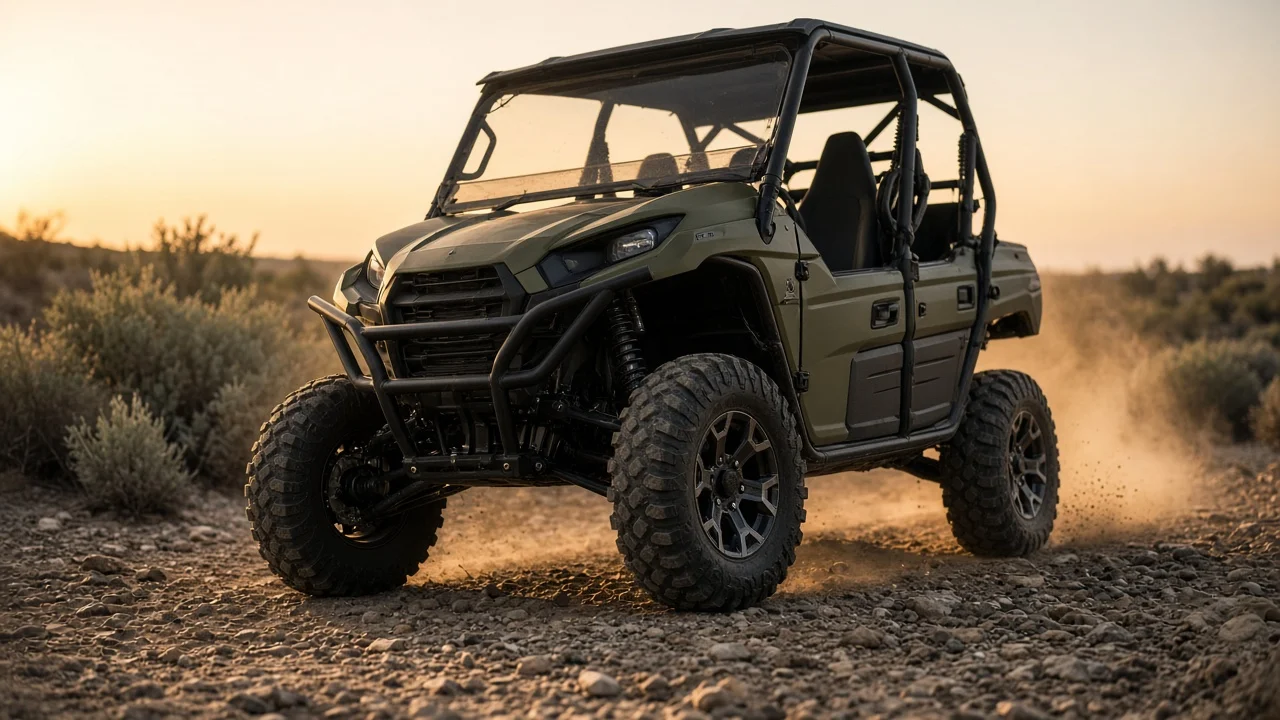
Choosing wheels for a Kawasaki Teryx or Ridge involves more than rim diameter and tire size. Wheel offset determines where the tire sits relative to the suspension and bodywork, which changes scrub radius, steering effort, bearing load, and clearance. A replacement wheel with the wrong offset can rub at full steering lock, stress hubs, or alter stability on crowned trails. Side-by-side owners often ask about the Kawasaki Ridge wheel offset because the Ridge is a newer platform, while the long-running Teryx has a well-documented fitment pattern. Interpreting offset correctly helps match aftermarket rims to each machine’s suspension geometry without guessing.
Essential answer
Wheel offset describes the distance between the wheel’s mounting face and the centerline of the rim. Positive offset places the mounting surface toward the outside of the wheel, tucking the tire inward. Negative offset moves the mounting surface toward the brake side, pushing the tire outward. Zero offset centers the mounting face on the rim centerline. For a Kawasaki Teryx wheel offset, the factory wheel typically uses a positive value that keeps the tire under the fender and close to the steering axis. Aftermarket wheels with less positive or more negative offset widen the track but also move the tire’s contact patch farther from the pivot point. That increases steering feedback, scrub radius, and leverage on suspension components.
The Kawasaki Ridge wheel offset follows the same measurement principle, but the vehicle has different suspension packaging and body clearance. An offset that works on a Teryx may not transfer directly to a Ridge because the hub faces, fender openings, and suspension arms are not identical. Before fitting a wheel, confirm the bolt pattern, hub bore, rim width, and offset together; offset alone does not guarantee tire compatibility. A wider rim with the same offset changes tire section shape and can still cause rubbing. Think of offset as a position control, not a universal fitment code. When comparing wheels, consider how the chosen offset moves the tire’s outer edge and inner sidewall at full compression and steering angle.