Kawasaki KX65 Engine Oil Capacity: What the Figure Actually Refers To
The short answer
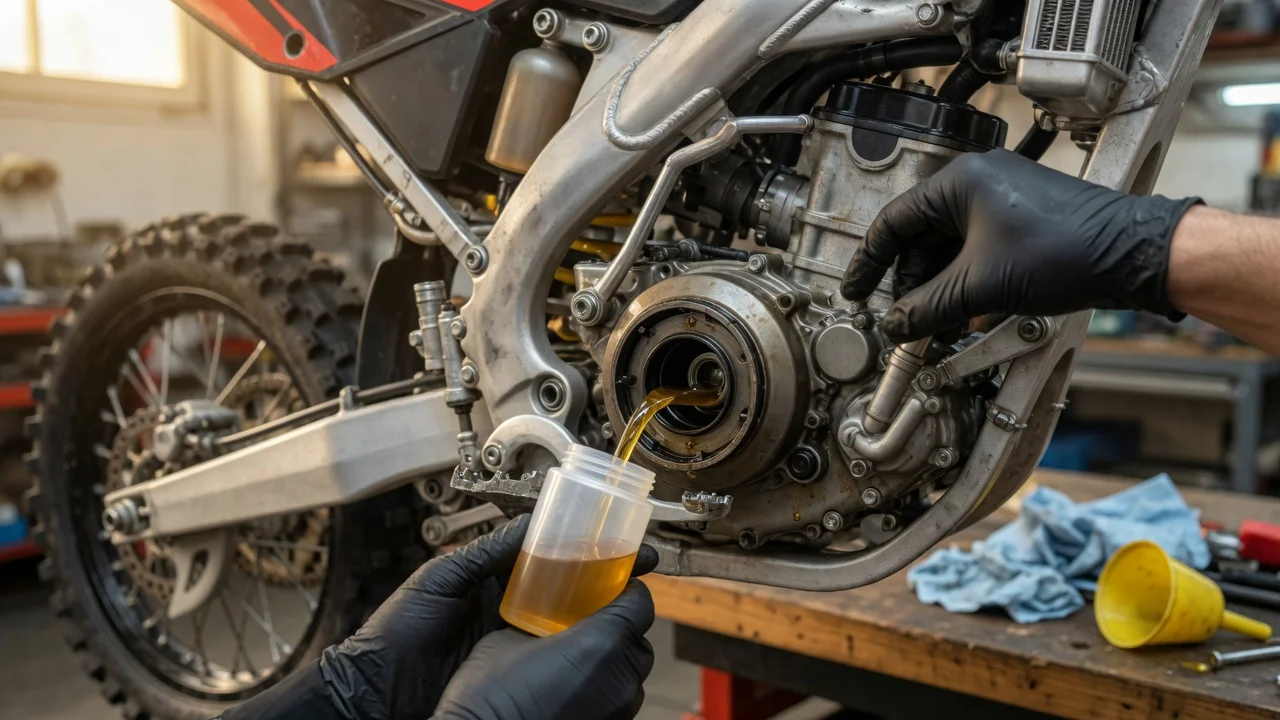
The Kawasaki KX65 has a two-stroke engine, so it has no engine oil sump to fill with a measured volume the way a four-stroke engine does. The engine is lubricated by two-stroke oil that is pre-mixed with the fuel. When owners ask about KX65 oil capacity, the figure they usually need is the capacity of the transmission, which holds its own oil separate from the fuel. This article does not state a transmission oil volume because no verified specification was supplied for it. Take the exact capacity, oil grade, and premix ratio from the owner's manual or service manual for your model year.
Why the two-stroke design changes the question
In a four-stroke engine, oil sits in a crankcase sump and circulates through the engine. The capacity is the volume needed to fill that sump. A two-stroke engine like the KX65's works differently. Its crankcase takes in the fuel-air charge, so it cannot hold a pool of oil. Lubricating oil is instead mixed into the fuel at a set ratio and burned as the engine runs. That leaves two separate oil specifications on this bike:
Transmission oil: a fixed volume held in the gearbox and clutch case, drained and refilled at service intervals. This is the figure that corresponds to an oil capacity. Two-stroke premix oil: mixed with the fuel at the manufacturer's recommended ratio. It is a mixing proportion, not a capacity.
Confirming the figure for your bike
The KX65 has been sold over many model years, so check the specification for your specific bike rather than relying on a general figure. The owner's manual or the factory service manual for your model year should list the transmission oil capacity, the recommended oil grade, and the premix ratio. Kawasaki manuals sometimes give separate figures for a routine oil change and for a full refill after the engine has been taken apart. Use the one that matches the job you are doing. If you don't have a manual, an authorized Kawasaki dealer can look up the specification from the frame or engine number.
What this article does not cover
No documented measurements were available for this article. It therefore gives no transmission oil volume, recommended oil grade, premix ratio, or note on whether these changed between model years or markets. Do not treat this guide as a replacement for those figures. Confirm them from Kawasaki's documentation before servicing the bike.