Jeep Grand Cherokee Transfer Case Shift Motor Identification
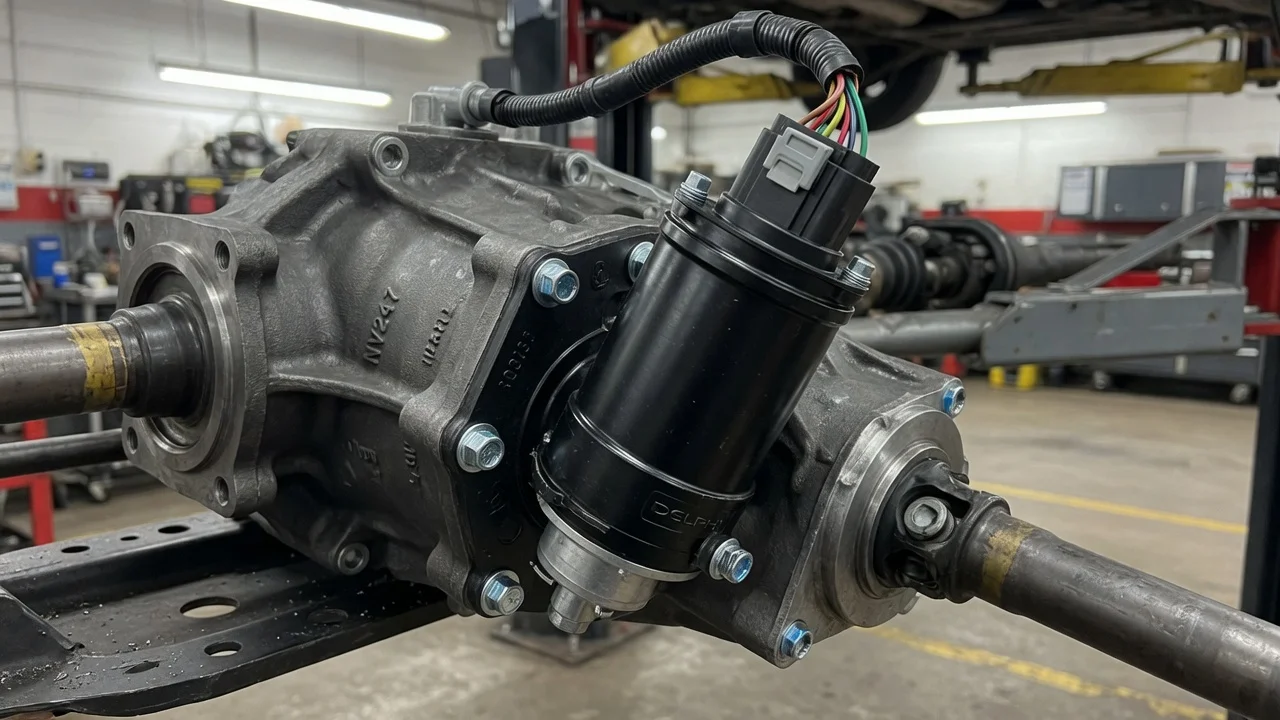
When a Grand Cherokee will not shift into 4 Low or Neutral, or shows a 4WD service warning, the transfer case shift motor is often the suspect. Before you order a replacement, you need to confirm which motor your Jeep actually uses. The correct part depends on the generation, the four-wheel-drive system and the transfer case installed at the factory. This guide explains how to identify it and what to verify before buying.
The short answer
The reliable way to identify the transfer case shift motor on a Jeep Grand Cherokee is to match three things: the vehicle's VIN, the identification tag on the transfer case and the part number printed on the motor itself. A model year alone is not enough, because the same year could be built with different four-wheel-drive systems, and some of those systems do not use a shift motor at all.
If your Jeep is a two-wheel-drive model or has a single-speed, full-time system without a low range, there may be no shift motor to replace. If it has a two-speed transfer case with an electronic selector, the motor is typically mounted on the transfer case housing and connected by a wiring harness. A VIN-based parts lookup at a dealer or a reputable parts counter is the most dependable way to confirm the exact part for your vehicle configuration.
How the shift motor works in the 4WD system
On electronically shifted Grand Cherokee transfer cases, the driver does not move a lever connected directly to the case. Instead, a switch or terrain selector sends a request to a control module, and that module commands the shift motor. The motor is an electric actuator that rotates an internal shift mechanism to move the transfer case between ranges, such as high range, low range and Neutral.
The motor usually contains a position sensor so the control module knows where the shift mechanism is. If the module cannot confirm that the motor reached the requested position, it may refuse the shift, set a fault code or display a warning. That is why a symptom such as a blinking 4WD indicator does not automatically mean the motor has failed: wiring, connectors, the switch, the module or the transfer case itself can produce similar complaints.
What changes the correct part
Generation is the first variable. Older Grand Cherokees commonly used a floor-mounted lever on some four-wheel-drive versions, while later generations moved to electronic selection. A shift motor designed for one generation should not be assumed to fit another, even if the parts look similar in photos.
The four-wheel-drive system is the second variable. Grand Cherokee models have been offered with different Quadra-Trac and Quadra-Drive systems, and these do not all use the same transfer case. Systems with a low range rely on an actuator to change ranges, while a single-speed system may not have one. Trim level is only a rough clue, since options and packages could change the drivetrain within the same trim.
Production changes are the third variable. Manufacturers sometimes revise a part during a model run, and a revised motor may carry a different part number or require a software update in the control module. The part number on your existing motor and the information tied to your VIN settle these questions better than general fitment charts.
Identifying the shift motor on a 2015 Grand Cherokee
For a 2015 Jeep Grand Cherokee, start by confirming which four-wheel-drive system the vehicle has. The window sticker or build sheet, if available, lists it, and a dealer can retrieve the factory build details from the VIN. Owners can also check the selector controls in the cabin: a system with a 4 Low position indicates a two-speed transfer case that uses an electronic shift actuator.
Next, inspect the transfer case from underneath with the vehicle safely supported. Look for the identification tag on the case and the label or stamping on the motor housing. Dirt and corrosion often cover these markings, so clean them gently before reading. Record the numbers exactly, including any suffix letters, and photograph them before ordering. Do not rely on a listing that only says it fits a 2015 Grand Cherokee without stating the drivetrain.
What the owner can do before buying
Begin with a scan for diagnostic trouble codes using a tool that can read the relevant drivetrain modules, not only engine codes. Note any codes related to the transfer case, shift motor position or the selector switch. Check the motor's electrical connector and nearby wiring for corrosion, damage or loose pins, especially if the vehicle operates in wet, salted or off-road conditions.
Review the service history for previous transfer case repairs, fluid service or software updates, since these can affect the diagnosis and the correct replacement. Follow the shift procedure described in the owner's manual; some range changes require specific conditions, such as the transmission in Neutral and the vehicle nearly stopped. A shift that fails because the conditions were not met is not a motor fault. If the evidence points to the motor, buy the part that matches your existing part number or the VIN lookup.
Limitations and when to get professional help
This guide cannot confirm the exact part for an individual vehicle, and it does not replace the manufacturer specifications for your Jeep. Fitment, connector style and calibration requirements vary, and a replacement motor may need a relearn or setup procedure performed with a capable scan tool. Installing the wrong part, or forcing a shift mechanism by hand, can leave the transfer case in an unintended range.
Seek professional inspection if the vehicle is stuck in Neutral or 4 Low, if the warning returns after a repair, or if there are noises, leaks or binding while turning. A dealer or drivetrain specialist can confirm the configuration from the VIN, check for applicable service bulletins and test the circuit before you spend money on parts. Use the maintenance schedule in your owner's manual for transfer case service rather than a general interval.