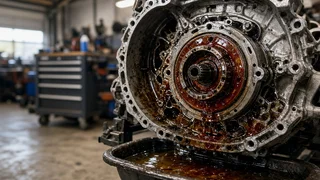
JCB 509-42 transmission fluid

Choosing the correct transmission fluid for a JCB machine is more than a maintenance detail; it directly affects shift quality, clutch life, and hydraulic control stability. The designation “509-42” points to a product selection question rather than a universal specification, so interpreting it correctly requires attention to machine model, operating conditions, and the transmission type installed. Without matching the fluid to the equipment maker’s approved requirement, an operator can introduce viscosity, friction, or additive mismatches that first appear as soft engagement or delayed movement and later become expensive driveline repairs.
Essential answer
The essential answer is that “JCB 509-42 transmission fluid” is best understood as a fluid choice linked to a specific JCB part, product, or service designation rather than a single globally defined oil. Because transmission designs vary across backhoe loaders, telehandlers, and compact equipment, a number alone is not enough to confirm fitment. The same machine family may use separate fluids for powershift transmissions, torque converters, and hydraulic compartions, and an incorrect cross-reference can produce unstable clutch engagement or altered shift behavior.
Operators should treat the 509-42 marking as a starting point for confirming the required fluid specification through the machine’s operator manual, serial number range, or dealer parts lookup. Transmission type matters because wet clutches and brakes rely on carefully balanced friction modification. A fluid that works in one JCB driveline may not protect another, especially when cold-flow performance, heat resistance, or seal compatibility differs. Without confirmation, the safest position is to view the designation as model-specific rather than an interchangeable universal tractor fluid.