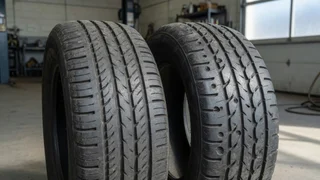
Is Tire Feathering Dangerous?
Tire feathering creates an uneven wear pattern that catches a driver’s eye as scalloped or angled edges across the tread, often with one side of each tread block worn lower than the other. This condition changes how the contact patch meets the pavement and can produce a rhythmic hum or vibration that grows with speed. Because the appearance is subtle at first, many owners wonder whether continuing to drive is safe. A direct answer depends on how deep the feathering has become and what mechanical or alignment issue is causing the accelerated shoulder wear.
Essential answer
Tire feathering is not automatically an emergency, but it is a warning that the tire’s footprint, inflation pressure, and suspension geometry are no longer working together as designed. Light feathering may create noise and mild vibration while the tire still retains enough tread depth to evacuate water and maintain basic grip. In that state, cautious driving to a service facility is typically reasonable. The risk increases when the angled wear exposes the wear bars, reduces the effective load index margin, or produces steering wander.
The hazard depends less on the word “feathering” and more on the underlying cause. Worn shocks, incorrect toe alignment, or mismatched drivetrain compatibility can keep loading one edge of each tread block until the rubber develops a sawtooth profile. That profile reduces the amount of stable rubber in contact with the road, especially during braking or lane changes. Until the alignment and suspension condition are evaluated, the vehicle should be driven gently, and any tire showing cords, severe scalloping, or rapid vibration should be removed from service.