Intercooler for a Single Turbo Setup
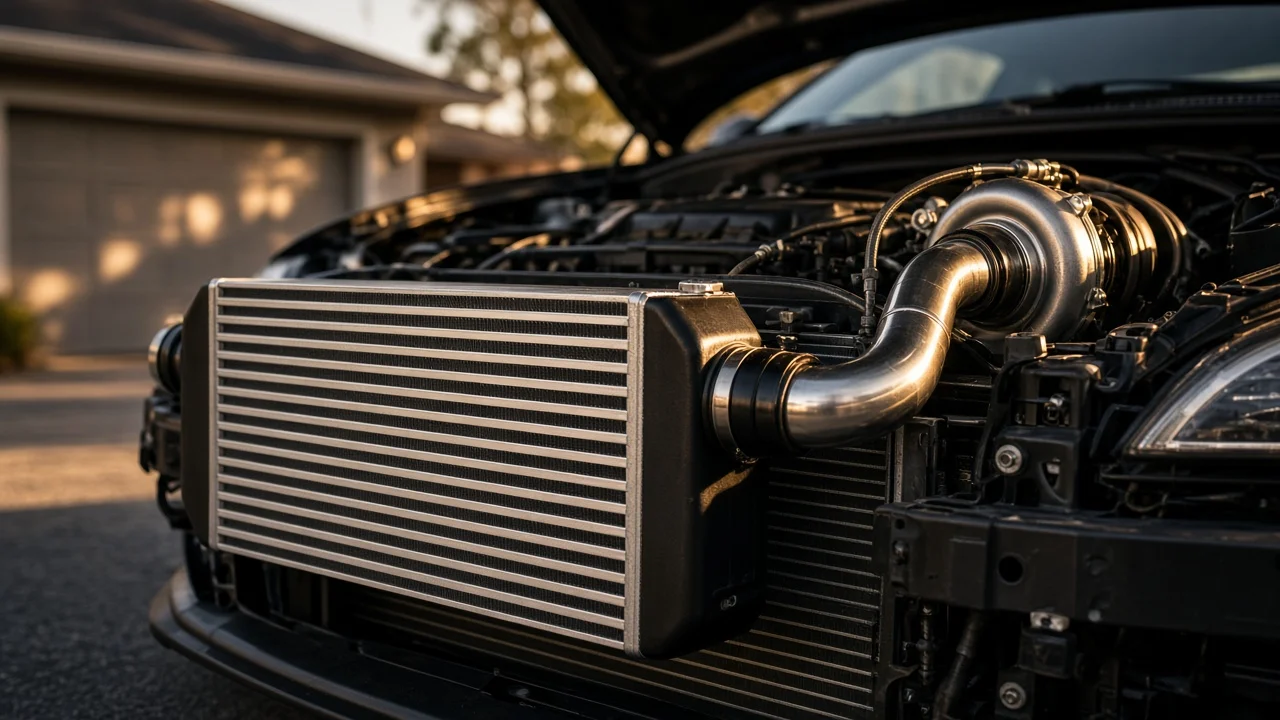
Choosing the right single turbo intercooler often comes down to one question: can it cool the charge air enough without creating a restrictive pressure loss? A single turbo setup tends to produce a concentrated stream of hot, high-velocity air from the compressor outlet, so the intercooler becomes the critical link between reliable boost pressure and actual horsepower. The wrong core size, tank design, or hose connection routing can make an otherwise strong turbo feel lazy. This guide explains what to look for when comparing parts so you can buy with confidence instead of guessing.
The direct answer
For a single turbo intercooler, prioritize a core that balances heat rejection against minimal pressure loss. A larger frontal area is generally better at lowering charge-air temperature, but an overly long core can increase restriction. The best choice is usually a bar-and-plate or tube-and-fin unit sized to match the turbo’s airflow range and the vehicle’s available ambient air path. Fitment matters just as much as size; an intercooler that blocks the radiator or forces awkward piping cuts can erase the benefits of the larger core.
You also need to check the hose connection locations before buying. A single turbo often places the compressor outlet on one side while the throttle body sits on the other, so the intercooler’s end tank orientation determines whether you can use a clean, short pipe run. Look at the inlet and outlet diameters too. Matching them to your charge pipes reduces step changes in airflow that cause turbulence, pressure loss, and heat. Avoid units with internal oil contamination from new manufacturing residue, and confirm that any used intercooler flows freely and holds pressure.













