Inner CV Joint Leaking Transmission Fluid
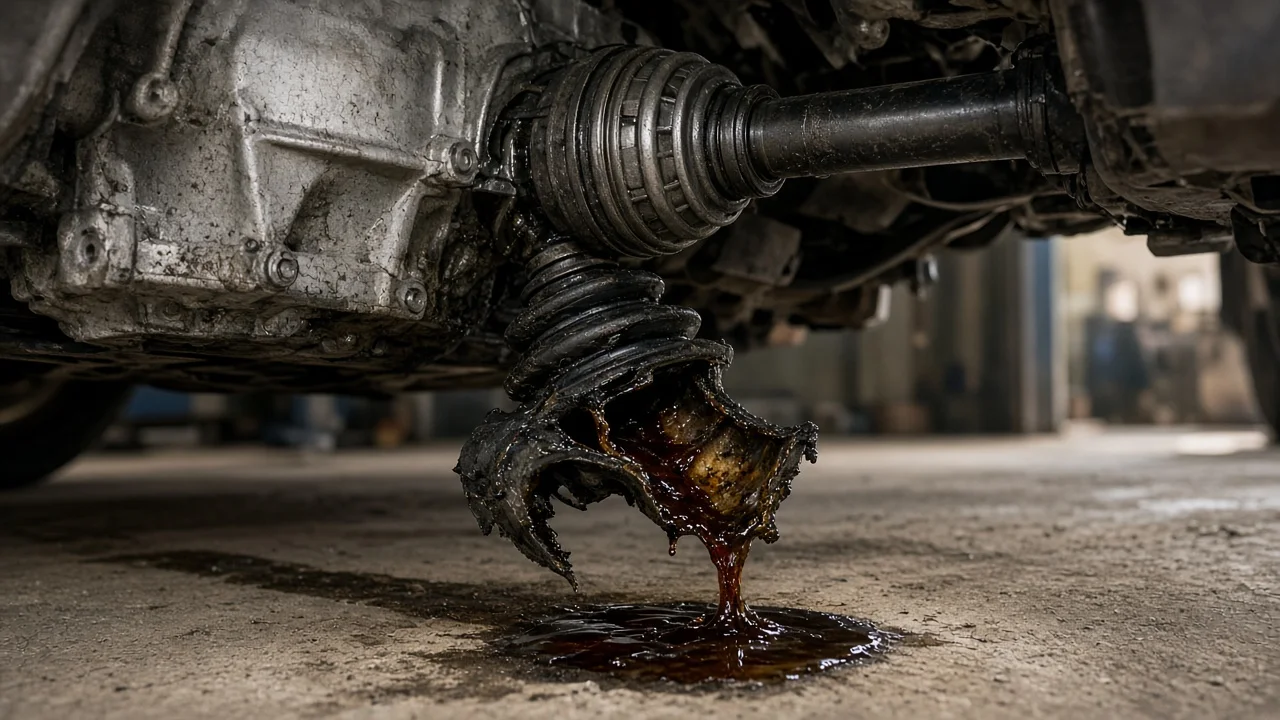
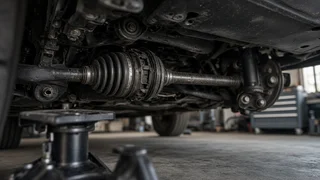
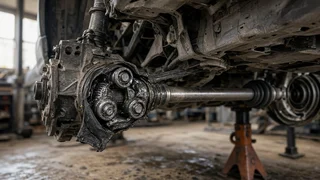
Finding red or brown fluid near an inner CV joint can look alarming, but the source is rarely the joint itself. The driveshaft boot and cup sit close to the transmission case, so a leak from an axle seal, differential output, or transmission housing can easily coat the CV joint area. Identifying whether the fluid is transmission fluid, gear oil, or even melted grease changes the repair path. This guide explains how to read the leak, separate likely causes, and confirm what should be checked before replacing expensive components.
Direct answer
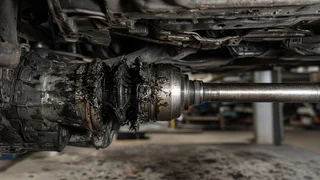
An inner CV joint generally cannot leak transmission fluid unless the transmission output seal directly behind it has failed, allowing fluid to run along the axle shaft and collect at the joint. The CV joint itself is packed with grease and sealed by a rubber boot, not connected to the transmission fluid circuit. When fluid is visible on the inner joint, the boot may be torn and throwing grease, but transmission fluid means the leak is coming from a nearby seal, case joint, or breather.
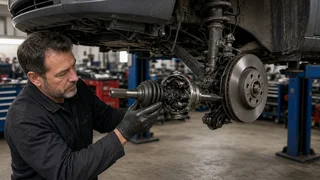
Start by wiping the area clean and confirming the fluid color, odor, and level. Red or brown slick fluid with an oily smell points to the transmission. Thick gray or black grease indicates a split inner CV boot. A leak that follows the axle shaft rearward toward the wheel usually starts at the output seal, while wetness only on the case above the axle may come from a pan gasket, selector seal, or cooler line dripping down. Check the transmission fluid level before moving the vehicle because low fluid can cause shift behavior changes and further damage.