Can an Infiniti G35 Use Regular Gas?
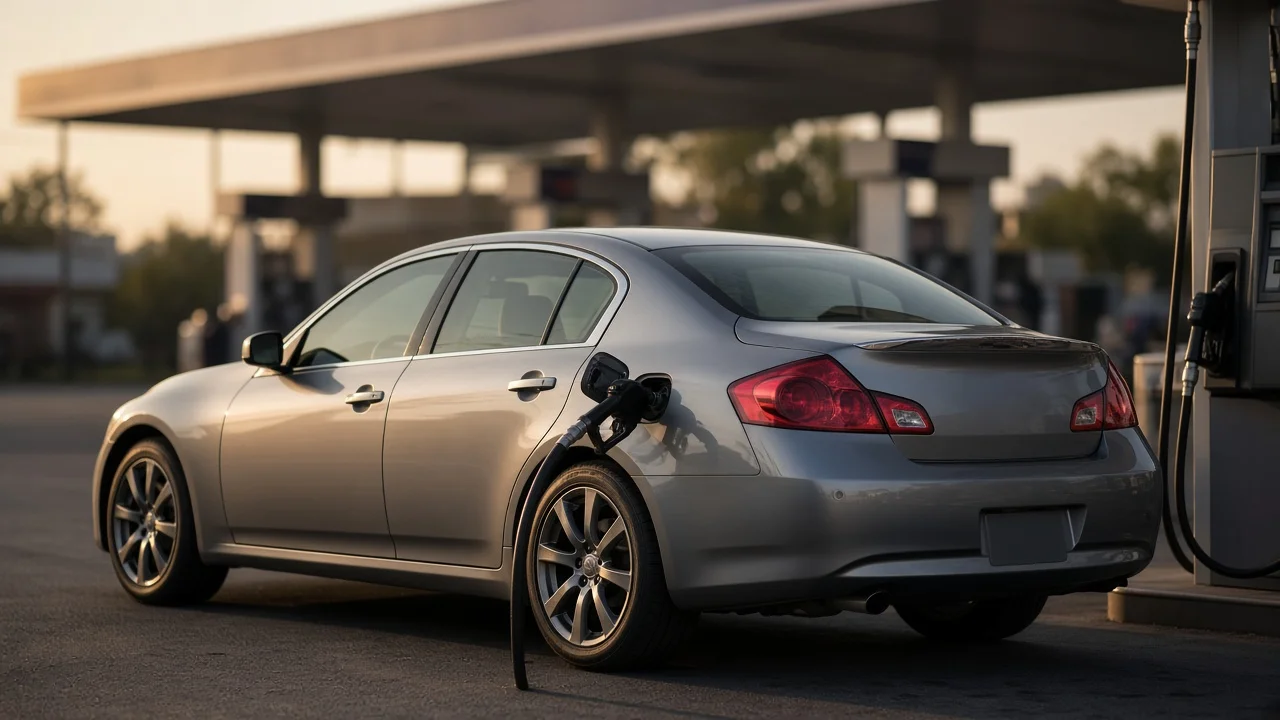
Short answer: an Infiniti G35 can usually run on regular gas without immediate harm, but it is designed and tuned for premium. Infiniti's guidance for the G35 is generally described as premium unleaded recommended, typically 91 octane as shown at US pumps. Regular 87-octane fuel is generally treated as an acceptable fallback rather than the intended fuel. The engine can adapt to regular, but you should expect some loss of performance and possibly efficiency. The exact wording for your car is in its owner's manual and on the label inside the fuel filler door, and that is the reference to follow.
Which G35 Models This Applies To
The G35 name covers two model generations sold in the US, and every version uses a 3.5-liter V6 from Nissan's VQ engine family. The fuel guidance is broadly the same across them, but the details below help you match the advice to your specific car.
Generation | Approximate US model years | Body styles | Engine; First generation (V35) | 2003–2006 sedan, 2003–2007 coupe | Sedan, coupe | VQ35DE 3.5L V6; Second generation (V36) | 2007–2008 sedan | Sedan | VQ35HR 3.5L V6
Powertrain configuration matters less for fuel than you might expect. Rear-wheel-drive models and the all-wheel-drive G35x share the same engine family, and manual versus automatic transmission does not change octane guidance. Trim level also does not create a separate fuel requirement. Market specification is the bigger variable: cars sold outside North America, such as the closely related Nissan Skyline in Japan, use different octane labeling, so imported or gray-market vehicles should be checked against their own documentation.
Premium Recommended vs. Premium Required
Automakers use two distinct phrases, and the difference is the heart of this question. Premium required means the engine is designed so that lower-octane fuel may cause damage or is not approved for use. Premium recommended means the engine delivers its rated power and intended drivability on premium, but it has been engineered to tolerate regular fuel by adjusting itself. The G35 falls into the recommended category, which is why regular gas is generally usable.
What Happens When You Use Regular Gas in a G35
Octane is a measure of a fuel's resistance to knock, also called detonation or pinging. Knock happens when the air-fuel mixture ignites uncontrollably from heat and pressure instead of burning smoothly after the spark plug fires. The VQ35 engines run relatively high compression and aggressive ignition timing to make strong power, which is why they benefit from higher-octane fuel.
The G35's engine management uses knock sensors that listen for detonation. When they detect it, the computer retards ignition timing, meaning it fires the spark slightly later, which reduces knock. This protection is what makes regular gas usable, but it comes with trade-offs:
Reduced power and throttle response, most noticeable under hard acceleration, when passing, or when climbing hills. Possible small reduction in fuel economy, which can offset part of the savings from cheaper fuel. Audible pinging under heavy load in some conditions, especially in hot weather or with a fully loaded car. Greater sensitivity to engine condition, since older, high-mileage engines with carbon buildup can be more prone to knock.
In ordinary, gentle driving many owners notice little difference. The gap shows up when the engine is working hard, which is exactly when the G35's performance character matters most.
When Regular Gas Is Reasonable and When It Isn't
Using regular occasionally, such as when premium isn't available or on a road trip through areas with limited fuel options, is generally consistent with premium-recommended guidance. If you choose to run regular routinely, the car should still function, but you are accepting reduced performance as a standing trade-off.
Stop using regular and switch back to premium if you hear persistent pinging or knocking, if a check engine light appears, or if the car feels noticeably sluggish. Heavy or sustained knock is not something the engine should be left to manage indefinitely. Towing, carrying heavy loads, track days and very hot climates all raise knock risk and are good reasons to stay with premium.
Understanding Octane Numbers on the Pump
US pumps display octane as the Anti-Knock Index (AKI), the average of two lab measurements often written as (R+M)/2. Regular is commonly 87, mid-grade around 89, and premium typically 91 to 93, depending on the station and region. At high altitude, some stations sell lower-octane fuel, such as 85, which is not a good match for a G35. Many other countries label fuel using the Research Octane Number (RON), which produces higher figures for the same fuel, so a European or Japanese octane number cannot be compared directly with a US pump number.
Buying fuel with a higher octane rating than your G35 calls for, such as 93 instead of 91, is not harmful, but the engine is not designed to extract extra power from it in stock form. Mid-grade can be a middle ground if premium is unavailable.
Ethanol Blends and Fuel Quality
Most US gasoline contains up to 10 percent ethanol, and the G35 is designed to run on that. The G35 is not a flex-fuel vehicle, so E85 should not be used. For blends above 10 percent, follow the owner's manual rather than the pump label alone. Fuel that carries a detergent additive standard, often marketed under programs like Top Tier, can help limit intake valve and combustion chamber deposits over time, which in turn helps the engine resist knock.
Is It Worth Paying for Premium?
This is partly an editorial judgment rather than a technical rule. If you bought a G35 for its performance and drive it enthusiastically, premium is the fuel that lets the engine deliver what it was built to do. If the car is mainly a commuter and you drive gently, regular is a defensible cost-saving choice under a premium-recommended rating, as long as you watch for knock and switch back if you hear it. Because fuel economy may drop slightly on regular, the real-world savings are often smaller than the price difference at the pump suggests.
Bottom Line
For the G35 gas type question, premium unleaded is the intended fuel across both US generations and all body styles and drivetrains. Regular gas will generally not damage a healthy G35 thanks to knock-sensor protection, but it trades away some performance and possibly efficiency. Confirm the guidance printed in your owner's manual and fuel door label, use premium when you can, and return to premium promptly if the engine starts to ping.