Premium vs Regular Gas: Octane Ratings, Compatibility and Cost
The Short Answer
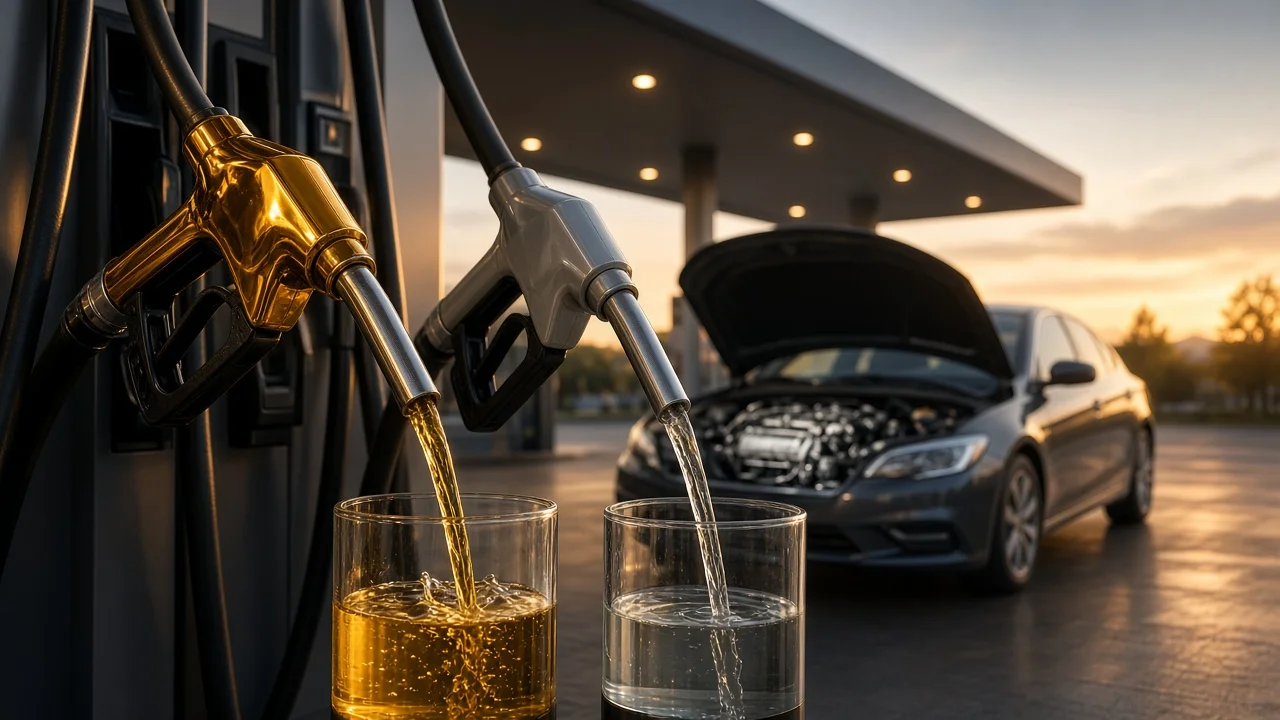
Premium gas is gasoline with a higher octane rating than regular. Higher octane means the fuel resists knock, which is uncontrolled early ignition in the cylinder. It does not mean the fuel holds more energy or burns cleaner. If your owner's manual or fuel-door label says premium is required, use premium. If it says regular, premium generally gives no meaningful benefit and costs more. If it says premium is recommended, regular is usually allowed, but power and fuel economy may drop somewhat. The manual for your specific model year, engine and market is the deciding source.
What Octane Rating Means
An octane rating measures how well a fuel resists knocking under compression. Engines with high compression ratios or turbochargers squeeze the air-fuel mixture harder. That makes premature ignition more likely, so these engines are often designed around higher-octane fuel. A lower-compression engine designed for regular has no use for the extra knock resistance.
In the United States, pumps display the Anti-Knock Index (AKI). It is the average of two laboratory measurements, the Research Octane Number and the Motor Octane Number, and is often printed as (R+M)/2. Many other countries post the Research Octane Number instead, so the same fuel shows a higher number there. That is why octane figures in foreign or imported-vehicle manuals can look higher than US pump labels.
What Number Is Unleaded Gas?
All gasoline sold for road vehicles in the US is unleaded, so "unleaded" names no single grade. When people say regular unleaded, they usually mean the lowest grade at the pump, typically labeled 87. The usual grade groupings are:
Grade | Typical US pump octane (AKI) | Typical use; Regular | 87 | Most engines designed for regular fuel; Midgrade (plus) | 89 to 90 | Some vehicles that list it; otherwise rarely necessary; Premium | 91 to 94 | Engines that require or recommend premium, often high-compression or turbocharged
Exact numbers vary by retailer and region. Some high-altitude areas sell a lower-octane regular grade, such as 85. Read the yellow octane label on the pump, not the grade name, and match it to the minimum octane in your manual.
Required, Recommended or Regular: Reading Your Vehicle's Requirement
Premium required: Use fuel that meets the stated minimum octane. Lower-octane fuel can cause knock that the engine may not fully prevent, and the manufacturer may treat it as misuse. Premium recommended: The engine is tuned to perform best on premium but can adjust to regular. Expect possible reductions in power, responsiveness and fuel economy, especially under heavy load or in hot weather. Regular (87) specified: The engine is designed for regular. Premium normally gives no improvement in power, mileage or engine life.
Requirements can differ between engines in the same model, and between model years or markets. A base engine may take regular while a turbocharged or performance version needs premium. Check the documentation for your exact powertrain, not the model name alone.
What Happens If You Use the Wrong Grade
Most modern engines have knock sensors. When they detect knock, they retard ignition timing to protect the engine. This lets an engine that recommends premium run on regular, at some cost to performance and efficiency. A single tank of lower-octane fuel in an engine that requires premium is unlikely to cause immediate damage under gentle driving. Avoid hard acceleration, towing and heavy loads until you can refill with the correct grade. Persistent knocking or pinging sounds are a reason to stop using that fuel and have the vehicle checked.
Putting premium in an engine designed for regular will not harm it. It is simply unnecessary spending in most cases. Detergent additive levels are a separate matter from octane and can vary between fuel brands, so a higher grade does not automatically mean a cleaner-running engine.
Premium vs Regular Gas Price
No current price data was available for this article, so it gives no specific per-gallon gap between regular and premium. The difference varies by region, station and time, and it can change separately from the base price of regular. To see what applies to you, compare the posted prices for each grade at the stations you use.
Two simple calculations show the real cost of choosing premium:
Extra cost per fill-up = gallons per fill-up × (premium price − regular price); Extra cost per year = gallons used per year × (premium price − regular price)
For a vehicle where premium is only recommended, weigh that yearly figure against any loss in fuel economy and performance you notice on regular. Tracking your mileage over several tanks of each grade gives a more reliable comparison than a single fill-up.
How to Decide
Check the owner's manual or fuel-door label for the minimum octane and whether premium is required or recommended. If premium is required, use it. The savings from regular do not justify the risk. If premium is recommended, decide based on your driving. Premium makes more sense for towing, frequent hard acceleration or hot climates. Regular may be acceptable for gentle commuting if the manual allows it. If regular is specified, buy regular and skip premium. When buying a vehicle, confirm the fuel requirement for the specific engine. It affects long-term running costs.