Identify 4707 brake shoes
Trying to pin down a “4707” brake shoe can feel like solving a puzzle, because the number alone usually points to a casting, lining, or aftermarket catalog code rather than a complete vehicle application. Brake shoes work with drums, while pads clamp rotors, so identifying the correct friction material affects fitment and braking balance. This guide explains how to interpret the 4707 marking, what to compare on the shoe assembly, and where to look for confirmation before ordering replacement parts.
Essential answer
The essential answer is that 4707 brake shoe identification is not a universal vehicle specification. The designation is best understood as a catalog, foundry, or friction-code clue that must be matched against the drum brake size, shoe width, anchor style, and wheel cylinder layout for a specific axle. Without a vehicle application or additional casting numbers, the code tells you only that a particular shoe core or lining family carries that stamp.
In practice, this means the number narrows a search but does not identify a unique shoe. Two different brake systems may use a similar numeric stamp while differing in lining length, pivot hole placement, or parking brake lever attachment. Treat 4707 as one piece of the identification chain: check the application guide, compare the shoe profile against the removed pair, and confirm the friction material edge code before assuming interchangeability.
Identification and location
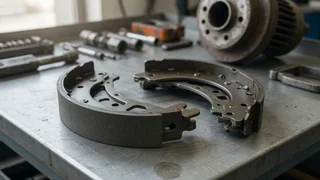
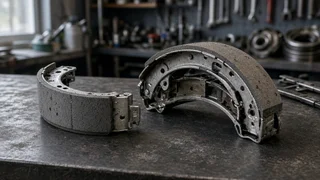
To recognize the correct shoe, begin with the metal web shape rather than the printed number alone. Look at the arc of the friction material, the cutouts for the adjuster and wheel cylinder, and the slots or holes that locate the return springs. A shoe for a leading-trailing drum assembly will have an asymmetrical lining placement, while many parking brake shoes use a narrower band of friction material and a simpler anchor arrangement.
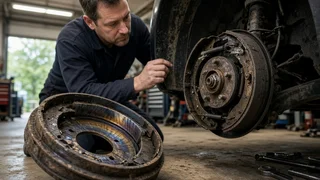
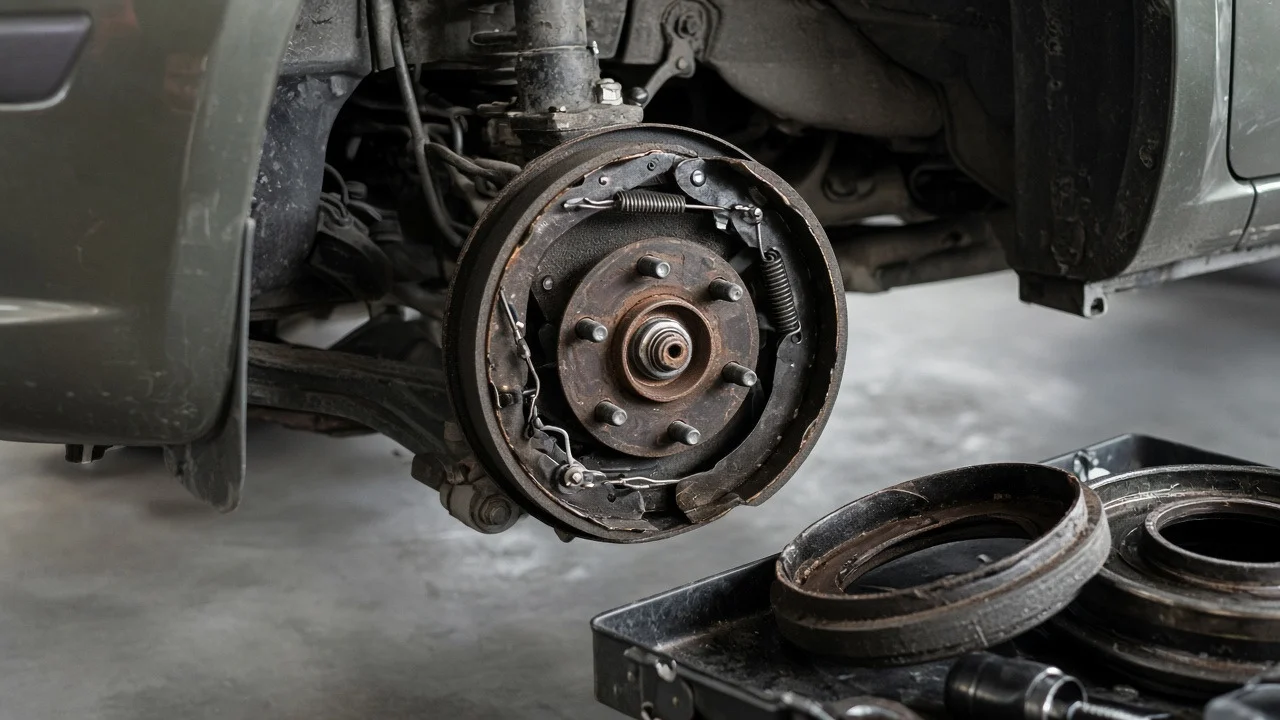
Location matters during inspection. On a rear drum system, the shoes sit inside the drum, behind the hub, and are retained by spring cups and pins on the backing plate. A separate drum-in-hat parking brake places a small shoe assembly under the rotor hat. If the 4707 marking appears on the steel web, clean the area carefully and compare the stamp, lining wear limit indicators, and any caliper or hydraulic connection details to the documentation for the applicable vehicle configuration.