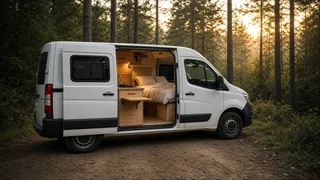
Ice cream van camper conversion

Turning a retired ice cream van into a camper means reworking a commercial serving body into a small living space. The process differs from converting a plain cargo van because the original freezer, serving window, and soft-serve equipment shape every later decision. Buyers often look at body configuration, seating layout, cargo access, wheelbase, powertrain options, and market specification before purchase. Understanding this starting point helps you judge whether a particular vehicle suits a practical camper layout or carries hidden costs.
Essential answer
An ice cream van camper conversion is a project that turns a former mobile vending vehicle into a compact recreational dwelling. The essential answer is that it is possible, but the work usually involves more deconstruction than a standard van build. The serving hatch, stainless counters, sinks, and refrigeration equipment must be removed or repurposed before insulation and living systems go in. The original body configuration often includes a walk-through cab or rear service area that can become a useful galley or bunk space.
The project’s scope changes with the vehicle’s seating layout and cargo access. A side serving window may be sealed or converted into a screened opening, while the rear door setup affects how you load furniture and tanks. Wheelbase influences driving feel and interior length, and powertrain options determine whether the van suits highway touring or local trips. Market specification also matters, because a van built for stationary vending may have different cooling, electrical, and rust profiles than a standard passenger model.