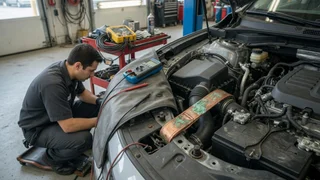
Hyundai Engine Ground Strap
A Hyundai engine ground strap is a flexible conductor that ties the engine block and attached metal assemblies back to the vehicle’s chassis or negative battery circuit. When this braided connection degrades, electrical behavior changes in ways that can look like sensor, charging, starting, or ignition trouble. Because the strap bypasses rubber engine mounts that electrically isolate the powertrain, it affects multiple systems at once. The following overview explains what the part does, how to interpret common symptoms, and why a visual and electrical inspection matters before replacing unrelated components.
Essential answer
The essential answer is that this strap functions as a shared ground return path for engine-mounted electrical loads, not as a load-bearing or engine-control part on its own. In many Hyundai layouts the powertrain sits on rubber mounts, so the engine block cannot reliably return current through metal-to-metal chassis contact. A braided copper or tinned strap between the block, cylinder head area, transmission bolts, or nearby body points provides that path. Damaged strands, corrosion, loose fasteners, or a broken eyelet can raise resistance and make reference voltages unstable for sensors and actuators.
Scope changes depending on the model, engine configuration, and service history. Some vehicles use more than one ground bond, so a single visible strap may not be the only return route. In other cases the strap is mounted low where road spray, battery acid vapor, or winter de-icing chemicals accelerate deterioration. Because engine movement can flex the braid during acceleration and shifting, a strap can look intact while internal strands are fractured behind the terminal. That is why an on-car voltage test and a physical inspection together give a more reliable picture than a quick glance.