Husky Tread Depth and Tire Gauge
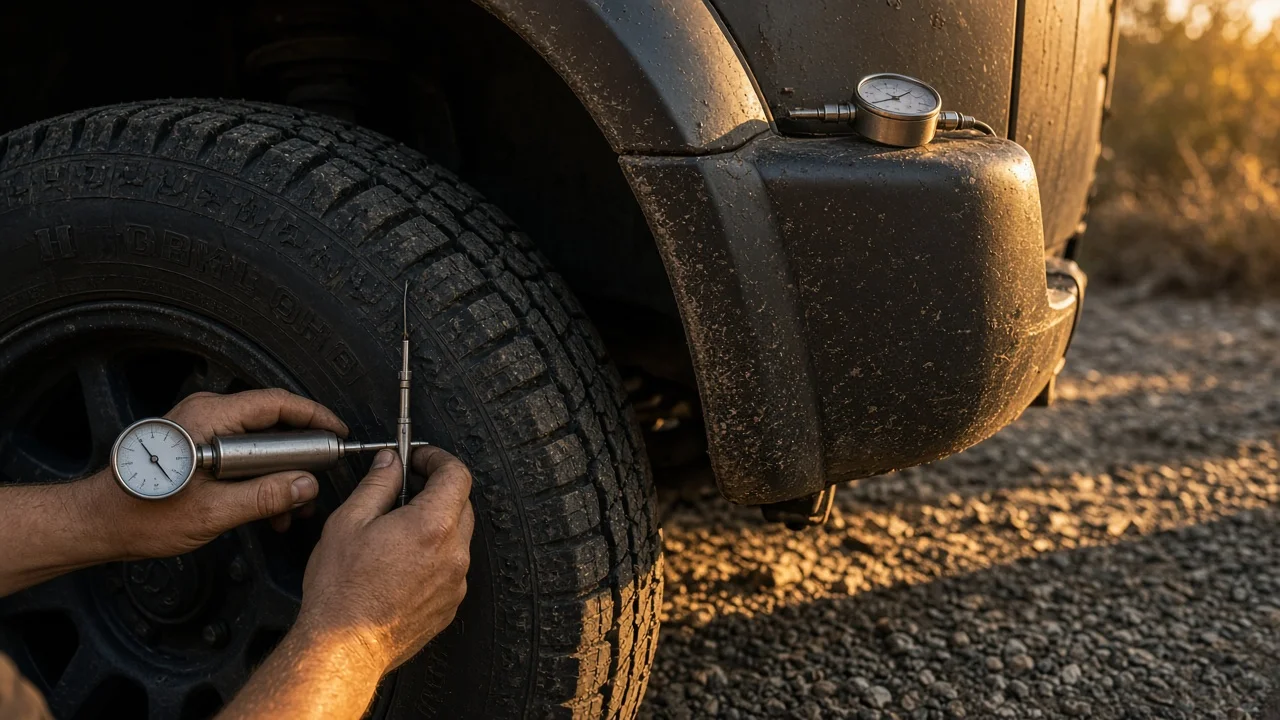
A tread gauge turns the question of remaining tire life into a repeatable measurement instead of a guess. For anyone comparing tires, adjusting inflation pressure, or checking drivetrain compatibility, a Husky digital tread depth and tire gauge offers a compact way to read wear in hundredths of an inch or millimeters. The reading matters well beyond the wear bars: shallow tread changes wet-road evacuation long before a tire looks bald, which is why routine measurement belongs alongside checking the vehicle placard and tire size.
The direct answer
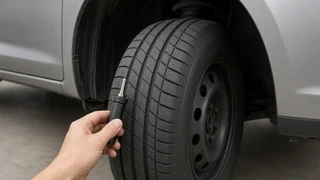
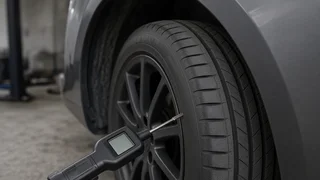
The direct answer is that a Husky tread depth and tire gauge is a purpose-built measuring tool for quantifying remaining tread, with the digital version displaying the reading on a small screen rather than requiring you to interpret a sliding scale. It works by extending a probe into a tread groove and converting that linear travel into a depth value. Using it gives a more consistent comparison across the tread face than a penny test, especially when you are trying to decide whether worn tires still meet safe wet-weather performance or whether they should be replaced in pairs or full sets.
The condition that changes how you use the tool is where you measure. A single center-groove number can hide shoulder wear caused by sustained underinflation, while repeated center-only wear may point to overinflation. For an accurate picture, take readings at the inner, center, and outer grooves around the tire. The gauge does not diagnose the cause; it records the evidence. That evidence is useful whether you are inspecting a used vehicle, rotating tires for even wear, or verifying that a tire’s load index and size are appropriate for the service it sees.