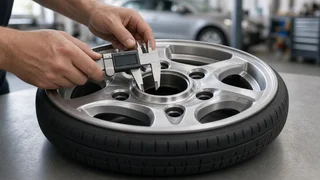
How to Make a Wheel Center Bore Bigger
Enlarging a wheel's center bore is a precision machining task, not a casual grinding job. The center bore, also called the hub pilot, locates the wheel on the vehicle hub. When the bore is too small, the wheel cannot seat flat against the mounting surface. Making it bigger requires removing material evenly so the wheel remains concentric. If the cut is off-center, you create radial runout and vibration. The process demands careful measurement, secure workholding, and repeated fit checks to preserve safe fit tolerance.
Direct answer
The only safe way to make a wheel center bore bigger on most alloy or steel wheels is to remove material with a precision lathe, a rigid boring bar, or a purpose-built hub boring machine. A rotary file or sanding drum cannot hold the required concentricity. The goal is to enlarge the bore just enough to clear the hub pilot while keeping the new opening exactly on the wheel's original centerline. Any off-center cut changes hubcentric support and can cause the assembly to rely only on the lug studs, which may lead to vibration, uneven clamping, or stud fatigue.
The correct final diameter depends on the vehicle's hub pilot and the wheel's intended mounting surface. A small clearance of a few thousandths of an inch is typical, but an exact interference or slip fit is not universal. You must measure both the hub and the existing bore before any metal is removed. If the wheel was designed for a smaller hub, inspect the back of the spoke area for enough material thickness to safely open the bore. Removing too much from a thin hub ring can crack under load.
How to proceed
Begin by cleaning the wheel's mounting surface and measuring the hub and bore with a calibrated caliper or micrometer. Note the difference between the hub diameter and the current opening. Mount the wheel securely in a lathe or on a fixture that references the existing center bore. Use a dial indicator to check radial runout before cutting; if the wheel is not indicated true, the machined hole will be eccentric. Set the cutting tool to remove only a small amount per pass, working outward from the original bore edge toward the required diameter. Stop frequently to check size and fit.
After machining, deburr the edge lightly and clean away any chips or cutting fluid. Test-fit the wheel on the hub without the lug nuts. It should slide on smoothly and seat fully against the rotor or drum face. If it rocks or binds, re-measure the bore and check for taper. Any final fit should still allow the wheel to center on the hub pilot. If the wheel lacks enough material for a safe enlargement, use hubcentric rings only when the bore is larger than the hub, or choose a wheel with the correct center bore.