How to Get a Car Unstuck From Snow
Before you start
Getting a car unstuck from snow is a local, hands-on process: you work with the vehicle, its wheels, and the ground around it. You do not need an app or online service to follow the basic steps. The main tools are ones you can keep in the car, such as gloves, a shovel, traction material like sand or cat litter, and floor mats or cardboard to place under the drive wheels.
Before trying to move the car, make sure the exhaust pipe is clear of snow. A blocked exhaust can push carbon monoxide into the cabin. Stay behind the side of the car or stand clear of the wheels when someone else is driving, and keep bystanders away from the path of any material the tires might throw.
Step-by-step instructions
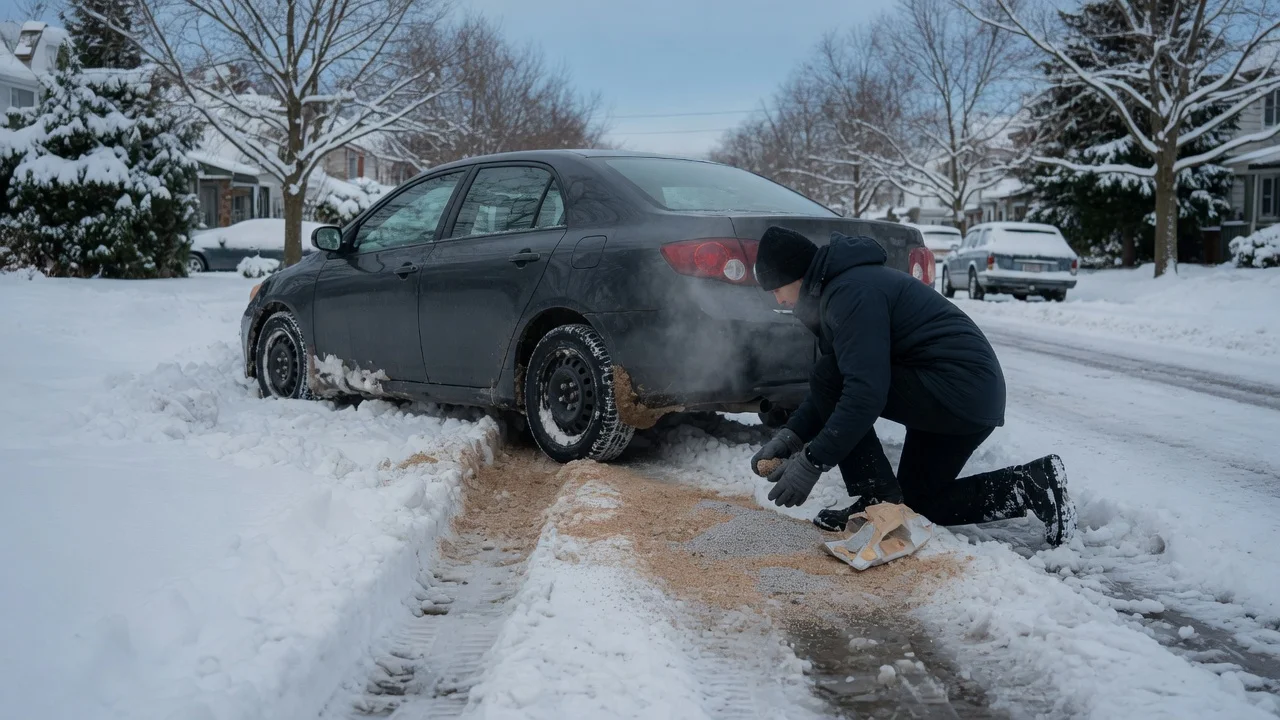
Turn off stability or traction control if the vehicle allows it. Check the owner's manual if you are unsure, because the switch location and available settings vary by model. In some vehicles these systems reduce wheel spin and can make it harder to rock the car out of packed snow. Clear snow from around all four tires, the front of the car, and the rear. Remove snow from under the rocker panels if it is touching the body. Give the drive wheels several feet of cleared space in front of and behind the car. Straighten the front wheels as much as possible. Turned wheels create more resistance and can dig sideways instead of helping the car move forward or backward. Place firm traction material under and just ahead of the drive wheels. Sand, gravel, cat litter, floor mats, or flattened cardboard can all work. Put the material close to the tires so they can grip it without throwing it far. Shift into the lowest suitable forward gear, or into reverse if you plan to move backward first. In a car with an automatic transmission, use a low forward gear if one is available and the owner's manual supports it. Apply light, steady throttle and allow the wheels to turn slowly. If the tires spin, stop immediately. More throttle usually polishes the snow into ice and makes the situation worse. Rock the car only if light throttle does not work. Move forward a short distance, stop, shift into reverse, move backward slightly, and repeat. Keep the speed low. Stop rocking if the car begins to move sideways or the wheels dig deeper. When the car starts to move, keep going steadily until the wheels are on more solid ground. Avoid stopping in the same rut that trapped the vehicle.
If the car has a dedicated snow or winter mode, select it only if you are familiar with how that setting changes throttle or traction behavior on your vehicle. On some models these modes reduce wheel spin automatically, while on others they may not help when the car is already stationary in deep snow.
Check the output
The expected result is simple: the car moves under its own power to a spot where the drive wheels can grip a cleared or packed surface. After the car is free, drive a short distance at low speed and check that the steering feels normal, the brakes work, and no warning light related to traction control remains on unnecessarily. If a traction control system was turned off, turn it back on when you no longer need wheel spin.
Look at the area where the car was stuck. If the tires left deep ruts or exposed ice, the car may slip again if you stop in the same place. Clear a longer path before moving on when the surface is still soft.
Common problems and next steps
A common mistake is pressing the accelerator harder when the wheels spin. That often melts the snow surface briefly and turns it to ice. If spinning has already made the area slick, clear the affected snow and add fresh traction material before trying again. Digging the car out further is also useful even when only part of the tire is buried.
If the car is high-centered, with the weight resting on packed snow under the body rather than on the wheels, rocking and adding traction may not help. Clear snow from under the middle of the car first, then retry the same gentle sequence. If the vehicle still does not move after a few short attempts, stop to avoid overheating the transmission. Calling a tow or recovery service is the safer next step when the car is stuck on a slope, near traffic, or in snow too deep to clear by hand.